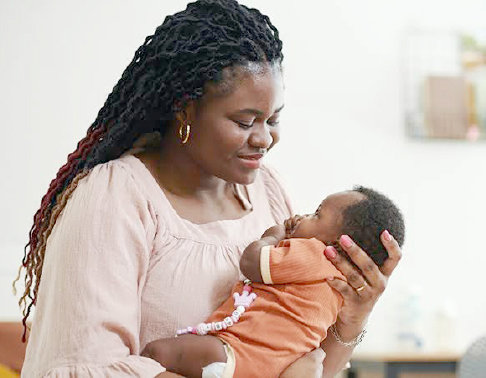
As Nigeria joins the global community to commemorate this year’s World Breastfeeding Week (WBW), observed globally from August 1 to 7 each year, issues of infant and maternal malnutrition still resonate.
A recent report by The Humanitarian Needs And Response Plan coordinated by OCHA, projected that approximately 309,000 pregnant and breastfeeding women and girls (PBWG) are likely to suffer from acute malnutrition during the year.
Statistics from the United Nations Children’s Fund ( UNICEF) indicate that while more than 90 per cent of Nigerian mothers breastfeed, early breastfeeding initiation has declined from 42 per cent in 2018 to 36 per cent in 2023, while exclusive breastfeeding rates have stagnated at 29 per cent.
Additionally, according to the 2023-2024 National Demographic and Health Survey (NDHS), only 23 per cent of babies are breastfed up to the recommended two years of age.
The theme for this year’s celebration, “Prioritise Breastfeeding: Create Sustainable Support Systems,” highlights the critical role of breast milk in child survival, growth, and healthy development.
According to the World Health Organisation (WHO), exclusive breastfeeding means feeding an infant only breast milk, with no other foods or drinks, not even water, except for oral rehydration solution or drops, or syrups (in liquid form) if prescribed by a health professional.
As a newspaper, we recognise that breastfeeding is crucial for an infant. Experts say breast milk contains essential nutrients for a child’s survival and healthy development.
According to UNICEF, breast milk is natural and the most complete source of infant nutrition.
It contains antibodies that protect children from illnesses, improve cognitive performance, and reduce the likelihood of obesity in later life.
The Children’s Global Organisation stated that breastfeeding lowers mothers’ risk of certain cancers and Type 2 diabetes and is also a climate-smart, sustainable, cost-effective, and zero-waste method of feeding infants.
Conversely, it is estimated that inadequate breastfeeding is responsible for 16 per cent of child deaths each year.
Unfortunately, Nigeria is at a crossroads as malnutrition remains a public health concern due to a lack of access to food and nutrition.
At the recent National Summit on Food Security and Nutrition, Vice President Kashim Shettima said the malnutrition crisis continues to rob nearly 40 per cent of Nigerian children under five of their physical and cognitive potential.
UNICEF has called on policymakers, employers, health professionals, civil society, and communities to create sustainable support systems for breastfeeding through the Nutrition 774 Initiative.
The N774 Initiative is a federal government programme that aims to revitalise and incentivise local action to improve Nigeria’s food security, health, and nutrition.
Instructively, the Speaker of the House of Representatives, Hon Tajudeen Abbas, said the house was considering two transformative legislative Initiatives; one of which proposes six months’ maternity leave for nursing mothers, in alignment with global best practice to support early childhood nutrition and maternal health.
Furthermore, UNICEF called for extended paid maternity leave up to six months across all states in Nigeria, and to champion breastfeeding as a wise national investment that protects the right of every Nigerian child to adequate nutrition.
According to the global body, 12 of Nigeria’s 36 states, including the Federal Capital Territory (FCT), offer paid maternity leave for up to six months.
Some of the states include Lagos, Oyo, Kaduna, Ekiti, Cross River, Niger, and the Federal Civil Service, which extended it to four months.
Recently, the Kebbi state government approved six-month maternity leave for pregnant workers.
The leave, according to the government, is to enable exclusive breastfeeding for newborn children by their mothers.
The governor said the executive arm will soon forward a bill to the state legislature to enact a law supporting the initiative.
Similarly, the governor added that the government would approve other UNICEF funds to tackle malnutrition.
We recognise that though progress towards exclusive breastfeeding is not visible, federal and some state governments are taking steps to improve nutrition for Nigerian infants.
Also, in our opinion, the National Orientation Agency (NOA) should help disseminate the message to the grassroots, where most of our Nigerian women dwell.
UNICEF said mothers must receive support—whether at home, in healthcare settings, or workplaces—to initiate breastfeeding within the first hour of birth, breastfeed exclusively for six months, and continue alongside nutritious complementary foods up to breastfeeding their babies for at least 24 months.
Breastfeeding is one of the critical pathways to reducing under-five mortality. It is crucial to attain Sustainable Development Goals (SDGs) 2 and 3, which include ending hunger, improving nutrition, and promoting health and well-being.
World Breastfeeding Week was started in 1992 to generate public awareness and support for breastfeeding.
It is officially celebrated on 1-7 August every year to highlight the importance of breastfeeding.
We’ve got the edge. Get real-time reports, breaking scoops, and exclusive angles delivered straight to your phone. Don’t settle for stale news. Join LEADERSHIP NEWS on WhatsApp for 24/7 updates →
Join Our WhatsApp Channel