For millions of Nigerian football fans, the beautiful game has transformed into a painful waiting game. As the Super Eagles look on from the sidelines, their hopes of qualifying for the 2026 FIFA World Cup now hang precariously in the balance, reliant on a verdict from FIFA. Salifu Usman analyses the anxiety and confusion surrounding the expected ruling on Nigeria’s petition against DR Congo.
For most nations, following the FIFA calendar is routine. However, for Nigeria, the release of FIFA’s 2025 Football Annual Report on February 19, 2026, was intended to be D-day. As the world governing body published the document, millions of Nigerians held their breath, scanning for a single entry that would determine the Super Eagles’ fate. The verdict on Nigeria’s petition against DR Congo was conspicuously absent.
In that moment, the anxiety gripping Africa’s most populous nation transcended sport. It morphed into a national psychological condition. For over two months, following the Nigeria Football Federation (NFF) lodging its protest on December 15, 2025, Nigerians have found themselves trapped in a cycle of hope, rumour, and frustration—“losing sleep,” as one outlet put it, over a decision that refuses to materialise.
The Long Night of Vigilance
In the early hours of a Wednesday morning in mid-February, while the rest of the world slept, many Nigerians remained wide awake, anxiously anticipating a FIFA verdict that never arrived. This situation extended beyond football; it resulted in a suspension of daily life. Staff members of the NFF were reportedly on standby for an email from Zurich, ready to receive communication that could either usher in nationwide jubilation or plunge the country into mourning.
The lead-up to the anticipated “Decision Monday” (February 16) was chaotic. Social media transformed into a battleground for misinformation. Conflicting reports swung wildly throughout the day—one moment claiming Nigeria had triumphed and would be reinstated, the next alleging the protest had been dismissed. The NFF was compelled to issue a rare early-morning statement to debunk the rumours, urging the public to disregard unverified claims.
The Heart of the Matter: Law vs. Legacy
To grasp the anxiety, one must understand the stakes. Nigeria suffered a gut-wrenching loss in the African playoff final in Rabat last November, succumbing to a 4–3 penalty shootout defeat. For a nation that prides itself as the “Giants of Africa,” missing a second consecutive World Cup is unthinkable.
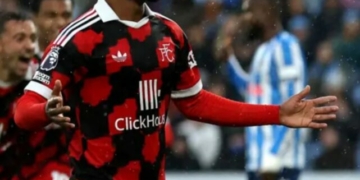
The legal argument, however, is nuanced. The NFF alleges that DR Congo fielded up to nine ineligible players, including Premier League stars Aaron Wan-Bissaka and Axel Tuanzebe. The crux of the matter lies in the conflict between FIFA’s global statutes and DR Congo’s domestic law. While FIFA permits players to switch allegiance if they hold a valid passport, the NFF contends that Congolese law prohibits dual citizenship. Thus, if these players possess European passports without renouncing their other nationalities, their clearance by FIFA was allegedly based on “fraudulent” documentation.
“We believe that we have a chance; that is why we petitioned,” NFF General Secretary Mohammed Sanusi stated, defending the move against critics who dismiss it as sour grapes.
Arguments For and Against: “Back Door” vs. “Watertight Case”
Public discourse has divided both the nation and the continent. In Nigeria, the argument for the petition is straightforward and resonates with the popular Pidgin English sentiment: “Evidence choke” (there is overwhelming evidence).
The Case for Nigeria:
The Legal Loophole: Supporters argue that rules are rules. If Congolese law prohibits dual citizenship, and the players have not renounced their foreign ties, the Leopards cheated. The NFF insists it is not FIFA’s responsibility to know every country’s domestic laws, but it is FIFA’s duty to act once a violation is brought to its attention.
The Marketability Argument: Some fans and pundits highlight the “economics” of football. With stars like Ademola Lookman, Victor Osimhen, and Alex Iwobi shining in Europe, Nigeria represents a massive television audience and market for FIFA. “In both footballing terms and economic viability, FIFA would always choose Nigeria,” one fan, @iAmPODii, posted on social media.
AFCON Pedigree: Nigeria’s impressive run to the semi-finals at the 2025 Africa Cup of Nations (where they kept three clean sheets in four games against World Cup-bound teams) fuels the belief that this generation of players—many of whom may not be at their peak in 2030—deserves the global stage.
The Case Against (and the DR Congo Position):
Winning Through the “Back Door”: This is the most potent counter-argument. DR Congo’s football federation issued a sharp statement in December, asserting: “If you can’t win on the pitch, don’t try to win from the back door. The World Cup must be played with dignity and confidence, not with lawyers’ tricks.”
Fairness and Neutrality: Neutral observers and some Nigerians express discomfort with the idea of overturning a result based on a technicality months after the final whistle. Sports marketing consultant Tolu Ogundeji encapsulated this sentiment: “We are waiting, but Nigeria doesn’t deserve to be at the World Cup through the back door. DR Congo fought for the ticket.”
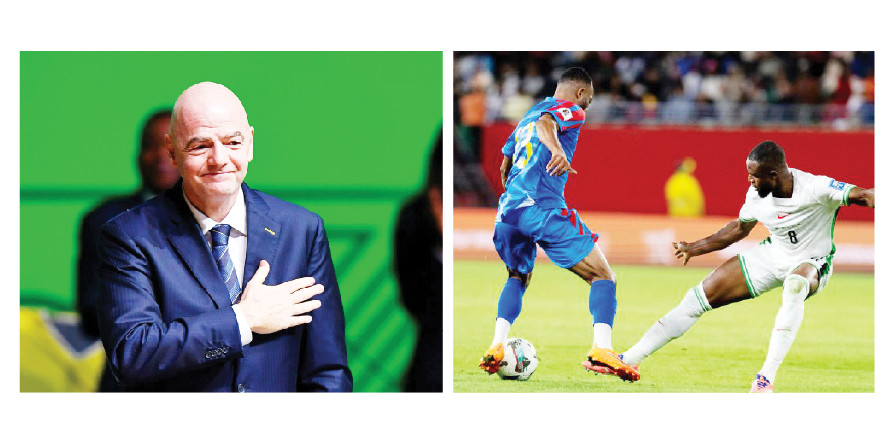
The CAF Factor: There is palpable concern regarding the reported influence of Confederation of African Football (CAF) Secretary General Véron Mosengo-Omba, a Swiss-Congolese national with close ties to FIFA President Gianni Infantino. Nigerian circles whisper about Francophone influence potentially skewing the scales, fearful that geopolitics might overshadow the “watertight” evidence.
The Human Cost of Waiting
The uncertainty is taking a tangible toll. For the players, it is a state of limbo. Super Eagles midfielder Alex Iwobi recently admitted, “We are still waiting; hopefully, we can go to the World Cup.” That “hopefully” carries the weight of a career’s ambition.
For the average fan, it is sheer exhaustion. As user @abn_tel lamented on X (formerly Twitter): “They should resolve this once and for all; we are tired of holding a calculator every time we hear FIFA.” The reference to a “calculator” is a deep cultural nod to the Nigerian trait of calculating complex qualification scenarios—a skill rendered useless by the administrative stalemate.
What Happens Next?
The silence from Zurich is deafening, yet it is not empty. Analysts suggest FIFA is treading carefully to avoid legal fallout, with both parties reportedly prepared to approach the Court of Arbitration for Sport (CAS) if dissatisfied.
The Chairman of Nigeria’s National Sports Commission, Shehu Dikko, has attempted to manage expectations, reminding Nigerians that “the World Cup is a closed chapter for us competitively, but the legal matter is pending.” He acknowledged that the case might ultimately be decided at CAS, not FIFA.
As the intercontinental play-offs in Mexico loom in late March, the clock is ticking. Will Nigeria’s “watertight case” hold up? Or will DR Congo’s dream of returning to the World Cup for the first time since 1974 (as Zaire) withstand the legal storm?
Until then, a nation waits. The verdict is not merely about a football match in Rabat; it is about justice, legacy, and the agonising pain of what might have been. Sports journalist Richard Terver perfectly encapsulated the national mood: “I just hope it is what we are all expecting it to be. The verdict is around the corner. We’ll wait.”
According to reports by BSNSports.ng.com, the Jamaica Football Federation (JFF) has expressed concern over FIFA’s delay in issuing a ruling on Nigeria’s protest regarding player eligibility in DR Congo’s squad during last November’s African playoff final.
The outcome of this protest could significantly affect the upcoming intercontinental playoff in March, where Jamaica is scheduled to face DR Congo for a berth at the 2026 FIFA World Cup.
Officials within the JFF are reportedly uneasy about the continued absence of a decision, highlighting the potential impact on logistical and competitive preparations. As the high-stakes encounter approaches, Jamaica’s technical staff and administrators remain mindful that any late ruling could necessitate adjustments to tactical planning, training schedules, and travel arrangements.
While there is speculation that Nigeria’s appeal may ultimately fail, Jamaican football authorities are taking a cautious approach. A delayed verdict that alters the identity of their playoff opponent would present considerable challenges, particularly so close to a fixture of such magnitude.
This situation underscores the administrative complexities that can arise in international football when eligibility disputes remain unresolved in the lead-up to major competitions. Both Jamaica and DR Congo continue their preparations amid the uncertainty, as stakeholders await formal clarification.
FIFA has yet to release an official statement on the matter. For Jamaica, a timely resolution is deemed vital to ensure smooth planning and optimal readiness for what represents one of the most consequential matches in the nation’s World Cup qualifying campaign.
DR Congo is set to face the winner of the semi-final match between Jamaica and New Caledonia, the spot Nigeria will occupy
We’ve got the edge. Get real-time reports, breaking scoops, and exclusive angles delivered straight to your phone. Don’t settle for stale news. Join LEADERSHIP NEWS on WhatsApp for 24/7 updates →
Join Our WhatsApp Channel