Since President Bola Ahmed Tinubu assumed office in May 2023, Nigerians have faced significant increases in the cost of basic commodities.
The removal of the petrol subsidy, foreign exchange reforms, naira depreciation, rising energy costs and persistent inflation have all featured prominently in discussions about the country’s economic difficulties.
Although the Tinubu administration has defended the economic reforms as crucial to stabilise the economy and attract investment, the immediate impact on household purchasing power has remained a major concern.
With the 2027 general elections approaching, beyond political promises and economic projections, many Nigerians are measuring the impact of government policies by how much they now spend on everyday necessities, from transportation and food to electricity, cooking gas, healthcare and internet access.
Hereunder is a comparison of prices before and during the administration to show how the costs of several essential goods and services have risen.
- Petrol: From Below ₦250 To Over ₦1,300 Per Litre
Nigeria’s Cost Of Living Crisis: 10 Things That Have Become More Expensive Under Tinubu
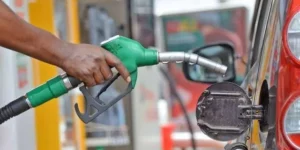
Petrol is arguably one of the most visible examples of the rising cost of living since Tinubu assumed office. On May 29, 2023, during his inauguration, the president announced that petrol subsidy was no longer sustainable and would be removed, triggering an immediate increase in pump prices across the country.
Before the announcement, petrol sold for approximately ₦195-₦238 per litre in many parts of the country. Prices subsequently jumped to between ₦488 and ₦617 per litre, with further increases recorded in the months that followed.
The naira’s depreciation, foreign-exchange pressures, changes in the pricing regime, and fluctuations in global crude oil markets contributed to subsequent increases. The emergence of the Dangote Refinery also introduced new dynamics into domestic fuel pricing.
By October 2026, petrol was selling for between ₦1,369 and ₦1,435 per litre at various NNPC retail stations, according to Finelib’s market price tracking. Prices differed across states and marketers, with some locations recording higher rates.
- Cement: From About ₦5,000 To ₦15,000 Per Bag
Nigeria’s Cost Of Living Crisis: 10 Things That Have Become More Expensive Under Tinubu
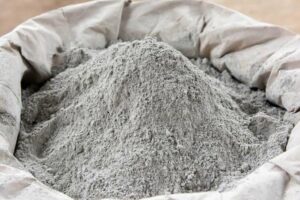
When Tinubu assumed office in May 2023, a 50kg bag of cement sold for approximately ₦5,000 in many markets. However, prices rose sharply in 2024, reaching between ₦7,500 and ₦10,000, with some major cities recording prices of ₦10,000 to ₦15,000.
BusinessDay, in a September 2026 report, said cement prices had increased by about 329 per cent over five years, rising from approximately ₦3,500 in 2021 to as much as ₦15,000 in 2026.
The Federal Government had previously held meetings with major manufacturers, including Dangote Cement, BUA Cement and Lafarge, seeking price reductions amid public complaints.
However, the prices have continued to fluctuate. In August 2026, the Federal Competition and Consumer Protection Commission (FCCPC) disclosed that its investigation had uncovered indications of possible price manipulation in the cement market.
According to the commission, a 50kg bag that sold for between ₦9,300 and ₦9,700 in January 2026 had risen to between ₦10,500 and ₦13,000 by mid-year, with some locations recording prices of ₦15,000 by July.
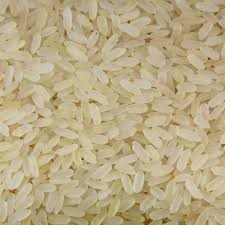
- Rice: From About ₦28,000 To Over ₦70,000 Per 50kg Bag
Nigeria’s Cost Of Living Crisis: 10 Things That Have Become More Expensive Under Tinubu
Rice, one of Nigeria’s most consumed staple foods, has also seen substantial price increases since the beginning of the Tinubu administration, though prices have since moderated from their previous peaks.
Before Tinubu assumed office in May 2023, a 50kg bag of rice sold for approximately ₦28,000 in major markets, according to a December 2024 report by The Guardian.
The price rose to between ₦85,000 and ₦100,000 in major markets by December 2024, representing more than a 200 per cent increase over the pre-administration price.
The Federal Government subsequently introduced interventions, including subsidised sales of imported rice to selected categories of Nigerians, and implemented measures to ease food imports.
As of November 2, 2026, market data published by Useagrios put the average price of a 50kg bag of rice across 37 Nigerian markets at approximately ₦71,039, although individual market prices varied considerably.
- Sachet Water: From ₦5–₦10 To ₦50 Per Sachet

Nigeria’s Cost Of Living Crisis: 10 Things That Have Become More Expensive Under Tinubu
Sachet water, popularly known as ‘pure water’, was sold for about ₦5-₦10 per sachet in previous years.
Now it has risen to as much as ₦50 per sachet in some locations.
The price of a bag has also increased, with consumers paying between ₦300 and ₦500, depending on the location and manufacturer.
A May 2026 market survey by the News Agency of Nigeria (NAN) reported that a bag of sachet water sold for between ₦500 and ₦800 in several parts of Lagos, compared with ₦350-₦450 recorded in late 2025.
- Electricity: Band A Tariff Rises Above ₦200 Per Unit
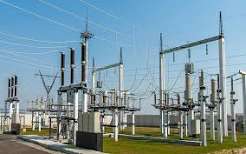
Electricity bills have become another major concern for Nigerian households and businesses, particularly for consumers classified under Band A, who are expected to receive at least 20 hours of electricity supply daily.
In April 2024, the Nigerian Electricity Regulatory Commission (NERC) approved an increase in the electricity tariff for Band A customers from approximately ₦68 to ₦225 per kilowatt-hour (kWh).
According to a KPMG analysis, the affected customers accounted for about 15 per cent of Nigeria’s 12 million electricity consumers at the time.
Although the government subsequently reviewed the tariff, the cost remained considerably higher than the previous rate. Under the revised tariff structure, Band A customers under several distribution companies have faced rates around ₦209.50 per kWh, subject to applicable regulatory orders.
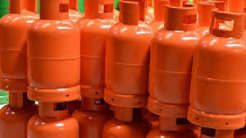
- Cooking Gas: From ₦800 To ₦1,500 Per
Nigeria’s Cost Of Living Crisis: 10 Things That Have Become More Expensive Under Tinubu
In May and June 2023, a kilogramme of cooking gas sold for approximately ₦700-₦870 in many parts of the country.
By 2026, consumers were paying between ₦1,200 and ₦1,650 per kilogramme across several locations, with prices varying by state and retail outlet.
A June 2026 market survey by Nairametrics reported that cooking gas sold for between ₦1,498 and ₦1,650 per kilogramme in Abuja, following earlier prices of about ₦2,000 in some locations.
At those rates, refilling a 12.5kg cylinder cost between approximately ₦18,725 and ₦20,625.
- Mobile Data: 50 Per Cent Telecom Tariff Increase

Nigeria’s Cost Of Living Crisis: 10 Things That Have Become More Expensive Under Tinubu
In January 2025, the Nigerian Communications Commission (NCC) approved a tariff adjustment of up to 50 per cent for telecommunications operators, following service providers’ requests to review their charges.
Before the adjustment, telecom tariffs had largely remained unchanged since 2013, despite rising operational expenses, according to the NCC.
The approval allowed operators to increase the prices of their data and voice packages, resulting in higher costs for subscribers’ internet access.
For instance, MTN Nigeria adjusted some of its data offerings, with its 15GB weekly plan rising to ₦6,000 under the revised tariff structure.
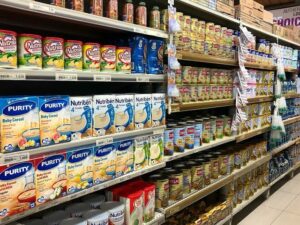
- Infant Formula: Baby Food Became More Expensive
Nigeria’s Cost Of Living Crisis: 10 Things That Have Become More Expensive Under Tinubu
Before Tinubu assumed office in May 2023, a 400g tin of some popular infant formula brands, including Nestlé NAN, sold for approximately ₦3,000 to ₦4,000.
However, inflation, naira depreciation and rising import costs have contributed to significant increases in the prices of these products.
A report by Daily Independent on August 10, 2026, showed that a 400g tin of Peak Baby Infant Formula sold for ₦11,130, while Nestlé NAN Kid Optipro cost ₦11,205.
The report also put the prices of NAN Optipro Starter Formula and NAN Follow-Up Formula at ₦12,280 each, while specialised products such as NAN Comfortis and SMA Gold Follow-On Milk sold for ₦16,295 and ₦16,895 respectively.
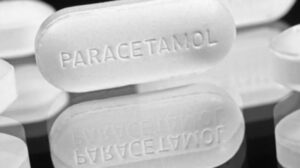
- Paracetamol: From ₦150 To ₦1,900 Per Strip
Nigeria’s Cost Of Living Crisis: 10 Things That Have Become More Expensive Under Tinubu
Before the current administration, a strip of paracetamol tablets generally sold for between ₦50 and ₦150, though prices varied by brand and location.
The cost increased amid rising inflation, foreign-exchange pressures, higher production expenses, and rising costs of imported pharmaceutical ingredients.
A March 2026 report by BusinessDay revealed that a strip of ten 500mg paracetamol tablets sold for between ₦150 and ₦300 in 2024 but had risen to between ₦1,900 and ₦2,500 by 2026, depending on the brand and pharmacy location.
The newspaper reported that the increase was part of a broader rise in the prices of essential medicines, with some products recording increases of up to 190 per cent.
- Garri: From ₦370 To Over ₦800 Per Kilogramme
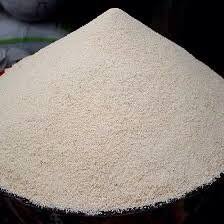
Garri, one of Nigeria’s most affordable and widely consumed staple foods, has also seen significant price increases since Tinubu assumed office.
The National Bureau of Statistics (NBS), in its Selected Food Prices Watch for May 2023, put the average price of one kilogramme of white garri at ₦371.42.
However, the price rose sharply over the following year, reaching ₦1,114.72 per kilogramme in May 2024, representing a 200.12 per cent increase within 12 months.
The NBS figures showed that the price subsequently climbed further, reaching ₦1,345.10 in April 2025 before moderating.
By April 2026, the average price had declined to ₦808.96 per kilogramme, according to figures from the bureau’s Selected Food Prices Watch.
We’ve got the edge. Get real-time reports, breaking scoops, and exclusive angles delivered straight to your phone. Don’t settle for stale news. Join LEADERSHIP NEWS on WhatsApp for 24/7 updates →
Join Our WhatsApp Channel