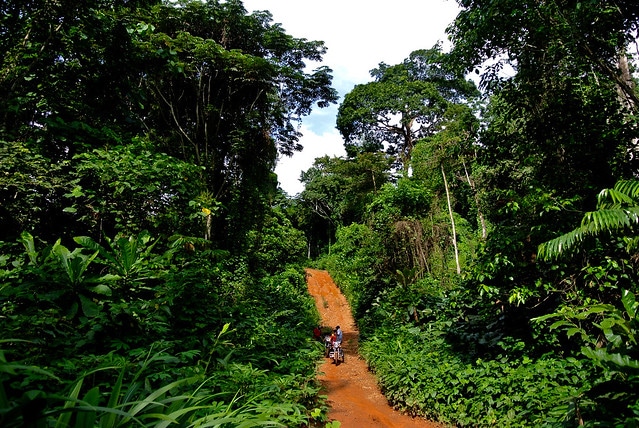
Nigeria stands at an ecological precipice that demands immediate national attention. The Nigerian Conservation Foundation has issued a stark warning: the country has lost nearly 90 per cent of its forest cover in the past three decades, leaving less than 10 per cent of its original forest landscape intact. This figure marks one of the most rapid deforestation rates anywhere in the world.
While insecurity, inflation and political turmoil dominate headlines, this silent crisis threatens the very foundation of water security, food production, rural livelihoods and national stability. It is ecocide unfolding in slow motion, a profound moral and governance failure that tests the social contract between state and citizen.
The drivers of this collapse are well documented yet persistently unaddressed. Illegal logging for timber and charcoal feeds urban demand and export markets. Rapid population growth has intensified pressure for fuelwood, while urban sprawl consumes peri-urban forests. Industrial agriculture and plantation expansion convert woodlands into cropland, and weak enforcement, coupled with corruption in forestry governance, allows violators to operate with impunity. Global Forest Watch data corroborate the scale: between 2001 and 2024 Nigeria lost 1.4 million hectares of tree cover, with 250,000 hectares of natural forest vanishing in 2024 alone. The Nigerian Conservation Foundation estimates current annual losses at around 400,000 hectares.
The result is accelerated desertification in the Sahelian North and intensified flooding in the South, destabilising the hydrological systems that once buffered the nation against climate extremes.
The consequences cascade across every sector. Forests once acted as natural sponges, regulating river flows, recharging aquifers and preventing erosion. Their destruction has triggered declining river volumes, falling groundwater levels and sedimentation in major dams such as Kainji and Shiroro. Urban flooding has become more frequent and severe as runoff accelerates without vegetative cover. For agriculture, which supplies the bulk of Nigeria’s food from rural smallholder farms, the outlook is equally dire. Soil fertility declines, rainfall patterns become erratic, temperatures rise and pests proliferate.
In the Sahelian belt spanning Borno, Yobe, Jigawa, northern Bauchi and Katsina, desertification is shrinking arable land, deepening food insecurity and fuelling rural poverty. This ecological unraveling directly undermines national food security.
Rural livelihoods are collapsing under the weight of lost resources. Communities in the North and Middle Belt have long depended on forests for fuelwood, herbal medicine, hunting, non-timber products such as shea, gum arabic and honey, and grazing vegetation. The disappearance of these assets has displaced families, intensified competition over shrinking resources and escalated inter-communal conflicts.
Herder-farmer tensions, already exacerbated by insecurity, are worsened as grazing routes vanish and arable land contracts. Youth, deprived of traditional forest-based opportunities, migrate to cities already strained by unemployment and housing shortages, or worse, become recruits for armed groups. Deforestation is thus not merely environmental; it is a driver of the very insecurity that further accelerates forest loss, creating a vicious feedback loop.
Philosophically, this crisis exposes a deeper failure of stewardship. Nigeria’s forests represent a shared national heritage, a common good that successive governments have treated as expendable. The social contract implicit in the 1999 Constitution, which mandates the state to protect the welfare of citizens, is breached when the very ecosystems sustaining life are allowed to vanish. Greed and short-term expediency have triumphed over moral rectitude and long-term vision.
Colonial legacies of exploitative forestry policies linger in outdated laws and fragmented enforcement. Despite multiple national policies, the absence of an updated forest inventory, coordinated federal-state action, community incentives and adequate funding has left the sector vulnerable. Illegal loggers, often shielded by political networks, operate freely while reforestation efforts remain symbolic.
Environmental advocates rightly demand decisive intervention. A federal declaration of a state of emergency on deforestation would coordinate a unified response. Large-scale reforestation campaigns, modelled on Ethiopia’s Green Legacy initiative, must be launched with measurable targets and community ownership. Satellite monitoring, drones and strengthened forest rangers should underpin an immediate crackdown on illegal logging networks. Stiffer penalties, including jail terms, must replace the current culture of impunity. A transition to renewable energy sources would reduce reliance on firewood and charcoal, while community-based forest management would restore local stewardship and economic incentives.
The stakes extend beyond ecology to national survival. Without forests, Nigeria risks losing not only water and food but also the climate buffers and biodiversity that underpin stability. Migration pressures will intensify, conflicts will multiply and economic volatility will deepen. Yet this tipping point also offers an opportunity for renewal. By treating forest restoration as a national security imperative, Nigeria can demonstrate the moral courage and strategic foresight that true leadership requires. The lessons of shared vulnerability, collective responsibility and intergenerational equity must guide policy.
History will not remember this generation by how loudly it decried crises but by whether it acted to reverse them. The vanishing canopy is a silent alarm. Nigeria must answer it with urgency, unity and resolve before the point of no return is crossed. The survival of the nation, quite literally, depends on it.
We’ve got the edge. Get real-time reports, breaking scoops, and exclusive angles delivered straight to your phone. Don’t settle for stale news. Join LEADERSHIP NEWS on WhatsApp for 24/7 updates →
Join Our WhatsApp Channel