
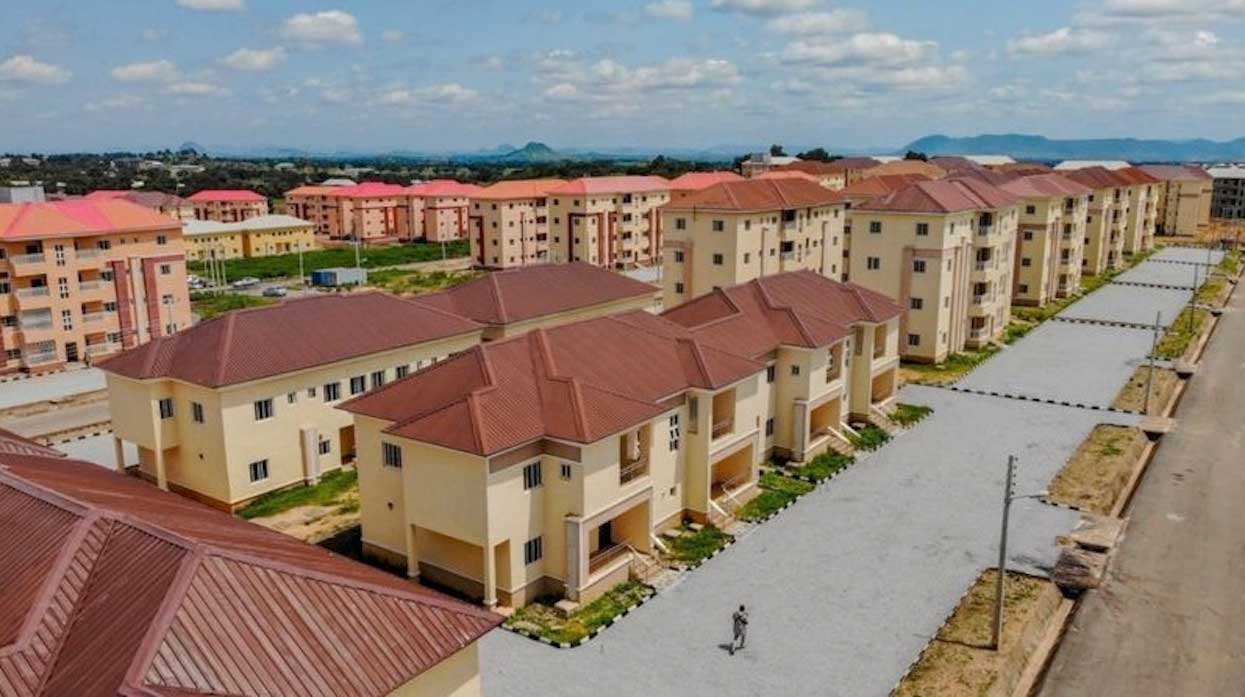
The Nigerian Housing Market (NHM) has projected nationwide residential price growth of between five and 15 per cent in 2026, with the strongest gains expected in infrastructure-linked suburban and emerging residential corridors.
Presenting the 2026 Nigerian Housing Outlook, NHM chief executive officer and lead housing analyst, Babatunde Akinpelu, said prime urban districts in major cities such as Lagos and Abuja are expected to record moderate but stable price appreciation of 5 to 8 per cent, reflecting market maturity and already-elevated property values.
According to Akinpelu, middle-income urban areas are projected to outperform the national average, with price growth of 8 to 12 per cent, driven largely by stronger affordability and sustained demand compared to prime locations.
The strongest upside, however, is expected in emerging suburban and infrastructure-linked zones, where residential prices could rise by 10 to 15 per cent in 2026. These areas are benefiting from new transport corridors, expanding road networks and a growing commuter population seeking relief from high inner-city housing costs.
“This is no longer a market where buying anywhere guarantees returns,” Akinpelu cautioned. “Location, access to infrastructure and alignment with income levels now matter more than ever.”
On the rental side, NHM sees little prospect of relief for tenants in the coming year. Rents, which have already risen sharply in recent years, are expected to remain elevated and continue increasing in 2026.
The outlook attributes sustained rental pressure to chronic housing shortages, rapid household formation, income growth that lags population expansion, and a strong investor preference for rental-yield assets. NHM also noted that rental inflation remains structurally disconnected from headline inflation, highlighting the depth of Nigeria’s housing imbalance.
Lagos remains the country’s most constrained and dynamic residential market, driven by extreme population density, economic concentration, limited land availability and strong diaspora participation. Highland acquisition costs continue to shape development patterns, pushing growth towards infrastructure-driven corridors such as the Lekki–Epe axis, mainland rail and transport routes, as well as emerging peri-urban and waterfront zones.
Abuja, by contrast, offers a more structured and less volatile residential environment anchored by government, diplomatic and institutional demand. The capital benefits from planned urban development and larger plot sizes, with NHM identifying expansion districts adjacent to prime zones, middle-income satellite towns and long-term land banking corridors as key growth areas.
Across all markets, NHM identified infrastructure as the single most important driver of residential value creation in Nigeria. Improved transport links, reduced commute times, expanded residential catchment areas and stronger investor confidence are directly linked to better price and rental performance.
According to the outlook, residential prices typically rise modestly before infrastructure development, strengthen during construction and accelerate significantly after project completion — a pattern increasingly evident in transport-linked corridors nationwide.
NHM outlined three possible price scenarios for 2026. Under the base case, gradual macroeconomic stability and continued urban demand would support price growth of 8 to 12 per cent. An upside scenario, driven by improved currency stability and stronger policy execution, could lift growth to 14 to 18 per cent. Conversely, macroeconomic or political disruptions could limit growth to 3 to 5 per cent under a downside scenario.
In terms of investment strategy, NHM highlighted infrastructure-linked suburbs, middle-income rental housing and emerging commuter zones as high-return opportunities. Established urban rentals, build-to-rent developments and short-let apartments offer more stable yields, while land banking in expansion corridors and mixed-use residential projects provides longer-term growth optionality.
Akinpelu stressed that Nigeria’s residential real estate market in 2026 will reward discipline, segmentation, and long-term thinking rather than speculative behaviour.
“The opportunity remains substantial,” he said, “but success will depend on strategy over sentiment. Those who align with infrastructure, affordability realities, and employment access will capture the real value in 2026 and beyond. The message from NHM is clear: Nigeria’s housing market is still growing, but only the prepared will benefit, he stated.
We’ve got the edge. Get real-time reports, breaking scoops, and exclusive angles delivered straight to your phone. Don’t settle for stale news. Join LEADERSHIP NEWS on WhatsApp for 24/7 updates →
Join Our WhatsApp Channel