In this report, MARK ITSIBOR takes a look at the ongoing global economic disruptions vis-a-vis inflationary pressures and efforts by the authorities to achieve a single digit inflation for Nigeria.
The focus, determination and models are fixated on the target – bring inflation down to a single digit. But the optics, chiefly energized by the ongoing war in Iran, are up to betray that ambition. From the Central Bank of Nigeria to the Federal Ministry of Finance, the message is clear – ‘a less than 10 percent headline inflation is possible’.
Nigeria’s ambition to return to a single-digit inflation regime is being tested by renewed global shocks, yet policymakers and analysts insist the trajectory remains firmly on course.
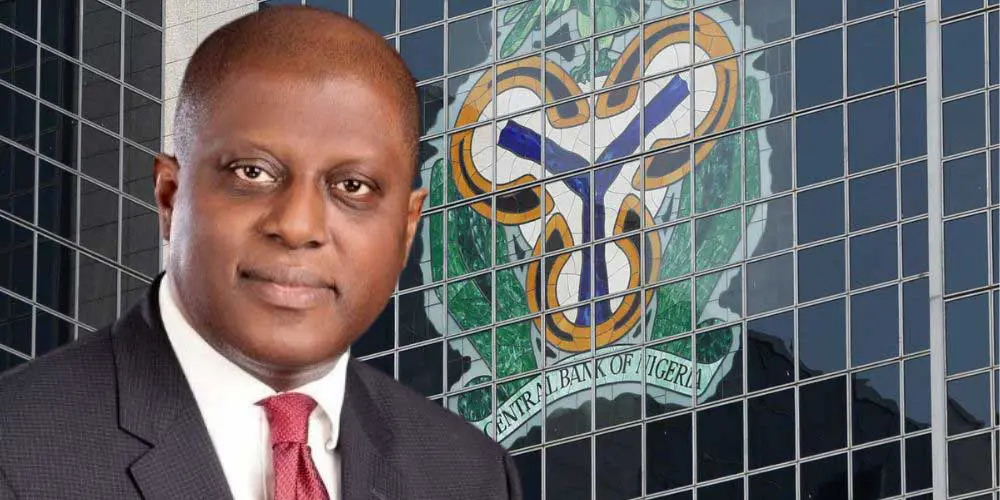
Governor of the Central Bank of Nigeria (CBN) Olayemi Cardoso said Nigeria will achieve single digit inflation rate despite marginal rise in inflation rate to 15.38 per cent in March from 15.06 per cent in February.
The economy’s growth prospects and resilience to global shocks in the face of headwinds are positive results gained from the CBN-led financial sectors reforms and quest for stronger economy.
Globally, inflation has been acknowledged as the biggest enemy of growth, the biggest enemy of the common man.
A marginal rise in inflation in March 2026 has sparked debate about the durability of recent gains, but there is growing consensus that underlying reforms are strengthening the economy’s ability to withstand external pressures.
Latest data from the National Bureau of Statistics (NBS) showed that headline inflation edged up to 15.38 per cent in March from 15.06 per cent in February. The increase, though modest, marked the first uptick in 12 months, interrupting a steady disinflation trend that began in April 2025.
On a month-on-month basis, inflation rose more sharply by 4.18 per cent, reflecting short-term pressures largely attributed to global supply disruptions, rising logistics costs, and energy price volatility linked to geopolitical tensions.
However, a broader year-on-year comparison reveals a significant improvement from the 27.35 per cent recorded in March 2025, underscoring the extent of progress made over the past year.
For the Central Bank of Nigeria (CBN), the latest data does not signal a reversal of policy success but rather highlights the sensitivity of emerging markets to global shocks. Governor Olayemi Cardoso has maintained a firm stance, reiterating that the apex bank will not deviate from its commitment to price stability.
Speaking during the Spring Meetings of the International Monetary Fund and the World Bank in Washington, Cardoso described the inflation uptick as a temporary development driven by spillover effects from the ongoing Middle East crisis.
“We are not relenting on continuing to build resilience,” he said. “We will stay the course in bringing inflation down to single digits, despite all that is going on globally.”
The Middle East conflict has introduced a new layer of uncertainty into the global economic environment. According to the IMF, the crisis has triggered increases in oil, gas, and fertiliser prices, disrupted trade routes, and driven up shipping costs.
Those developments have had ripple effects across emerging and developing economies, including Nigeria.
Director of the IMF’s African Department, Abebe Aemro Selassie, noted that while the shock has clouded the outlook for Sub-Saharan Africa, countries that implemented early and decisive reforms are better positioned to cope. “2025 was a year of hard-won stabilisation gains,” he said during the presentation of the Regional Economic Outlook.
“Macroeconomic reforms, exchange rate realignments, and strong monetary policy frameworks are beginning to yield visible results.”
Selassie explained that regional growth is projected to moderate slightly to about 4.3 per cent in 2026, down from earlier forecasts, as global conditions tighten. Inflation across the region is also expected to tick upward, reflecting renewed cost pressures.
For Nigeria, the external shock has manifested primarily through higher import costs and pressures on food prices. Yet, the ability of the economy to absorb these shocks without a sharp spike in inflation is being viewed as evidence of strengthening macroeconomic fundamentals.
Reform Agenda Begins To Deliver
Over the past two years, Nigeria has embarked on a series of far-reaching economic reforms aimed at correcting long-standing structural imbalances. These include foreign exchange market liberalisation, removal of fuel subsidies, tighter monetary policy, and fiscal consolidation.
The CBN’s foreign exchange reforms have been particularly significant. By adopting a willing buyer–willing seller model and improving transparency in the FX market, the apex bank has reduced arbitrage opportunities and enhanced investor confidence.
In addition, efforts to boost foreign exchange inflows have gained traction. The CBN has licensed new International Money Transfer Operators, introduced policies to improve diaspora remittances, and ensured timely access to naira liquidity for market participants.
The measures have contributed to a steady accretion of external reserves and improved exchange rate stability. Diaspora remittances, estimated at about $23 billion annually, remain a critical pillar of Nigeria’s FX inflows. Cardoso disclosed that the country receives approximately $600 million monthly from remittances alone.
The stabilisation of the naira has, in turn, helped moderate imported inflation and improve business planning for manufacturers and investors.
Monetary policy and inflation control
At the heart of the CBN’s strategy is a commitment to tight monetary policy aimed at anchoring inflation expectations. Analysts say this approach reflects a deliberate shift toward orthodox central banking principles after years of policy distortions.
The bank’s actions have begun to yield results, with early signs of easing lending rates and improved liquidity conditions in the financial system. While interest rates remain relatively high, the expectation is that sustained disinflation will gradually create room for lower borrowing costs.
The CBN has also emphasised the importance of aligning monetary policy with fiscal actions. This coordination is seen as critical in ensuring that gains in price stability are not undermined by expansionary fiscal measures.
President Bola Ahmed Tinubu has reinforced this approach by directing economic managers to implement policies that mitigate the impact of global shocks on households while sustaining reform momentum.
Nigeria’s reform efforts have drawn commendation from international institutions. The IMF, in particular, has highlighted the visible impact of policy adjustments on macroeconomic stability.
Selassie pointed to exchange rate realignments, subsidy reductions, and stronger fiscal positions as key drivers of improved economic performance. He noted that these measures have laid the foundation for sustainable growth and lower inflation.
However, he also warned that new global shocks, particularly the Middle East crisis, could undermine these gains if not carefully managed. Rising food prices, declining foreign aid, and tightening financial conditions pose significant risks to the region.
IMF estimates that a 20 per cent increase in international food prices could push more than 20 million people in Sub-Saharan Africa into food insecurity, highlighting the social implications of inflationary pressures.
Beyond immediate policy measures, Nigeria’s economic outlook is supported by several structural factors that could drive long-term growth.
Abiodun Adedipe, founder of B. Adedipe Associates Limited, identified key reforms that are reshaping the economy. According to him, foreign exchange reforms have eliminated distortions, while fuel subsidy removal has freed up significant fiscal resources.
He noted that bank recapitalisation efforts are strengthening the financial sector’s capacity to support large-scale investments, while fiscal consolidation is improving government accountability and expanding revenue generation.
Adedipe emphasised that ongoing tax reforms could be transformative, creating incentives for investment and fostering regional competition. He also highlighted initiatives such as consumer credit schemes, education financing, and agricultural funding as critical to inclusive growth.
Nigeria’s demographic profile further strengthens its prospects. With a population estimated at over 230 million and a median age of about 18 years, the country has one of the youngest populations globally. Rapid urbanisation and increasing internet penetration are also driving productivity and innovation.
According to Adedipe, these factors, combined with expanding local refining capacity and growing interest in non-oil exports, position Nigeria for sustained economic expansion.
Complementing macroeconomic reforms are efforts to strengthen industrial policy and drive structural transformation.
Chief Economist for Africa at the World Bank, Andrew Dabalen, stressed that industrial policies must be carefully designed to avoid inefficiencies.
“Well-designed industrial policies can unlock productivity gains and job creation,” he said. “But they must be grounded in a realistic understanding of country-specific constraints and supported by strong implementation capacity.”
Dabalen highlighted the importance of infrastructure development, skilled labour, access to finance, and regional integration—particularly through the African Continental Free Trade Area—in ensuring the success of industrial strategies.
Without these foundations, he warned, industrial policies risk creating isolated economic enclaves rather than broad-based transformation.
Despite the positive outlook, Nigeria’s path to single-digit inflation is not without challenges.
External risks remain significant, including volatility in oil prices, exchange rate pressures, and global financial tightening. Domestically, structural issues such as food supply constraints and infrastructure deficits continue to pose inflationary risks.
The IMF has also cautioned about the importance of prudent debt management. Selassie noted that the key issue is not whether Nigeria borrows domestically or externally, but whether debt levels remain sustainable relative to repayment capacity.
He advised policymakers to undertake liability management operations and adopt strategies that optimise borrowing costs while maintaining fiscal discipline.
For Nigeria, the modest rise in inflation in March serves as both a warning and a validation. It highlights the economy’s exposure to global shocks but also underscores the progress made in building resilience.
The broader disinflation trend, coupled with improving macroeconomic indicators, suggests that the country is moving in the right direction.
Maintaining this trajectory will require sustained policy discipline, effective coordination between fiscal and monetary authorities, and continued commitment to structural reforms.
As Cardoso emphasised, the journey to single-digit inflation is a marathon, not a sprint. It demands consistency, credibility, and the ability to adapt to evolving global conditions.
We’ve got the edge. Get real-time reports, breaking scoops, and exclusive angles delivered straight to your phone. Don’t settle for stale news. Join LEADERSHIP NEWS on WhatsApp for 24/7 updates →
Join Our WhatsApp Channel