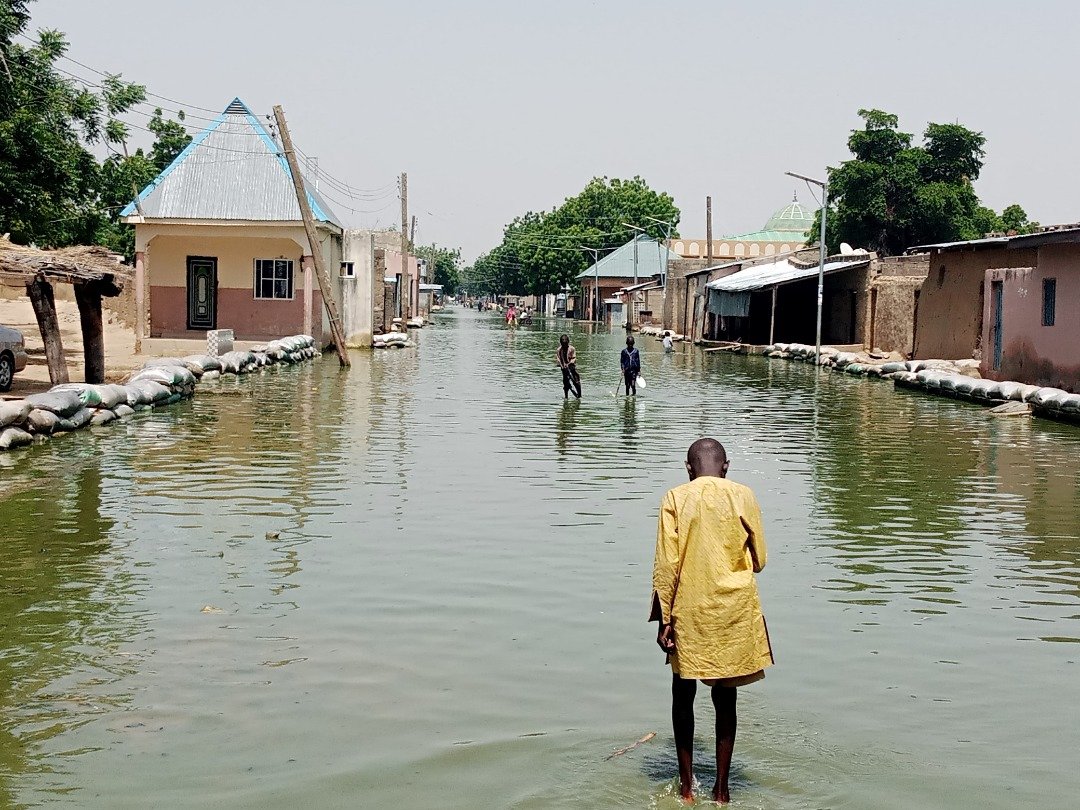
Experts report that Nigeria, yet again, may be staring down the barrel of a devastating flood season.Recently, the Nigerian Meteorological Agency, NiMET, predicted heavy rainfall in 13 states in the coming days. In a statement, it said that the affected states could experience flash floods on roads, bridges and low-lying areas which can disrupt vehicular traffic.
The states that are the focus of this prediction include Niger, Plateau, Benue, Kaduna, Taraba, Delta and Imo. Others are Cross River, Akwa Ibom, Rivers, Bayelsa, Ekiti and Osun states.
Moderate to heavy rainfall is also anticipated over parts of Zamfara, Kano, Borno, Gombe, Adamawa, Kogi, Kwara, Nasarawa, Ogun, Oyo, Ondo, Lagos, Edo, Enugu, Ebonyi and Anambra states.
Sadly, in our view, this grim forecast is a harsh reminder of the recurring flood catastrophes that have plagued the country, exacting a staggering toll on lives, livelihoods, and infrastructure.
The statistics paint a sobering picture. According to the National Emergency Management Agency (NEMA), at least 33,983 Nigerians were affected by flooding in 2023, with 7,353 displaced from their homes, 75 injured, and five lives lost.
Over 1,600 houses and 866 hectares of farmland have been utterly destroyed, dealing a crippling blow to food security efforts.
In 2022 alone, Nigeria lost an estimated $4.6 billion due to flooding according to estimates from NiMET
That’s a huge chunk out of the nation’s GDP, enough to severely dent any economic progress. Thousands were killed or injured while millions were displaced from their homes and lands, critical infrastructure destroyed just as agricultural production took a massive hit – worsening the nation’s food insecurity.
The fundamental issues that have turned flooding into an annual menace haven’t changed – poor drainage infrastructure, inadequate waste management, harmful environmental practices, and climate change. These factors, man-made and natural- have all conspired to make large swathes of Nigeria a disaster waiting to happen at the very first rains.
Authorities claim to have studied the problem inside out through numerous panels, committees, and deliberations.
However, what has been sorely lacking is implementing the recommended solutions with the urgency and commitment required to neutralise this recurring threat.
The recent reconstitution of the Presidential Committee on Flood Mitigation, Adaptation, Preparedness, and Response by the National Economic Council is a positive step, but its proposals need to move rapidly from pencil to pavement.
In the considered opinion of this newspaper, this annual ritual of destruction cannot be allowed to continue. It is an indictment on the entire process and points to a collective failure of public policy. It also indicates a lack of political will to implement robust, long-term strategies aimed at mitigating the scourge of flooding.
We believe the recommendations of the NEC committee would provide a blueprint for tackling this monumental challenge.
It is our opinion that putting in place a high-level National Flood Management Council under the office of the Vice President to coordinate response efforts, as well as earmarking dedicated annual budgets for flood prevention and control at all levels of government, could help build an institutional framework to finally get a handle on the crisis.
But those measures need to be accompanied by massive investments in drainage infrastructure upgrades, sustainable urban planning, reforestation efforts, and revamped disaster management systems.
Moreover, we must acknowledge the link between flooding and climate change. As global temperatures continue to rise and weather patterns become increasingly erratic, Nigeria’s vulnerability to extreme weather events accordingly amplifies.
It is imperative that our flood mitigation strategies are inextricably woven into broader climate change adaptation and mitigation policies, addressing root causes rather than merely treating symptoms.
Underpinning all these efforts must be a steadfast commitment to sustainable urban planning, infrastructure development, and environmental stewardship.
In our view, we must prioritise the construction of resilient infrastructure, enforce stringent zoning regulations, and promote eco-friendly practices that harmonise human habitation with the natural environment.
Collaboration and collective action are the lynchpins of success in this endeavor. Federal, state, and local authorities must forge seamless partnerships, transcending political affiliations and territorial boundaries.
Nigerians, on their part, must embrace a culture of preparedness and resilience. Community-led initiatives, such as drainage clearance, disaster response drills, and proactive relocation from high-risk areas, can play a pivotal role in mitigating the impact of floods.
Each year, floods claim innocent lives, decimate hard-earned livelihoods, and erode the nation’s economic progress. We owe it to the victims of past floods, and to future generations, to confront this challenge with the utmost urgency and determination.
We’ve got the edge. Get real-time reports, breaking scoops, and exclusive angles delivered straight to your phone. Don’t settle for stale news. Join LEADERSHIP NEWS on WhatsApp for 24/7 updates →
Join Our WhatsApp Channel