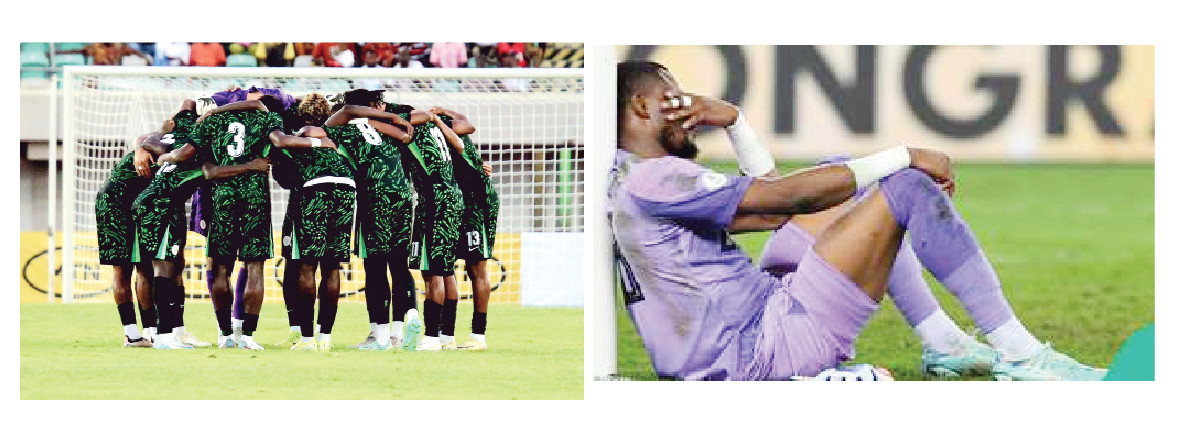
Following FIFA’s confirmation that DR Congo will represent Africa in the upcoming inter-confederation play-off tournament, effectively drawing a line under months of uncertainty for the Super Eagles and their supporters, SALIFU USMAN delves into the emotional impact of World Cup disqualification on Nigerian fans, players, and the football federation.
After months of anxious waiting, the Super Eagles’ hopes of participating in the upcoming FIFA World Cup have dimmed, leaving behind a landscape of profound disappointment stretching from passionate fans to the very heart of the Nigerian Football Federation (NFF). As the dust settles on this latest setback, the emotional impact ripples throughout the country, revealing a deep-seated connection between football and national identity.
The controversy stems from the CAF play-off final in November 2025. Following a gruelling match that ended 1–1, the Super Eagles lost to the Leopards of DR Congo in a penalty shootout. The Nigeria Football Federation (NFF) subsequently filed a formal protest with FIFA, seeking to overturn the result based on player eligibility.
The NFF alleged that DR Congo fielded between six and nine players—including high-profile names like Aaron Wan-Bissaka and Axel Tuanzebe—who they claimed were ineligible. The core of their legal argument was that DR Congo’s domestic law does not recognise dual citizenship. The NFF contended that since these players held European passports, they were not legal Congolese citizens under local law, thus rendering their FIFA clearance “fraudulent.”
However, by including DR Congo in the official tournament line-up circulated to global media, FIFA has signalled that its disciplinary committee found no merit in Nigeria’s claims to disqualify the Congolese. For Nigeria, this marks the second consecutive World Cup miss, following the Super Eagles’ absence from the 2022 edition in Qatar.
A Nation in Mourning
From Lagos to Abuja, the news of Nigeria’s disqualification has sparked an outpouring of grief. For many fans, football is not merely a sport; it is a lifeline, a source of pride, and an embodiment of national unity. The Super Eagles have long been a symbol of hope, representing Nigeria’s resilience and aspirations on a global stage. Now, facing an absence from the World Cup, fans are left grappling with feelings of betrayal, anger, and despair.
The irony is particularly bitter considering this generation is widely regarded as one of Nigeria’s most talented on paper, featuring stars who have excelled in Europe’s top leagues yet couldn’t replicate that success when it mattered most for their national team. Over the span of nine tournaments between 1994 and 2018, Nigeria qualified for six editions of the FIFA World Cup, reaching the round of 16 on three occasions (1994, 1998, and 2014). This consistent presence established Nigeria as Africa’s most reliable World Cup representative, with their vibrant style of play and iconic green kits becoming familiar sights to global audiences.
The expanded 2026 tournament, with 48 slots instead of 32, was supposed to make qualification more accessible than ever for African nations. Instead, Nigeria’s failure to secure one of Africa’s nine automatic places—followed by their play-off collapse—has raised alarming questions about the direction of the country’s football.
“I’ve been following the Super Eagles since I was a child,” says Samuel Okoro, a lifelong fan from Lagos. “This disqualification feels like a personal loss. We believed in them, and now we feel abandoned.” As he speaks, the weight of disappointment is palpable in his voice. Samuel is not alone; countless fans share his sentiments, each having invested time, emotion, and hope into the team’s journey.
The Qualification Campaign: A Tale of Missed Opportunities
The path to World Cup qualification is seldom straightforward, and for the Super Eagles, this campaign was riddled with challenges. While the exact reasons for their disqualification might be murky, the echoes of what went wrong during the qualification process are clear.
The campaign began with high hopes as Nigeria entered the qualifiers with a strong squad, buoyed by the talents of players like Victor Osimhen and Wilfred Ndidi. However, a series of lacklustre performances, compounded by injuries and tactical missteps, ultimately led to their failure to secure a spot. Matches that should have been won turned into missed opportunities, and the spectre of underperformance loomed large.
“This was supposed to be our time,” reflects Chika Nwosu, a football analyst and commentator. “But the reality is that we fell short when it mattered most. The players have to take responsibility, but the federation also needs to reflect on its role in this failure.”
The NFF’s management has come under scrutiny as fans demand accountability. Questions about the coaching staff, player selection, and even the federation’s financial decisions have come to the forefront. As Chika points out, “The federation needs to be transparent about its decisions, especially when so much is at stake for a nation that loves football.”
The Financial and Psychological Toll on the NFF
Beyond the emotional ramifications for fans, the financial and psychological toll on the Nigerian Football Federation cannot be overlooked. After an unsuccessful appeal regarding the disqualification, the NFF is facing a crisis of its own. The costs associated with the qualification campaign, coupled with the fallout from disqualification, have left the federation in a precarious position.
According to sources within the NFF, the financial implications are severe. Sponsorship deals hinge on the national team’s performance, and a failure to qualify for the World Cup could result in significant loss of revenue. “Companies invest in the Super Eagles because they believe in the brand,” explains a senior NFF official who wishes to remain anonymous. “Without the World Cup, we risk losing that investment, which could have long-term consequences for Nigerian football.”
Psychologically, the disqualification has left the NFF reeling. The federation has been under immense pressure to deliver results and foster development at all levels of the sport. “Our credibility is on the line,” the official continues. “We need to regain the trust of the fans and sponsors alike. It’s a tough battle, and we must rise to the occasion.”
Voices of Disappointment
In the aftermath of the disqualification, interviews with fans reveal a spectrum of emotions. “We were so close,” says Adaobi Eze, a university student and passionate supporter. “I had been planning a watch party for the World Cup. Now, what do I do with all that excitement? It’s heartbreaking.” Her friends nod in agreement, each echoing the shared sense of loss.
For others, the disappointment has ignited a call for change. “This is a wake-up call for Nigerian football,” asserts Emeka Oluwaseun, a former semi-professional player. “We can’t keep repeating the same mistakes. It’s time for a new vision, new leadership. We need to invest in grassroots development and ensure that our young talents have a pathway to success.”
While the blame game continues, the disappointment of not seeing Nigeria’s green-white-green flag at the 2026 World Cup will not only be felt by the fans but also by the players. More than 80 per cent of the current Super Eagles squad may never feature in a World Cup before their careers end. Aside from Captain Wilfred Ndidi, Alex Iwobi, and Chidozie Awaziem, none of the current players in the Super Eagles set-up have featured in the Mundial. Most of them may no longer be playing at the World Cup level for the next edition of the competition in 2030 due to age or other variables in the game.
Broader Implications for Nigerian Football Development
The fallout from the Super Eagles’ disqualification extends beyond this immediate setback. As Nigerian football navigates these turbulent waters, the implications for development are profound. The disqualification has reignited discussions about the need for structural reforms within the NFF and the broader football ecosystem.
In recent years, critics have pointed to a lack of investment in youth programmes and coaching infrastructure. “We need to build a sustainable model for football development in Nigeria,” argues Chika Nwosu. “This isn’t just about the Super Eagles; it’s about creating a robust system that nurtures talent from the ground up.”
Furthermore, the emotional impact on fans cannot be underestimated. Football has the power to unite a nation, and the disqualification serves as a stark reminder of the fragility of hope. As Nigeria grapples with its footballing identity, the passion of the fans remains unwavering. “We’ll always support our team,” says Samuel Okoro. “But we need to see real change. We deserve better.”
A Call to Action
As the dust settles on this chapter of disappointment, the call for action resonates loudly within Nigerian football. Both fans and stakeholders agree that change is necessary, and it must come from a collective effort to rebuild trust, invest in the future, and foster a culture of accountability.
In the shadows of disappointment lies a glimmer of hope. The passion of the fans, the resilience of the players, and the commitment of the NFF can serve as a foundation for a new era in Nigerian football. “This is a setback, but it can also be a turning point,” reflects Chika Nwosu.
“If we take the right steps, we can emerge stronger and more united.”
As Nigeria looks towards the future, the lessons learned from this disqualification will shape the trajectory of the nation’s footballing aspirations. The Super Eagles may be absent from the World Cup, but the spirit of Nigerian football burns bright, waiting for the day it can soar to new heights once again.
In this moment of reflection, the message is clear: while dreams may fade, the passion for football and the hope for a brighter future endure. Nigeria’s footballing journey is far from over; it is merely a chapter in a larger story that continues to unfold.
We’ve got the edge. Get real-time reports, breaking scoops, and exclusive angles delivered straight to your phone. Don’t settle for stale news. Join LEADERSHIP NEWS on WhatsApp for 24/7 updates →
Join Our WhatsApp Channel