The Federal Government has reaffirmed its commitment to press freedom, democratic accountability, and the protection of Nigeria’s information space, insisting that the administration of President Bola Tinubu remained fully aligned with global norms of media independence.
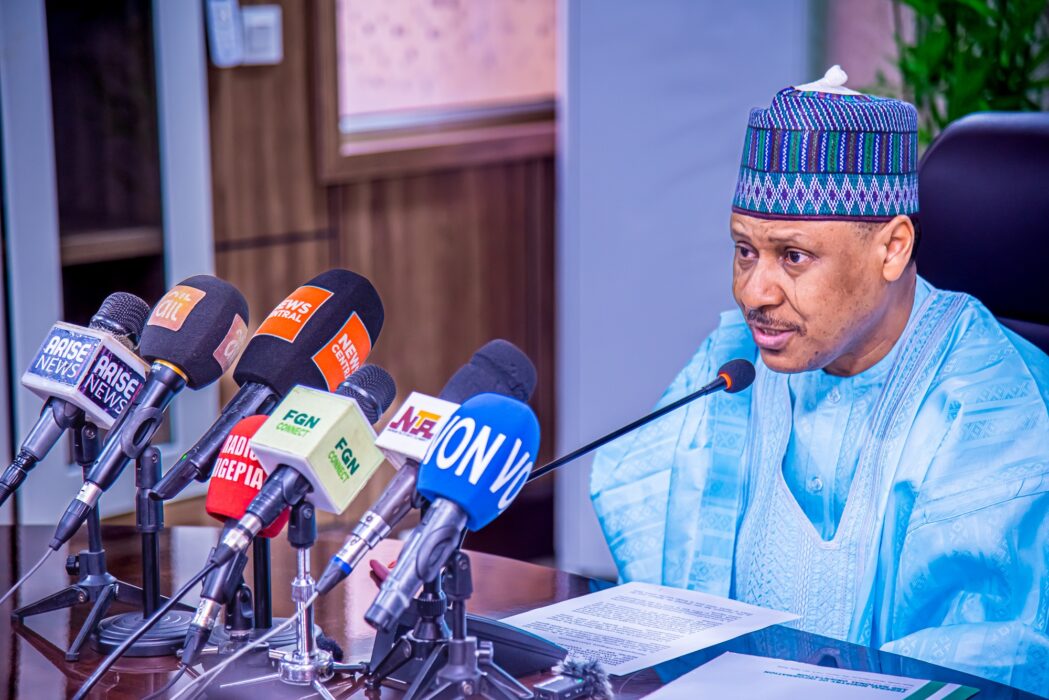
Minister of Information and National Orientation, Mohammed Idris, stated this on Tuesday in Abuja while speaking at the International Press Institute (IPI) Annual Congress and General Meeting.
Idris described the media as “the central nervous system of any democracy, and the amplifier of citizens’ voices.”
He noted that the attendance of Vice President Kashim Shettima at the opening session demonstrated the government’s openness to continuous engagement with journalists.
Responding to the theme, “Addressing Media Repression in Nigeria”, Idris said it was important to distinguish between Nigeria’s historical challenges with press freedom and the realities under the current administration.
He stressed that no government policy—formal or informal—exists to repress the media, adding that available evidence showed restraint and cooperation rather than hostility.
“A dialogue on freedom must be grounded in fact. If anyone claims there is an active policy of repression today, we should test that claim against the evidence,” he said.
The Minister noted that security agencies now operate under stricter protocols to ensure the safety of journalists, particularly during protests and in conflict-prone areas.
He added that regulatory bodies continued to maintain a safe, predictable and fair environment for media organisations.
“A free press is indispensable. Journalists must be able to work without intimidation or interference, and this government has been consistent on that point,” he added.
Idris referenced a recent incident where a major newspaper published a false report alleging that Nigeria had signed an agreement requiring the adoption of LGBTQ+ rights.
He said that despite the potential for such falsehoods to heighten cultural and religious tensions, the government chose transparency over confrontation.
“The federal government published the full text of the agreement, issued factual clarifications, engaged the public openly, and lodged complaints through the independent media ombudsman. We did not apply pressure or coercive measures. We chose facts,” he said.
The Minister further announced that Nigeria has been selected to host the Regional Media and Information Literacy (MIL) Institute for Africa, which will train journalists, educators, and citizens in ethical reporting, fact-checking, and combating disinformation within African cultural contexts.
He stressed that the institute will operate as a neutral, knowledge-based platform, not a government mouthpiece, and will support the strengthening of democratic information systems across the continent. The formal launch is scheduled for the first quarter of 2026, with all organisations at the congress invited to participate.
Idris reaffirmed the government’s readiness to collaborate with IPI Nigeria, the Nigerian Guild of Editors (NGE), and the Nigeria Union of Journalists (NUJ) to modernise media regulatory frameworks in line with global best practices while safeguarding free expression and the public interest.
“Our shared duty is not only to challenge repression but to expand freedom. Let us strengthen the foundations of our democracy by protecting the freedoms that sustain it,” the Minister stated.
We’ve got the edge. Get real-time reports, breaking scoops, and exclusive angles delivered straight to your phone. Don’t settle for stale news. Join LEADERSHIP NEWS on WhatsApp for 24/7 updates →
Join Our WhatsApp Channel