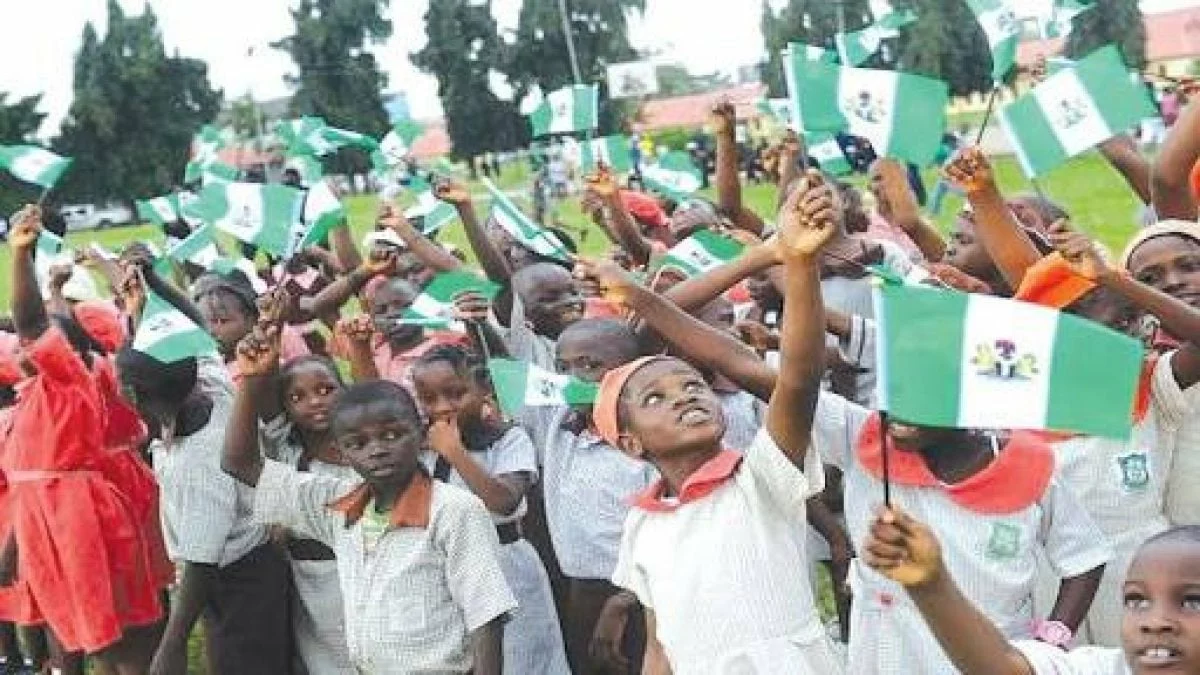
Decades ago, Nigerian children looked forward to celebrating Children’s Day on every May 27 with fanfare and hopes for the future. Not anymore.
As Nigeria marks the 2026 Children’s Day with the theme, “Future Now: Promoting Inclusion for Every Nigerian Child,” the year’s celebration should evoke sober national reflection. For millions of Nigerian children, the promise of childhood is unclear. For most of them, their experience is shaped by hunger, fear, abuse, exclusion, illiteracy, violence and abandonment. Indeed, for the average Nigerian child, it is not yet Uhuru.
The uncomfortable truth is that Nigeria has not made the country conducive for its children’s present and future. While a few government officials will put out statements extolling the virtues of inclusion and child protection, the grim statistics paint a far more troubling picture. Nigeria today hosts one of the most endangered child populations in the world.
Nothing illustrates this tragedy more starkly than the country’s education crisis. Nigeria currently has approximately 18.3 million out-of-school children — the highest figure globally. This means that one in every five out-of-school children in the world is Nigerian. About 66 per cent of out-of-school children are concentrated in the North-East and North-West, regions ravaged by insurgency, banditry and mass displacement. Thousands of schools have been shut due to insecurity, while attacks on educational institutions have turned classrooms into places of violence. Since the Chibok abduction in 2014, more than 1,700 students are reported to have been kidnapped from schools. This has serious implications for child development, the latest being the Oyo schools’ attack whose victims, including a two-year-old child, are still in captivity.
It is not only in lack of access to education that Nigerian children are limited. With a worsening economy, hunger and malnutrition are serious challenges to millions of households. Nigeria has the second-highest burden of stunted children globally, with more than 11 million children experiencing severe food poverty. About 32 per cent of children under five are stunted, while roughly two million suffer from severe acute malnutrition.
They do not fare better in terms of healthcare. Nigeria continues to bear the world’s highest burden of under-five mortality. Between 115 and 128 children die before their fifth birthday for every 1,000 live births. In practical terms, one in every eight Nigerian children dies before the age of five. Nearly one million children die annually from largely preventable causes, including malaria, diarrhoea, respiratory infections and malnutrition.
The crisis of displacement further compounds the vulnerability of Nigerian children. Of the more than 3.7 million internally displaced persons across the country, women and children constitute nearly 70 per cent. Many of these children live in camps under appalling conditions, deprived of education, healthcare and proper nutrition.
There is also the scourge of child labour. According to the National Bureau of Statistics and the International Labour Organisation, about 24.67 million Nigerian children between the ages of five and 17 are engaged in child labour. More than 14 million are involved in hazardous work capable of damaging their health, safety and overall psycho-social development. The economic pressure on families means that children are engaged in adult works including street hawking, artisanal mining and dangerous farm among other work.
As Nigerian children mark this year’s event, the Nigerian state must move beyond ceremonial speeches and adopt concrete, measurable actions to rescue the nation’s children. First, all states of the federation that are yet to fully domesticate and implement the Child Rights Act must do so without delay. Laws protecting children from abuse, exploitation, child marriage, trafficking and forced labour must not merely exist on paper; they must be enforced with seriousness and consistency. Security agencies and the judiciary must ensure swift prosecution of offenders who violate children’s rights.
Government must also declare a national emergency in education, especially in regions ravaged by insecurity. Schools must be rebuilt, secured and adequately staffed. The Safe Schools Initiative should be strengthened, while targeted incentives should be introduced to encourage girl-child education in vulnerable communities. Education must genuinely become free and accessible for poor families, with investments in school feeding programmes and learning materials and digital infrastructure.
In healthcare, primary healthcare centres across rural communities must be revitalised and properly funded. Maternal and child healthcare services should be prioritised, while nutrition programmes targeting pregnant women and children must be expanded urgently.
Poverty remains the biggest cause of child labour, trafficking and school dropout rates. Economic support for struggling families, especially in rural areas and conflict zones, would significantly reduce the pressures forcing children into labour and early marriage.
Furthermore, the welfare of internally displaced children should be given attention. A generation raised in Internally Displaced Persons (IDP) camps and trauma poses grave risks to national stability in the future.
The theme of the 2026 Children’s Day is on inclusion. This inclusion must translate to safe schools, functional healthcare centres, nutritious food, clean water, protection from violence and equal opportunity for every Nigerian child regardless of the status of their parents.
Nigeria owes its children a safe environment to grow and develop to their fullest potential. Only good, purposeful leadership at all levels of government can ensure that.
We’ve got the edge. Get real-time reports, breaking scoops, and exclusive angles delivered straight to your phone. Don’t settle for stale news. Join LEADERSHIP NEWS on WhatsApp for 24/7 updates →
Join Our WhatsApp Channel