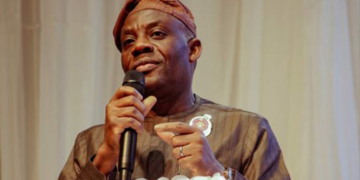
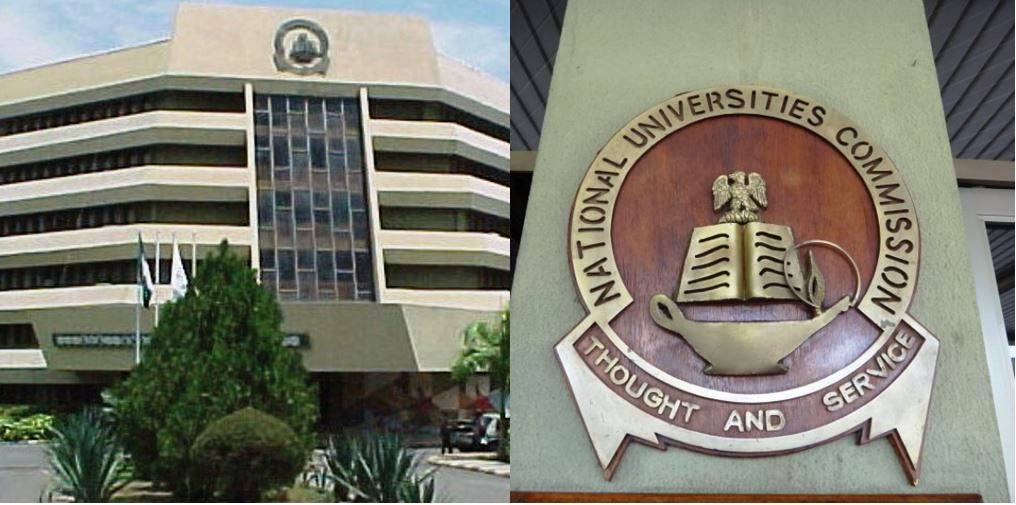
The Executive Secretary of the National Universities Commission (NUC), Professor Abdullahi Yusufu Ribadu, has inaugurated a reconstituted Committee on Degree Mills as part of renewed efforts to curb the proliferation of illegal universities and protect the integrity of the Nigerian University System.
The Commission announced this via a publication on its official website.
Speaking during the inauguration at the Commission’s headquarters in Abuja, Ribadu said the committee was constituted to strengthen institutional mechanisms aimed at confronting activities that undermine the credibility and quality of degrees awarded in Nigerian universities.
He noted that the menace of degree mills continues to threaten the reputation of the country’s higher education system and therefore requires coordinated action involving regulatory authorities and security agencies.
The committee is chaired by the NUC Director of Inspection and Monitoring, Mrs Justina Emerole. Other members include Visiting Professors Beatrice O. Emma-Okon and Ahmed Doko Ibrahim; Deputy Director, Legal Services, Directorate of Executive Secretary’s Office, Barrister Pascal Eruaga; deputy Director, Resource Programme and Planning, Directorate of Academic Planning, Dr Mohammed Ayuba.
Others are; deputy Director, Academic Matters, Directorate of Establishment of Private Universities, Barrister Umma Kaltume Giwa-Amu; Deputy Director, Undergraduate Programme Accreditation, Directorate of Accreditation, Dr Bashir Dauda; Deputy Director, E-Learning Division, Directorate of Open, Distance and e-Learning, Dr Hadu Gabriel Ligari; and Chief Legal Officer, Legal Services Division, Barrister Aaron K. Zamani, who will serve as member-secretary.
Addressing members of the committee, Ribadu said the initiative reflects the Commission’s determination to tackle the growing challenge posed by illegal institutions and fraudulent academic programmes.
He said the committee would play a critical role in identifying and investigating degree mills, as well as strengthening the Commission’s response through policy recommendations and collaboration with relevant agencies.
According to him, the committee is expected to identify institutions or entities operating as degree mills in Nigeria under any guise.
He said members would rely on intelligence reports, public complaints, petitions and surveillance information received from stakeholders to track such illegal operators.
The Executive Secretary further explained that the committee would conduct diligent and discreet investigations into identified institutions, including their promoters, operational methods and locations.
He added that evidence gathered during the investigations would be forwarded to relevant authorities for prosecution where necessary.
Ribadu said the committee would also verify claims by illegal operators who often attempt to legitimise their activities by falsely claiming affiliations with recognised local or foreign universities.
He stressed the need for strong collaboration between the NUC and security agencies to effectively combat the activities of degree mills.
According to him, the committee will work closely with agencies such as the Independent Corrupt Practices and Other Related Offences Commission, Department of State Services, Nigeria Police Force, Economic and Financial Crimes Commission and the Nigeria Security and Civil Defence Corps.
He explained that the collaboration would help in arresting operators of illegal institutions, shutting down unlawful facilities and prosecuting offenders.
The committee will also facilitate joint operations and awareness initiatives involving multiple agencies to ensure effective enforcement against illegal institutions.
Ribadu emphasised that public sensitisation would remain a major component of the committee’s work.
He said the committee is expected to develop strategies for raising public awareness on the dangers of patronising degree mills and other fraudulent academic institutions.
The Executive Secretary added that the committee would provide verified information on identified illegal institutions and issue periodic advisories to universities, employers and members of the public.
Ribadu also charged the committee to provide policy advice and strategic recommendations that would help the Commission prevent the emergence of new degree mills.
He explained that the committee would propose regulatory, legislative and operational reforms aimed at strengthening the NUC’s capacity to tackle the problem.
According to him, the panel would also guide the Commission on institutional processes such as the verification of foreign degrees, accreditation safeguards and other quality assurance measures within the Nigerian University System.
The Executive Secretary urged members of the committee to approach their assignment with diligence and integrity.
In her response, the committee’s chairman, Mrs Justina Emerole, thanked the Executive Secretary for the confidence reposed in the members through the reconstitution of the committee.
She described the assignment as both a privilege and a responsibility, assuring the Commission that the committee would work diligently to achieve its mandate.
Emerole commended Ribadu for his leadership and commitment to strengthening the quality of higher education in Nigeria.
She pledged that the committee would not disappoint the Commission and would make meaningful contributions towards addressing the challenge of illegal institutions.
We’ve got the edge. Get real-time reports, breaking scoops, and exclusive angles delivered straight to your phone. Don’t settle for stale news. Join LEADERSHIP NEWS on WhatsApp for 24/7 updates →
Join Our WhatsApp Channel