Vice-President Kashim Shettima has criticised former Anambra State Governor Peter Obi, saying the presidential candidate of the Nigeria Democratic Congress (NDC) has nothing to offer Nigerians beyond citing statistics.
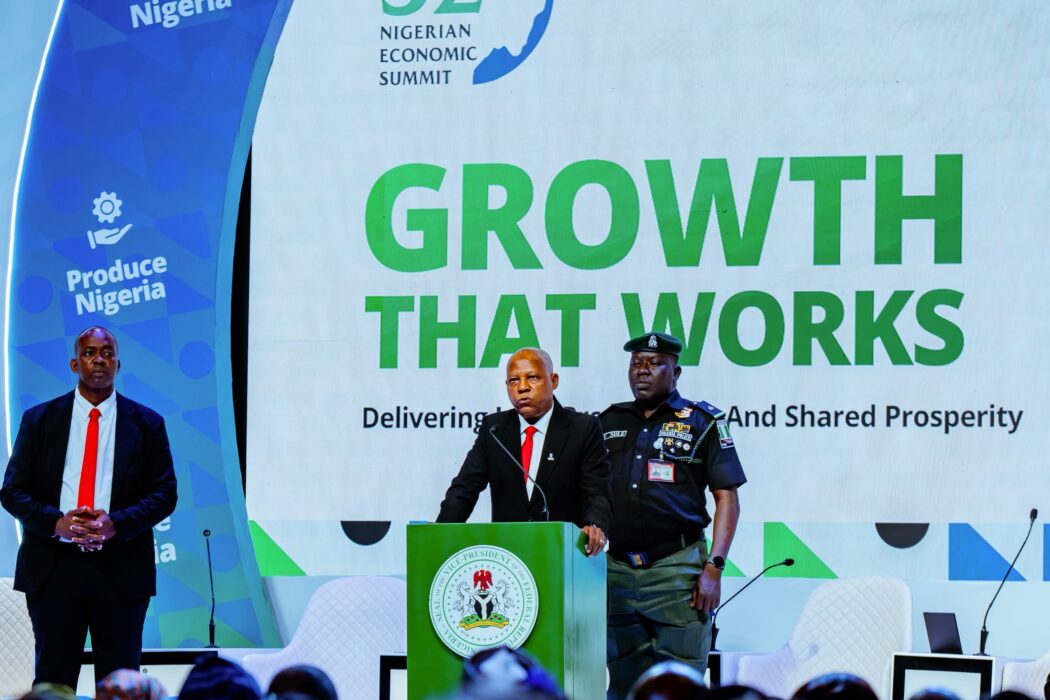
Shettima made the remarks on Monday at the 32nd Nigerian Economic Summit in Abuja, where he called on members of the country’s economic community to support the economic policies of President Bola Tinubu’s administration.
The vice-president also defended the removal of petrol subsidy, arguing that the policy had addressed distortions in the country’s fuel pricing regime and discouraged the use of subsidised Nigerian petrol in neighbouring countries.
“I respect Peter Obi for having the courage to say he’s not going to restore the petrol subsidy, but beyond spouting some statistics, Mr Peter Obi has absolutely nothing to offer,” Shettima said.
He added, “He was surviving on various statistics. So, I call on you, the crème de la crème of the Nigerian economic community, to support us.”
To defend the government’s fuel pricing policy, Shettima compared petrol prices in Nigeria with those in neighbouring countries, arguing that the figures illustrated the implications of the previous subsidy arrangement.
According to him, Nigeria consumed approximately 67 million litres of petrol daily a few years ago.
He said a litre of petrol sold for approximately N1,148.36 in Niger Republic, N1,729.29 in Benin Republic and N1,945.50 in Cameroon, compared with N1,390 in Nigeria.
“The comparison is wide. Nigeria was Christmas for other African countries,” he said.
Shettima’s comments came amid continuing debate over the economic impact of subsidy removal and the policy alternatives being canvassed by opposition politicians ahead of the 2027 general elections.
At the same summit, the vice-president also criticised former Vice-President Atiku Abubakar over his reported proposal to restore petrol subsidy if elected president, arguing that the move would reverse the government’s economic reforms.
Shettima defended President Tinubu’s decision to remove the subsidy, saying the president took the difficult step because he understood the country’s economic realities.
“The president took those painful decisions because he understands the dynamics,” he said.
The Tinubu administration has maintained that subsidy removal was necessary to address fiscal pressures and economic distortions, while the policy and its impact on living costs remain subjects of public debate.
We’ve got the edge. Get real-time reports, breaking scoops, and exclusive angles delivered straight to your phone. Don’t settle for stale news. Join LEADERSHIP NEWS on WhatsApp for 24/7 updates →
Join Our WhatsApp Channel