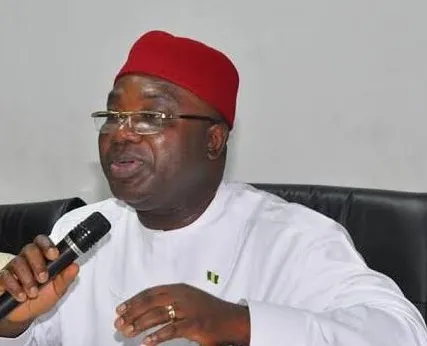
The executive secretary of the National Human Rights Commission, Dr Tony Ojukwu, has called for urgent global action toward adopting a legally binding international convention to safeguard the rights of older persons.
Ojukwu made the appeal in Geneva during the February 2026 session of the Intergovernmental Working Group on the Rights of Older Persons, convened on the margins of the UN human rights meetings.
Addressing delegates, the NHRC boss warned that older persons across the world continue to face discrimination, neglect, abuse and systemic exclusion, stressing that only a binding international instrument can effectively close existing protection gaps.
The forum was organised by the Office of the High Commissioner for Human Rights during the session of the Human Rights Council, where governments and stakeholders reviewed progress on advancing the rights of ageing populations.
Ojukwu aligned with global stakeholders on the need for clearer conceptual understanding of ageism and called for broad-based national consultations to ensure inclusivity in shaping the proposed treaty.
He emphasised that collaboration among national human rights institutions, civil society groups, older persons and youth would be critical to achieving a universally accepted convention.
According to him, the process must build strong ownership among stakeholders, avoid abstract debates, and deliver a practical and enforceable framework that protects the dignity and rights of the elderly both now and in the future.
He further proposed that the working group’s rules of procedure draw lessons from existing UN open-ended working groups, with necessary adjustments to enhance clarity and participation. Ojukwu also suggested that friendly states or experts be mandated to produce an initial draft of the proposed instrument ahead of the group’s July 2026 meeting, to serve as the basis for negotiations and consultations.
Reaffirming Nigeria’s commitment to human rights obligations, the NHRC chief urged that national human rights institutions and civil society actors remain fully mainstreamed in the process, describing them as society’s “conscience” in the protection of vulnerable groups.
He advocated hybrid meeting formats to broaden participation of older persons and relevant stakeholders, noting that inclusive engagement would strengthen legitimacy and global acceptance of the convention.
Ojukwu concluded by reiterating the guiding human rights principles of “leave no one behind” and “nothing about us without us,” stressing that the voices and lived experiences of older persons must shape any future international legal framework designed to protect them.
We’ve got the edge. Get real-time reports, breaking scoops, and exclusive angles delivered straight to your phone. Don’t settle for stale news. Join LEADERSHIP NEWS on WhatsApp for 24/7 updates →
Join Our WhatsApp Channel