
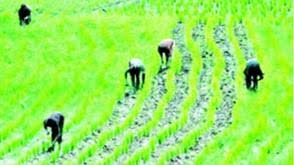
The leadership of the All Farmers Association of Nigeria (AFAN), Lagos State chapter, has raised concerns over the dominance of subsistence farming in the country, attributing low productivity in the agricultural sector to poor adoption of mechanisation.
The association said about 70 per cent of Nigerian farmers still operate at subsistence level, while only 30 per cent currently make use of mechanised farming tools.
The Deputy Chairman of AFAN in Lagos State, Mr. Shakin Agbayewa, who disclosed this in Lagos, said the situation is largely driven by poor access to land, finance, and modern farm equipment.
According to him, most farmers still depend on crude implements and manual labour, a development he said has limited productivity and hindered expansion into commercial-scale agriculture.
“Most farmers in Nigeria today are still subsistence farmers. We are not yet operating fully on a commercial basis. If you are talking about the percentage of farmers using mechanised tools, it is still very low. Only about 30 per cent can be said to have access to mechanisation,” he said.
Agbayewa blamed the inability of farmers to access mechanisation equipment such as tractors and other modern tools for the low level of inclusion in modern agricultural practices.
He noted that the cost of hiring tractors and paying operators has become a major burden for many rural farmers.
In spite of the challenges, he stressed that mechanised farming offers higher productivity and stronger long-term returns on investment.
“Mechanisation may be expensive in the short term, but in the long term, it is profit upon profit,” he said.
Agbayewa added that farmers who adopt mechanisation are able to cultivate larger farmlands, save time, and reduce post-harvest losses.
He further explained that such farmers also record better yields, as land preparation and planting are carried out more efficiently.
According to him, many Nigerian farmers are unable to benefit from these advantages due to high equipment costs, foreign exchange pressures, and rising fuel prices.
He said improved mechanisation would boost food production, reduce labour stress, and make farming more attractive to young Nigerians.
Agbayewa called on the federal and state governments to establish tractor hiring centres, farm service clusters, affordable equipment leasing schemes, and low-interest financing programmes for farmers.
He also urged increased local manufacturing of farm equipment and improved access to spare parts to reduce dependence on imports.
According to him, expanding access to mechanisation is critical to achieving food security, reducing food imports, and transforming agriculture into a profitable enterprise.
He added that increased mechanisation would also enhance the competitiveness of Nigerian agriculture and attract more young entrepreneurs into the sector.
We’ve got the edge. Get real-time reports, breaking scoops, and exclusive angles delivered straight to your phone. Don’t settle for stale news. Join LEADERSHIP NEWS on WhatsApp for 24/7 updates →
Join Our WhatsApp Channel