OPay has dismissed a viral social media claim that it would suspend operations indefinitely from September 1, 2026, highlighting the growing use of fabricated information to confuse customers about financial services in Nigeria.
The false publication, circulated across social media, urged the company’s customers to withdraw or transfer their funds ahead of the alleged shutdown.
In an email sent to customers today at 6:36 am, the digital payment platform described the publication as “false and misleading,” even as it stressed that its services remain fully operational.
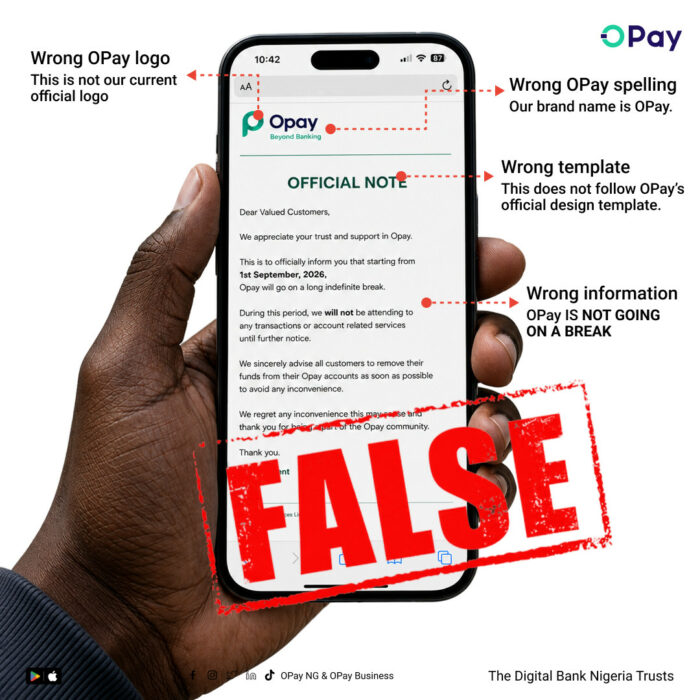
The email attached a description of the image used in the dissemination of the fake news that differs from the current company’s logo, spelling, wrong template and brand name
“This claim is completely false. OPay is not going on any break. We remain fully operational, and our services continue as normal,” the company said.
The platform said the circulating notice was not an official communication and urged customers to verify information through its verified channels before acting on or sharing such claims.
The latest incident is not isolated. Fake social media accounts, fabricated offers and false announcements have repeatedly targeted financial institutions and digital payment platforms in Nigeria.
In January, fact-checkers exposed several Facebook pages impersonating First Bank and offering bogus loans, while similar accounts posing as GTBank were found offering fake loans to Nigerians in March.
The financial firm itself has previously been targeted by fabricated social media campaigns. In 2024, false posts claimed the fintech was offering N100,000 giveaways and N150,000 grants, while other fake pages offered loans in its name.
In another case, a 2024 false report claimed the company was leaving the Nigerian market and advised customers to withdraw their funds. The company denied the claim at the time.
The recurrence of such claims raises concerns about a spate of misinformation on social media, particularly where false messages involve customers’ money. A fabricated shutdown notice can trigger panic withdrawals, unnecessary transfers and potentially expose users to fraudsters waiting to exploit the confusion.
The problem is compounded when false messages are presented in the format of official notices, using corporate logos, familiar language or links designed to make them appear legitimate.
For digital financial users, the digital payment platform’s incident reinforces the need to verify claims involving service suspensions, account closures, withdrawals, giveaways or financial offers through official channels before taking action.
However, the wider challenge is how social media platforms and regulators can limit the spread of fabricated financial information before it translates into financial losses or undermines confidence in Nigeria’s rapidly expanding digital payment ecosystem.
We’ve got the edge. Get real-time reports, breaking scoops, and exclusive angles delivered straight to your phone. Don’t settle for stale news. Join LEADERSHIP NEWS on WhatsApp for 24/7 updates →
Join Our WhatsApp Channel