
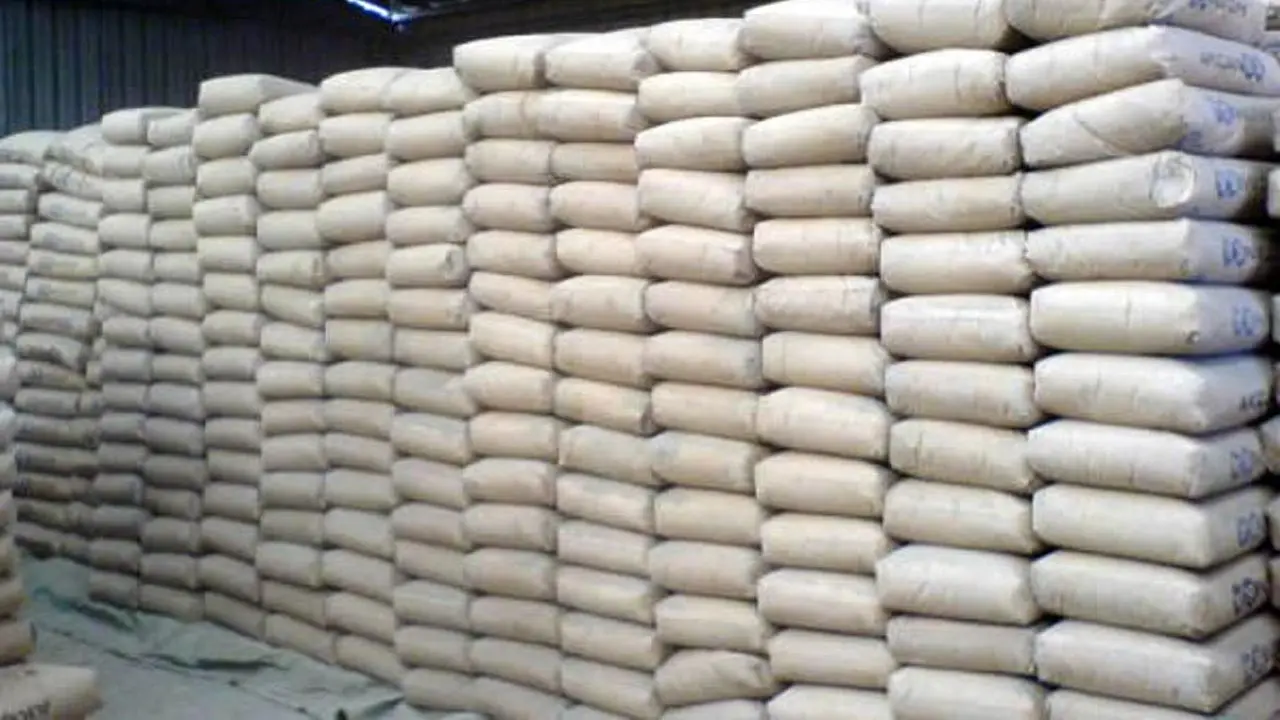
The persistent rise in cement prices in Nigeria has renewed calls for policy reforms amid stakeholders in the construction sector struggling with escalating building costs.
A policy report by Agora Policy, a Nigerian think-tank and non-profit organisation focused on practical solutions to national challenges, has identified market concentration and weak competition as major drivers of high cement prices in the country.
In the policy document titled “Market Power and Failure of Competition Policy in Nigeria’s Cement Industry”, made available on Tuesday, Agora Policy noted that despite Nigeria achieving self-sufficiency in cement production, the market remains highly concentrated.
According to the report, three dominant producers control the bulk of the market and enjoy average profit margins of about 49 per cent.
The think tank observed that as government and industry stakeholders continue to deliberate on solutions, there is a growing demand for reforms to promote competition, regulate prices, and ensure affordable cement for consumers.
Proposed measures include liberalising the cement market, issuing additional manufacturing licences, and addressing energy costs and logistics bottlenecks.
“The recent public discourse surrounding the cement industry in Nigeria has highlighted the notably high prices despite the impressive profitability of the three leading producers controlling the market,” the report stated. “This scenario raises important questions and suggests a need for deeper analysis.”
According to Agora Policy, Nigeria’s installed cement capacity has exceeded domestic demand since achieving formal self-sufficiency in 2012. Under normal economic conditions, such a surplus would be expected to result in lower prices.
“However, cement prices in Nigeria remain high, with reported average core operating profit margins among producers nearing 49 per cent as of September 2025,” the report said. This figure, it added, far exceeds margins in North America (20–36 per cent), Asia (15–25 per cent), and other parts of Africa (18–30 per cent).
While cement producers often attribute high prices to taxes, energy costs, transportation challenges, and financing constraints, Agora Policy questioned this explanation, noting that Nigerian cement is sometimes sold at lower prices in export markets than locally.
“If costs are the primary constraint, why can these producers sell cement abroad at lower prices than what is charged domestically?” the report asked, suggesting that market structure and pricing power play a significant role alongside cost pressures.
The report disclosed that as of the end of 2024, Nigeria’s cement production capacity stood at about 65 million tonnes per annum, more than double the estimated domestic demand of 32 million tonnes. This, it argued, creates room for competitive pricing, which has yet to materialise.
Providing historical context, Agora Policy explained that the current market dynamics stem from policies introduced in the late 1990s and early 2000s, when local cement production fell short of national demand.
At the time, government interventions, including import protection, preferential foreign exchange access, tax exemptions, and exclusive limestone mining concessions, were designed to attract investment and achieve self-sufficiency.
“By 2012, the production side of this strategy had largely succeeded, transforming Nigeria from a net importer to an occasional exporter of cement,” the report said. “However, the expected outcomes on the consumption side—particularly competitive pricing—have not materialised.”
Instead, the market has consolidated into what the report described as a concentrated oligopoly marked by sustained high prices and profit margins. This development, it argued, warrants a re-evaluation of whether existing fiscal, trade, and competition policies still align with their original objectives.
“As cement is a critical input with wide-ranging economic implications, a key policy question arises: is the current framework truly aligned with the public interest, or are reforms needed to better support Nigeria’s development goals?” the report queried.
Agora Policy concluded by stressing the need for a constructive dialogue among regulators, industry players, and policymakers to optimise competition, promote affordability, and ensure the cement industry supports Nigeria’s broader economic and infrastructure ambitions.
We’ve got the edge. Get real-time reports, breaking scoops, and exclusive angles delivered straight to your phone. Don’t settle for stale news. Join LEADERSHIP NEWS on WhatsApp for 24/7 updates →
Join Our WhatsApp Channel