
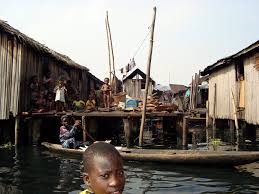
Nigeria is among other oil and gas producers profiled in a recent report that have failed to use proceeds of oil and gas exploration to turn around its economy and livelihoods of citizens.
Across Africa, more than anywhere else, oil and gas production has fallen far short of its promise as an engine of economic development.
A report published by NGO Oil Change International and think tank Power Shift Africa argues that the industry was never designed to build resilient local economies, but rather to serve export markets and maximize returns for multinational corporations.
Titled Pipe Dreams: How Oil and Gas Fail to Deliver Economic Development in Africa, the report examines the experiences of 13 African oil and gas producers, including Nigeria, Angola, Equatorial Guinea and Libya, drawing on peer-reviewed publications, official data and independent research.
Across all 13 countries, decades of hydrocarbon extraction have neither reduced poverty nor meaningfully stimulated economic growth. Instead, the report finds, the benefits have accrued largely to a small elite, deepening the vulnerability of the majority, entrenching inequality and perpetuating dependence.
African oil and gas producers are also not immune to energy crises or price volatility. These countries export crude oil while importing more expensive refined products such as diesel and gasoline.
Hundreds of millions of people across the continent — including in resource-rich nations like Nigeria, Equatorial Guinea and Mozambique — still lack access to electricity or clean cooking solutions.
The economics of oil and gas are structured to concentrate and export wealth while shifting costs onto governments and local communities. In major producers such as Nigeria and Angola, roughly 40 percent of the population continues to live in extreme poverty — on less than three dollars a day — despite decades of oil extraction. According to the African Export-Import Bank (Afreximbank), most African oil-exporting countries have recorded lower economic growth and higher inflation than their less resource-dependent peers in recent years.
This failure stems from an extractive model dominated by multinational oil companies, which often capture a disproportionate share of revenues through lopsided contractual terms or complex accounting arrangements. Under the Coral South project in Mozambique, which began producing gas in 2023, the government will not receive significant revenues until the mid-to-late 2030s, as contract clauses allocate the bulk of early earnings to foreign companies.
The oil and gas sector also operates largely in isolation from the broader economy. Services and equipment are typically imported, while products and profits are exported.
The industry generates remarkably few jobs, even when hydrocarbons account for a substantial share of GDP.
The oil sector employs just 0.01 per cent of the workforce in Nigeria, 0.3 per cent in Angola and 0.1 per cent in the Republic of Congo.
This enclave effect is especially pronounced with floating offshore installations, which companies can tow into position and load onto tankers with minimal integration into local economic life.
Rather than supporting other sectors, hydrocarbon extraction often undermines them. At the local level, toxic spills and the destruction of arable land devastate agriculture and fishing. At the national level, oil and gas revenues drive up exchange rates, eroding the competitiveness of other export industries, particularly manufacturing and agricultural products.
This dynamic is a textbook illustration of the “Dutch disease” and the so-called “resource curse,” a concept popularized in the 1990s by British economist Richard Auty. His thesis holds that economies heavily reliant on commodity exports tend to grow more slowly and are more prone to corruption, widespread poverty, weak institutions, environmental degradation and internal conflict.
In Nigeria’s Niger Delta, persistent oil spills have devastated farmland and severely depleted fish stocks, while gas flaring has degraded soil quality and permanently undermined fertility. The result has been a poverty spiral, as the primary sources of livelihood have been destroyed.
The report also highlights how the highly lucrative, extractive and elite-driven nature of the oil and gas industry makes it especially vulnerable to corruption. Nearly every African oil-producing country has been implicated in scandals involving hydrocarbon revenues. In one particularly striking case, senior executives at French company Elf diverted approximately $350 million in company funds between 1989 and 1993. Beyond purchasing villas, jewelry and artworks for personal use, they paid bribes to political officials in Gabon, Angola, Cameroon and the Republic of Congo. In 2003, 37 senior Elf executives were convicted on various corruption-related charges.
Unexpected drops in global oil prices, meanwhile, trigger cycles of collapsing public services, unemployment and macroeconomic contraction in oil-dependent economies. Paradoxically, oil and gas producers accumulate debt both during price crashes — when governments borrow to plug budget shortfalls — and during booms, when cheap financing encourages borrowing. When oil prices collapsed in 2014, the Angolan government was forced to slash its budget by 25 percent, leaving civil servants unpaid for months. The healthcare system simultaneously broke down, sparking outbreaks of malaria, yellow fever, dengue and chikungunya. Inflation surged to 30 percent, and external debt jumped from 36 to 115 percent of GDP.
Finally, as the world accelerates its shift toward renewable energy, Africa risks being left with stranded assets — investments that lose value before generating meaningful returns. Emerging producers such as Uganda, Mozambique, Namibia, Tanzania, the Democratic Republic of Congo and Côte d’Ivoire could find themselves in precisely that position, taking on rising debt if they invest heavily in new fossil fuel projects as global demand declines.
The report concludes that the promise of fossil fuels as a pathway to development has not been fulfilled — and will not be. It argues that only a just transition to renewable energy can broaden energy access, create jobs and support more resilient economies across the continent. The International Renewable Energy Agency (IRENA) estimates that renewables generate two to three times more jobs per dollar invested than fossil fuels, with around 14 million jobs potentially created across Africa by 2030.
Those jobs, the agency says, would also be more geographically dispersed and more accessible to women and young people.
We’ve got the edge. Get real-time reports, breaking scoops, and exclusive angles delivered straight to your phone. Don’t settle for stale news. Join LEADERSHIP NEWS on WhatsApp for 24/7 updates →
Join Our WhatsApp Channel