By Mathew Ibiyemi
Electricity It is one conversation that instantly commands the attention of a Nigerian. No doubt, it is a very critical utility.
Yet, while our newsfeeds are constantly flooded with what has not been done, we often ignore the quiet off-grid revolution happening right under our noses.
This isn’t a facade, we are talking about real projects, real people, and real, tangible impact.
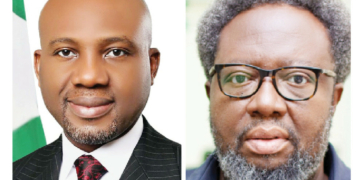
Through a formidable combination of policy reforms, public-private partnerships and an aggressive off-grid deployment strategy, the Rural Electrification Agency (REA) is rewriting the country’s energy story. The driving force behind this revolution is anchored at the very top echelon of government under the leadership of President Bola Ahmed Tinubu, the Minister of Power, Joseph Tegbe and REA Managing Director, Abba Aliyu.
In his recent Democracy Day broadcast, President Bola Ahmed Tinubu declared, “Electricity is a democratic dividend we owe every Nigerian.”
Truly, to transform a nation, you must first power its people.
While structural reforms heal the macro-economy, the REA backed by funding partners such as the World Bank and the African Development Bank (AfDB) is winning the war on the ground, ensuring that no Nigerian is left behind in reaping democratic dividends in the power sector.
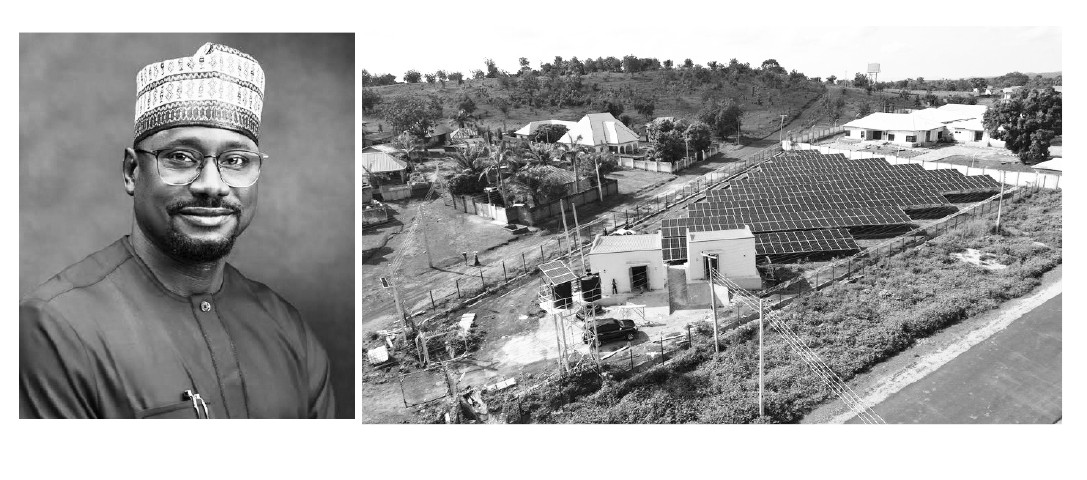
Among the profound impacts of the REA is the financial and operational lifeline to critical public institutions. By deploying solar hybrid mini-grids, the REA is permanently driving down the cost of governance and improving public service delivery.
Under the Energizing Education Programme (EEP), the agency is deploying robust clean energy infrastructure across federal universities and teaching hospitals. Phase II of the programme has successfully deployed a combined 32MW of solar hybrid capacity across seven major institutions. This includes 3MW installations at both the Michael Okpara Federal University of Agriculture in Umudike (Abia State) and the Federal University of Agriculture in Abeokuta (Ogun State), a 1.5MW facility at the Federal University Gashua (Yobe State), a 2.5MW network at the Nigerian Defence Academy in Kaduna, and a 3MW plant at the University of Abuja. It also features massive infrastructure additions for regional healthcare and academic hubs including a 7MW system at the University of Calabar and its Teaching Hospital in Cross River State, alongside a massive 12MW installation at the University of Maiduguri and its Teaching Hospital in Borno State.
Building directly upon this momentum, Phase III of the EEP adds another 36.5MW of clean capacity across eight additional university campuses. This ongoing expansion injects 5MW of solar hybrid capacity into the Modibbo Adama University of Technology in Yola (Adamawa State), 1.9MW into the Federal University of Dutsin-Ma (Katsina State), 1.6 W into the Federal University of Lafia (Nasarawa State), and 1.7MW into the Federal University of Lokoja (Kogi State).
Southern Nigeria also benefits from a 8.2MW project at the Federal University of Technology Owerri (Imo State), a comprehensive 10.7MW installation powering the University of Port Harcourt and its University Teaching Hospital (Rivers State), a 2.9MW facility at the Federal University of Uyo (Akwa Ibom State), and a 4.5MW solar hybrid grid at the Federal University of Technology Akure (Ondo State).
Beyond bridging an electricity supply gap in this institutions, the REA is unlocking economic sovereignty extending far beyond campus walls.
Through a collaborative initiative with the United Nations under the Africa Mini-grid Programme (AMP), the agency has established specialized mini-grids seamlessly integrated within agricultural cluster networks. Unlike traditional grids meant solely for household lighting, these installations are custom-built to power post-harvest processing, milling, and advanced cold-storage infrastructure. By providing reliable, localized energy directly to the farm gate, the REA is preventing massive food spoilage, shielding farmers from fluctuating fuel prices, and directly anchoring local agricultural supply chains.
This initiative also encompasses a 1.3MW pipeline of mini-grid sites built to empower 290 micro, small, and medium enterprises (MSMEs) and serve 49,042 direct and indirect beneficiaries.
Mathew is a personal media aide to the managing director of the Rural Electrification Agency (REA).
We’ve got the edge. Get real-time reports, breaking scoops, and exclusive angles delivered straight to your phone. Don’t settle for stale news. Join LEADERSHIP NEWS on WhatsApp for 24/7 updates →
Join Our WhatsApp Channel