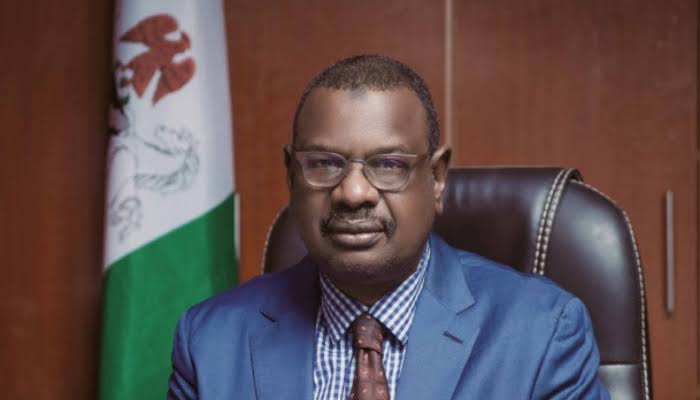
The chairman of the West African Power Pool (WAPP) Executive Board, Engr. Sule Ahmed Abdulaziz, has said network synchronisation must be supported by coordinated system operation, appropriate security arrangements, and market readiness among participants and stakeholders.
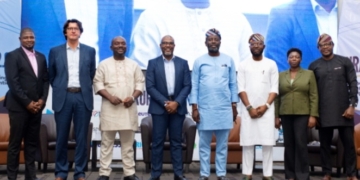
He spoke at the 68th Meeting of the Board, held in Lomé, Togo, on October 8 and 9, 2026, where he was unanimously re-elected for another three-year term.
Abdulaziz identified network synchronisation and the launch of the regional electricity market as two key technical issues before the Pool.
He described synchronisation as a major technical achievement.
According to him, the regional market will deliver on its promise only if it rests on clearly understood rules, reliable data, credible financial mechanisms, and independent, effective governance.
He said Board meetings are moments for decisions that must strengthen WAPP’s capacity to meet the region’s energy needs.
Abdulaziz, recalled that the 67th Meeting approved principles for the progressive establishment of the Independent System and Market Operator (ISMO).
The WAPP Information and Coordination Centre (ICC) retains a transitional role to maintain operations.
He said the task before the Board is to implement those decisions within a sound legal, institutional and financial framework that protects the interests of WAPP and its members.
Abdulaziz also urged member utilities to meet their financial obligations.
“Statutory contributions are not a formality; they are the basis of WAPP’s autonomy and capacity to act,” he said.
He said the Secretariat would continue to cut costs without weakening its critical functions.
The Secretary General of WAPP and Secretary of the Executive Board, Abdoulaye Dia, said that since the 67th session, the Pool has continued to implement guidelines on institutional strengthening and the progressive operationalisation of the ISMO.
He said this includes functional and accounting unbundling, and an orderly transition that allows the ICC to ensure continuity during Phase 2 of the Regional Electricity Market.
Dia said the progress made and the institution’s increased visibility have attracted new partnerships. He reaffirmed the Secretariat’s commitment to building an integrated, reliable and competitive regional electricity system ahead of the launch of the market’s second phase early next year.
On member contributions and the Pool’s 2025 financial statements, he urged utilities to settle outstanding dues. He said regular funding, rigorous management and collective discipline are critical to WAPP’s credibility and service delivery.
Other decisions
The Board discussed the restructuring study on the operationalisation of the ISMO, which it said is in line with best practice and necessary to reduce political interference as the WAPP market evolves.
It also adopted the Charter of the Forum for Women in Energy in West Africa, and a Memorandum of Understanding with the Millennium Challenge Account Côte d’Ivoire.
New Board representatives
The meeting welcomed new representatives of member utilities: Lawrent Tossou, new managing director of Société Béninoise d’Énergie Électrique (SBEE), representing Benin;
Amidou Traore, new director general of CI-ENERGIES, and
Julien Sagna, représentant de la Société de Gestion de l’Énergie de Manantali (SOGEM).
Membership applications
The Board reviewed membership applications from four utilities in the sub-region:
Konexa, from Nigeria; SOGESART (Société de Gestion de l’Énergie de Sambangalou et du Réseau de Transport d’Électricité), from Senegal;
SOGEOH (Société de Gestion de l’Énergie des Ouvrages du Haut Bassin du Fleuve Sénégal); and
HOLDEN – Niger SARL, an Independent Power Producer (IPP) from Niger.
The four utilities will be ratified at the WAPP General Assembly, to be held before the end of the year.
We’ve got the edge. Get real-time reports, breaking scoops, and exclusive angles delivered straight to your phone. Don’t settle for stale news. Join LEADERSHIP NEWS on WhatsApp for 24/7 updates →
Join Our WhatsApp Channel