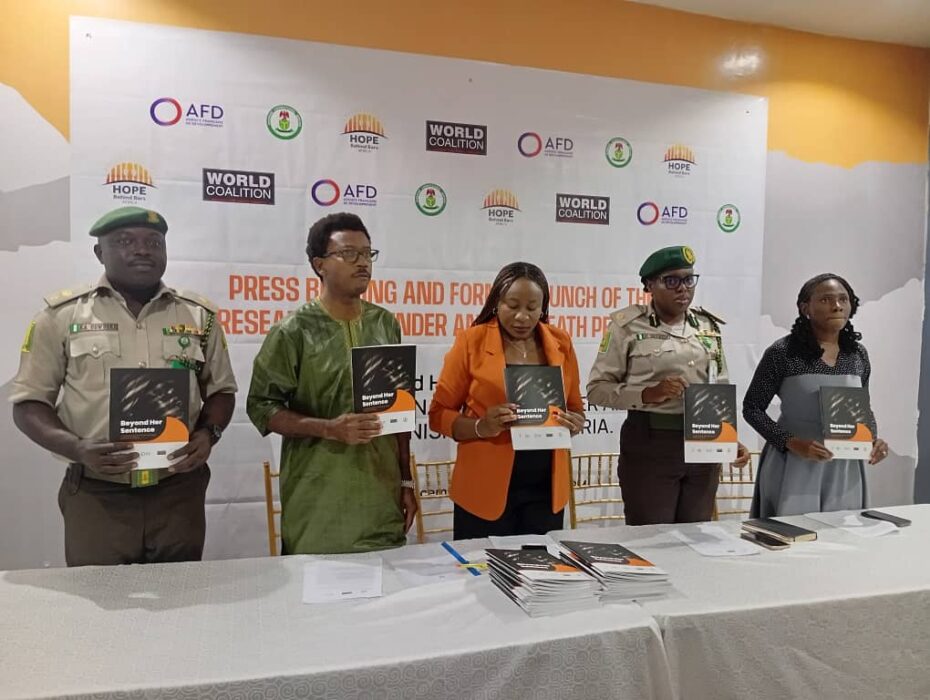
A human rights organisation, Hope Behind Bars Africa (HBBA) has called for a review of Nigeria’s Criminal Justice System for the implementation of legal and systemic reforms that accommodates gender-sensitive sentencing and enhances transparency of trial.
The Executive Director of HBBA, Mrs. Funke Adeoye made the call on Tuesday at a press briefing launching the research report on gender and death penalty in Abuja.
Adeoye revealed that the report offered unprecedented analysis of the gender pathways leading women to death row in Nigeria, adding that it uncovers systemic inequalities within the justice process and highlights the urgent need for gender-responsive reforms.
The Executive Director said the report titled: “Beyond Her Sentence: A Technical Analysis of Gender and Capital Punishment in Nigeria”, was an evidence-based study supported by the World Coalition Against the Death Penalty and the Agence Française de Développement (French Development Agency).
“As we mark the 16 days of Activism, we call on government, civil society, legal practitioners, and communities to act decisively. The death penalty helps no one; our justice is not infallible, and irreversible punishment disproportionately affects the most vulnerable. Abolition is both a legal necessity and a moral imperative.
“Nearly half of the women on death row are aged 18-35 and over one- third had no formal education, and only 10-percent attained tertiary education while most were mothers, leaving children in fragile care arrangements during incarceration.
“We also noted that over a third had experienced gender-based violence, including domestic abuse, forced marriage, and child marriage. Many lacked awareness of the laws under which they were charged, and more than half considered their trials non-transparent,” Adeoye said.
She also noted stigma from families and communities that has contributed in compounding the affected persons’ suffering, especially for women charged with sexual or marital offences.
While emphasising that women on death row endure compounded vulnerability and systemic injustices, Adeoye stressed that 80 per cent of the women interviewed believed that rehabilitation was possible as many of them had been exposed to vocational skills within correctional facilities where they were serving sentences.
We’ve got the edge. Get real-time reports, breaking scoops, and exclusive angles delivered straight to your phone. Don’t settle for stale news. Join LEADERSHIP NEWS on WhatsApp for 24/7 updates →
Join Our WhatsApp Channel