As president declares war on armed non-state actors
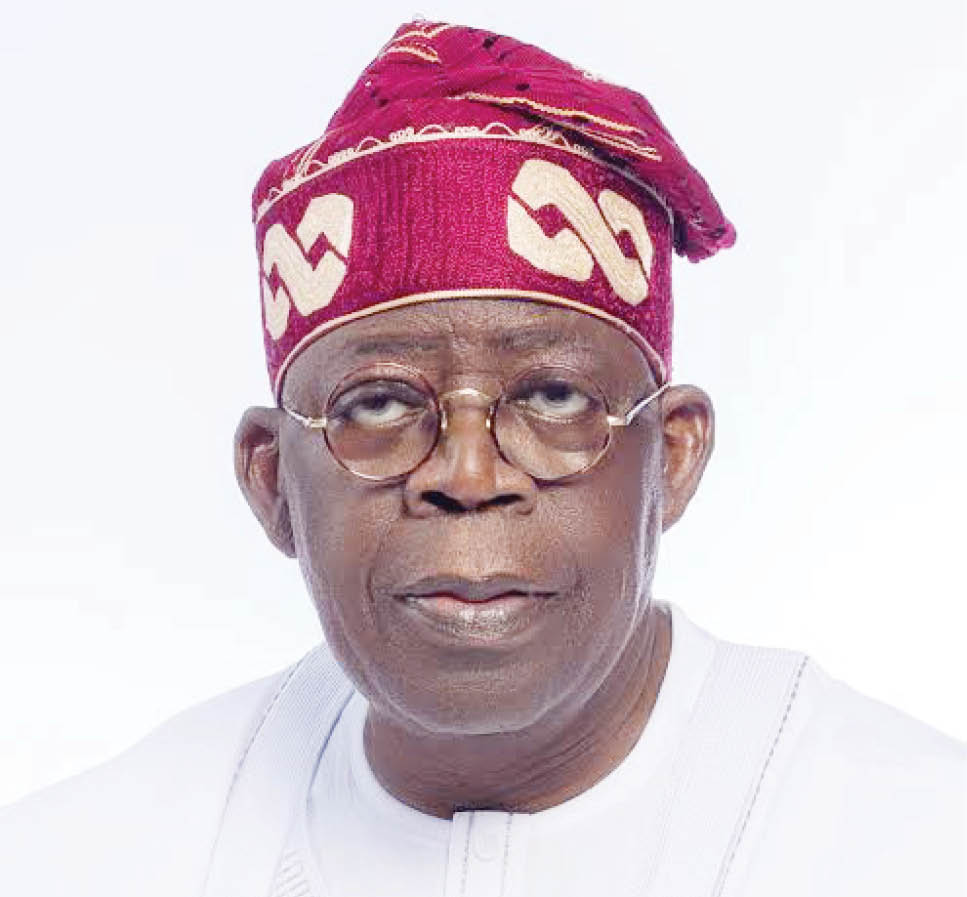
Security sector takes the lion’s share in President Bola Tinubu’s 2026 budget proposal on Friday, as he earmarked ₦5.41 trillion for defence and internal security—the single largest sectoral allocation in the fiscal plan—amid persistent insecurity and public anxiety across the country.
Presenting the “Budget of Consolidation, Renewed Resilience and Shared Prosperity” to a joint session of the National Assembly on Friday afternoon, Tinubu said the scale of the allocation underscored his administration’s resolve to restore peace and stabilise the country after years of banditry, kidnapping, insurgency, and communal violence.
The President stated that his government was “resetting the national security architecture” and rolling out a new counter-terrorism doctrine built on unified command, intelligence-driven operations, and community stability.
In one of the most sweeping security declarations of his presidency, Tinubu announced that all armed groups operating outside the authority of the state would henceforth be treated as terrorists.
“Henceforth, and under this new architecture, any armed group or gun-wielding non-state actors operating outside state authority will be regarded as terrorists,” he said, naming bandits, militias, armed gangs, kidnappers, violent cult groups, as well as their financiers, facilitators, and political protectors.
“The denominator is that if you wield lethal weapons and act outside the state’s authority, you are a terrorist,” the President said.
The hard-line stance comes against the backdrop of renewed attacks in parts of the North-West and North-Central, lingering insurgency in the North-East, and rising concerns over organised criminal networks—all of which continued to disrupt farming, trade, and investment.
Beyond security, Tinubu said the 2026 budget was structured to strengthen what he described as the interlinked foundations of growth, with ₦3.56 trillion allocated to infrastructure, ₦3.52 trillion to education, and ₦2.48 trillion to health.
“No nation can grow beyond the quality of its people,” he said, pointing to the Nigerian Education Loan Fund, which has so far supported over 418,000 students across tertiary institutions nationwide.
He added that health spending accounts for six per cent of the total budget size, net of liabilities, while recent high-level engagements with the United States government had opened access to over US$500 million in grant funding for targeted health interventions.
On the economy, the President reaffirmed his administration’s push for agricultural reforms, expanded mechanisation, irrigation, and agro-value chains, stressing that “food security is national security” as the government seeks to tame food inflation and reduce import dependence.
As he wrapped up the presentation, Tinubu framed the 2026 fiscal plan as a test of execution rather than rhetoric, coming at a time when budget implementation has come under intense public and legislative scrutiny.
“The greatest budget is not the one we announce. It is the one we deliver,” he said, pledging stronger revenue mobilisation, more disciplined spending, and tighter accountability across government.
We’ve got the edge. Get real-time reports, breaking scoops, and exclusive angles delivered straight to your phone. Don’t settle for stale news. Join LEADERSHIP NEWS on WhatsApp for 24/7 updates →
Join Our WhatsApp Channel