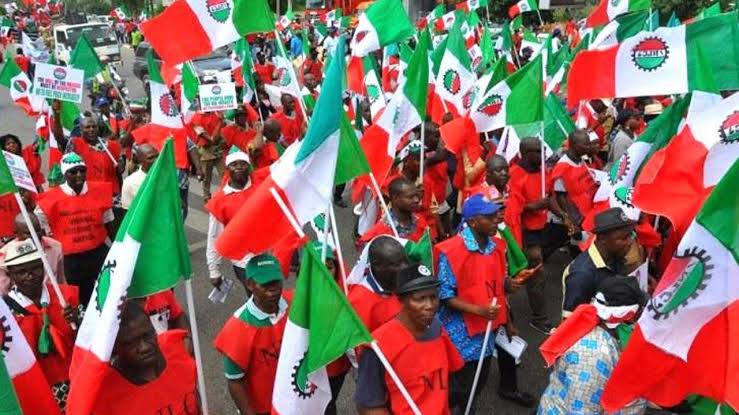
If media reports are anything to go by, the Senate plans to make laws to ban strikes in the country, especially in sectors of the economy it considers strategic. Or at least, the law will be couched in language that will hamstring the effectiveness of such actions by labour when they become inevitable. The proposed law will be part of the envisaged National Minimum Wage Act. We are appalled that the lawmakers are harbouring this thinking instead of focusing on good governance.
Based on this disclosure, it becomes necessary to put Labour on notice to watch out for interventions by this lawmaking body in its activities that may turn out to be a golden handcuff or, even worse, a Greek gift, the fabled Trojan Horse.
While the lawmakers are making plans to put in place this perceivable, in our opinion, obnoxious piece of legislation, it is pertinent to remind them that the right to strike is recognised by the International Labour Organisation (ILO’s) supervisory bodies as an intrinsic result of the right to organise protected by Convention No. 87, deriving from the right of workers’ organisations to formulate their programmes of activities to further and defend the economic and social interests of their members.
The Senators must also realise that the Freedom of Association and Protection of the Right to Organise Convention (1948), also known as Convention No. 87, was adopted on July 9, 1948, during the 31st session of the International Labour Conference in San Francisco. It came into force on July 4, 1951. This fundamental convention recognises workers’ right to establish and join organisations of their choice without prior authorisation, and it safeguards their freedom of association and the right to organise.
Furthermore, it is essential to stress that the right to strike is also an intrinsic result of the fundamental right of freedom of association. It is crucial for millions of women and men worldwide, particularly in Nigeria, to collectively assert their rights in the workplace, including the right to just and favourable conditions of work and to do so in dignity and without fear of intimidation and persecution. Moreover, protests about government social and economic policy and against harmful corporate practices form part of the fundamental civil liberties whose respect is essential for the meaningful exercise of trade union rights. This right, it needs to be emphasised, enables them to engage with corporate bodies and governments more equally. Member states, Nigeria included, are obligated to protect this right and not interfere with its exercise.
As a newspaper, we boldly state that protecting the right to strike is not simply about states fulfilling their legal obligations. It is also about them creating democratic and equitable societies that are sustainable in the long run. The concentration of power in one sector – whether in the hands of government or business – inevitably leads to the erosion of democracy and an increase in inequalities and marginalisation with all their consequences.
To this extent, therefore, the right to strike is recognised as a fundamental right in many democratic countries, including Nigeria. It is essential to remind the lawmakers that the right to strike in Nigeria derives from the right to unionise, guaranteed under Section 40 of the Nigerian Constitution. This provision ensures that every person (including workers and their unions) has the right to join, form, or belong to any trade union of their choice to promote and protect their interests without hindrance. Consequently, the right of workers to strike is an essential aspect of trade union rights. While the Nigerian Constitution does not explicitly mention the right to strike, it recognises the broader context of union rights and collective action.
We feel obliged to urge the Senators to concentrate their legislative energy on matters that make strikes of whatever kind unnecessary. The Senators should make laws to control and alleviate Nigerians’ daily hardship. In our view, they were lamenting the participation of national grid workers in the recent strike by labour unions as if they were immune to the country’s hardship. Their concern was influenced by the fact that shutting down the national grid affected their convenience. They should consider those inconveniences as prices that must be paid for the insensitivity of officialdom and their propensity to wallow in filthy opulence at a time when the populace suffers from want and poverty.
It is sad to point out that lawmakers are beginning to appear before right-thinking members of society as inherently anti-people. That should not be the appropriate relationship between them and the citizens who elected them as their representatives. Senators must not forget, in their frantic haste to protect their class interests, the aphorism that those who make peaceful change difficult make violent change inevitable.
But we plead that commonsense will prevail in enacting this all-important legislation, ensuring that all interests will be provided for and protected and the country will be a better place for all to live in.
We’ve got the edge. Get real-time reports, breaking scoops, and exclusive angles delivered straight to your phone. Don’t settle for stale news. Join LEADERSHIP NEWS on WhatsApp for 24/7 updates →
Join Our WhatsApp Channel