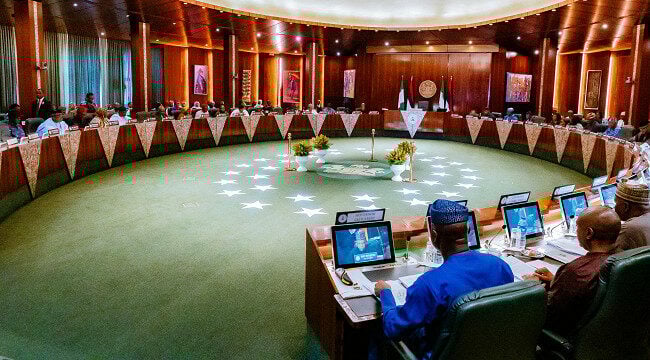
At the 152nd meeting of the National Economic Council in Abuja, governors and ministers filed out with a headline they clearly wanted the public to notice: Nigeria was ready to roll out solar irrigation pumps produced by NASENI.
The Vice President Kashim Shettima described it as proof that Nigerian ingenuity can compete with the world. Mass production is waiting for the President’s approval, and the promise is that farmers will now irrigate cheaply, expand cultivation, and even earn carbon credits in the process.
On paper, it looks impressive. Pumps that don’t guzzle petrol. Farmers spending less, producing more. A proudly made-in-Nigeria product to rival anything imported. But anyone who has watched the endless cycle of agricultural “magic bullets” knows why skepticism is necessary. This country has been through Operation Feed the Nation, Green Revolution, anchor borrower schemes, and tractor programmes that ended in scrapyards. Each time the problem wasn’t technology. It was a combination of delivery, corruption, and leadership.
The truth is that farmers are not stuck with petrol pumps because they like fumes. They are stuck with petrol because Nigeria cannot provide affordable, reliable power. Imagine the absurdity. A gas-producing country where smallholders irrigate with petrol engines because domestic gas is priced out of reach. At the same NEC meeting where solar pumps were being celebrated, the governor of Jigawa, Umar Namadi was begging the Minister of State Petroleum ( Gas)to make gas cheaper so agriculture could survive. That is the real scandal. Farmers shouldn’t be waiting for NASENI’s gadgets—they should already have steady power and affordable inputs.
Meanwhile, food inflation is squeezing Nigerians like never before. Official data indicate a rate of 21.87 percent in August. A bag of rice is now out of reach for families who once bought it as a routine. Yams, maize, beans—staples are becoming luxuries. Against that backdrop, solar pumps look like a tidy distraction from the harder conversation: why can’t Nigeria feed itself despite millions of hectares of arable land and decades of interventions?
The Vice President added that these pumps could unlock carbon credits for farmers. It’s a nice Davos-friendly line, but let’s not kid ourselves. The average farmer in Zamfara or Ebonyi has never heard of carbon markets, let alone benefited from them. Carbon trading is a bureaucratic racket dominated by big firms in the West. To dangle it before smallholders who struggle with extension services is like offering a Tesla charging station to a village without roads.
What nobody at NEC said was how much each pump will cost, who will pay, and how they will be distributed. We’ve heard that NASENI may produce between 50,000 and 100,000 units. That sounds big until you recall that Nigeria has more than 38 million smallholder farmers. Do the math: it barely scratches the surface. And when government officials talk about “working out modalities,” Nigerians know what comes next—fresh borrowing, intervention funds, contracts padded to the skies, and distribution lists that reward party loyalists more than actual farmers. We’ve seen it with fertilizer subsidies. We saw it with the anchor borrowers scheme, which ballooned into bad loans.
Even if the pumps are produced, will farmers adopt them? That depends on cost and simplicity. Farmers are practical. They invest in what works, not what looks good in a press release. If the pumps are too expensive or too complex to maintain, they’ll end up abandoned in warehouses, the way tractors rusted away across the states. A rural farmer wants something he can fix with a local mechanic, not a device with GPS tracking and mobile dashboards that depend on fragile broadband.
And while NEC was clapping for solar technology, the National Security Adviser was warning about riverine flooding. Thirteen states are at high risk. ₦24 billion has been set aside for multipurpose cash assistance, evacuation sites, early warning systems. That should remind us that food security is less about gadgets and more about protecting farms from natural disasters, providing timely fertilizer, and securing rural communities from bandits. Last year alone floods displaced more than 600,000 people and destroyed harvests across Kogi, Benue, and Anambra.
To be clear, I’m not against NASENI producing equipment locally. In fact, I think we should invest more in such efforts. What I reject is the idea that a few thousand solar pumps can change the fundamentals of our food crisis. It’s political theatre, a neat headline for governors to take home. Lest we forget, the President had already ordered NASENI since June 2024 to ramp up production of irrigation pumps. More than a year later, we are still “awaiting approval” and “working out modalities.” That pace alone tells you how unserious the system is.
So what does a serious agenda look like? It begins with energy. Until domestic gas is made affordable and available, we will keep circling the same hole. It requires a fertilizer regime that is open and competitive, not captured by cartels and cronies. It demands that flood preparedness is funded and predictable, not treated as an afterthought. It means reviving extension services so that farmers are equipped with knowledge, not left to guesswork. And it calls for honesty about scale: you cannot solve the problems of 38 million farmers with 50,000 gadgets.
Proponents will argue that every little step helps, that even a fraction of farmers using solar pumps could raise yields and ease inflation. Fair point. And yes, local innovation must start somewhere. But the pump itself isn’t the issue. The issue is the system it is plugged into. A system that has wasted billions on agriculture with little to show. A system where policies are announced for applause but rarely delivered with seriousness. Drop the best technology into that swamp and it will sink.
We keep mistaking gadgets for governance. Food security isn’t about mobile dashboards. It is about trust—whether farmers can trust the government to keep inputs affordable, power reliable, and land safe from floods and violence. At the moment the answer is no, and no solar pump will change that.
Watch for three signals in the months ahead. If NASENI publishes the cost of each pump and clear criteria for distribution, maybe this won’t go the way of past interventions. If the rollout happens before the next dry season instead of dragging endlessly, then perhaps there is some urgency. And if farmers themselves begin to adopt the pumps and report real benefits, not just politicians waving them at ceremonies, then it might matter.
But if by December we are still talking about modalities and approvals, then we can safely file this under another half-measure in Nigeria’s long history of abandoned solutions. Until leadership gets serious about fixing energy, inputs, and security, food inflation will keep climbing and poverty will keep deepening. NEC can endorse a thousand gadgets; none will matter without delivery. These are the issues.
We’ve got the edge. Get real-time reports, breaking scoops, and exclusive angles delivered straight to your phone. Don’t settle for stale news. Join LEADERSHIP NEWS on WhatsApp for 24/7 updates →
Join Our WhatsApp Channel