Nigeria has secured a sovereign credit rating upgrade from S&P Global Ratings, with the agency lifting the country’s long-term foreign currency rating from ‘B-’ to ‘B’ and assigning a Stable Outlook. The action, announced Friday, completes a sweep of positive rating revisions from all three major global credit agencies within a span of roughly twelve months.
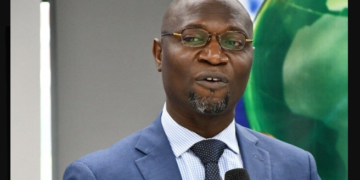
Finance Minister and Coordinating Minister of the Economy, Taiwo Oyedele, confirmed the development on Friday via his official X account, welcoming the upgrade as a validation of the administration’s reform programme.
“This latest upgrade by S&P follows similar positive rating actions in 2025 by Fitch Ratings and Moody’s Ratings. It further reinforces growing international confidence in Nigeria’s economic reform trajectory, policy consistency, and medium-term growth prospects.”
The statement from Oyedele added that the three independent assessments “collectively affirm that the difficult but necessary reforms” undertaken under President Bola Tinubu “are yielding measurable results and laying the foundation for a more stable, transparent, and resilient economy.”
WHAT S&P SAID
In its rating rationale, S&P highlighted improvements in Nigeria’s external position and stronger balance of payments dynamics, citing increased oil production and expanding domestic refining and export capacity as key drivers. The agency also credited the sustained implementation of key macroeconomic reforms, particularly the liberalisation of the foreign exchange market — a central plank of the CBN’s policy shift since mid-2023.
On the fiscal side, S&P recognised ongoing reforms aimed at broadening the tax base, improving public revenue mobilisation, enhancing fiscal transparency, and strengthening debt sustainability. According to Oyedele, Nigeria’s debt-to-revenue ratio has improved significantly since 2023 and is projected to decline further as reforms mature.
A TRIPLE ENDORSEMENT
The S&P upgrade is the third in a sequence that began with positive rating actions from Fitch Ratings and Moody’s in 2025. Taken together, the three upgrades represent the strongest run of credit agency endorsements Nigeria has received in over a decade and carry direct implications for the country’s borrowing costs and access to international capital markets.
Sovereign credit ratings directly influence the interest rates at which a country can borrow abroad. A move from ‘B-’ to ‘B’ on the S&P scale, while still within speculative-grade territory, narrows the risk premium investors demand on Nigerian Eurobonds and could reduce the cost of future external borrowing.
Oyedele said the upgrades “send a strong signal to global investors, development partners, financial markets, and the international business community that Nigeria is regaining macroeconomic credibility and restoring confidence in the management of its economy.”
GOVERNMENT’S REFORM COMMITMENTS
Oyedele’s statement used the occasion to restate several policy commitments, including continued opposition to the reintroduction of fuel subsidies, which the government argued “historically created significant fiscal distortions, incentivised smuggling, weakened foreign exchange liquidity, and diverted scarce public resources away from critical national priorities.”
The minister also reaffirmed commitment to a market-driven economy “anchored on transparency, competition, and effective regulatory oversight,” saying the government would continue to uphold policies that “support free enterprise, respect private investment, and provide a stable and predictable environment for businesses and investors to thrive.”
The statement, however, struck a measured tone on the pace of gains felt by ordinary Nigerians, with Oyedele acknowledging that “the work ahead remains substantial.” He said the government remains focused on addressing inflationary pressures, improving food security, and expanding decent job opportunities.
BACKGROUND
Nigeria’s economic reform programme, launched after President Tinubu took office in May 2023, involved the immediate removal of the petrol subsidy, a unification of the country’s multiple exchange rate windows, and a shift to a market-determined naira rate. The reforms triggered sharp short-term price increases and a significant depreciation of the naira but were accompanied by a pickup in foreign exchange inflows and a gradual stabilisation of the parallel market premium.
Annual inflation, which peaked at over 34 per cent in late 2024, had begun to moderate by mid-2025 following a combination of tight monetary policy from the CBN and base effects. The National Bureau of Statistics (NBS) reported year-on-year headline inflation at approximately 23 per cent as of March 2026, still elevated but on a declining trajectory.
We’ve got the edge. Get real-time reports, breaking scoops, and exclusive angles delivered straight to your phone. Don’t settle for stale news. Join LEADERSHIP NEWS on WhatsApp for 24/7 updates →
Join Our WhatsApp Channel