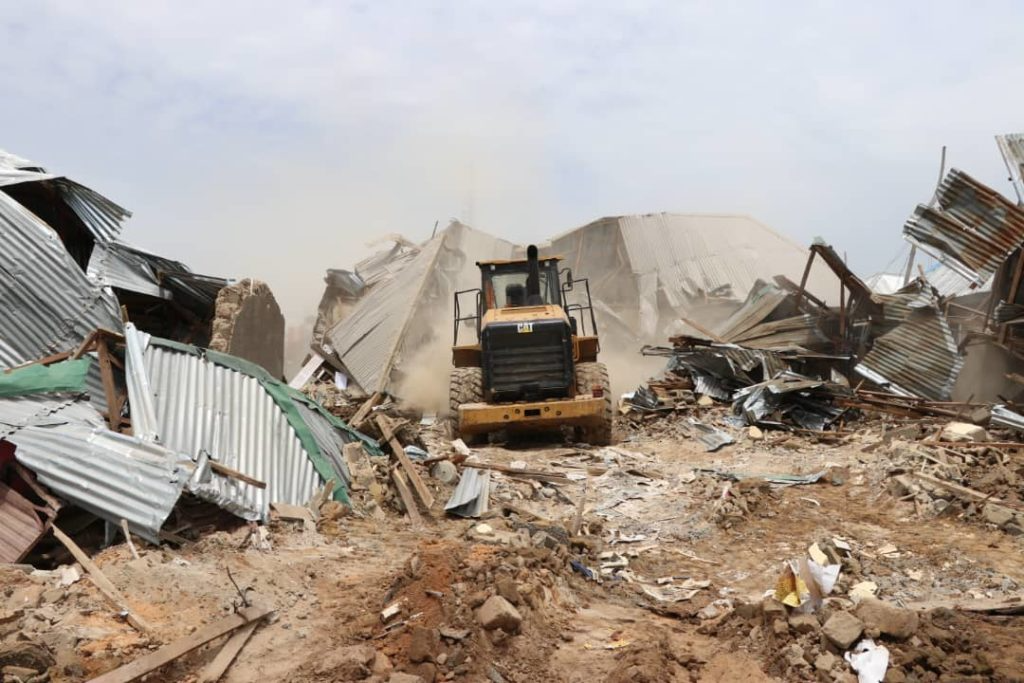
Stakeholders in Nigeria’s real estate industry have expressed concern over the demolition of about 50 buildings in a Lagos community by individuals suspected to be land grabbers, popularly referred to as “Omo Onile.” The incident has reignited discussions about persistent landownership disputes and enforcement gaps within the state’s property sector.
The demolished structures were located in the Amikanle community near the Command area of Alimosho local government area of Lagos State. Residents said unidentified individuals stormed the neighbourhood and brought down several houses.
According to residents’ accounts, the demolition followed demands for payment from property owners, with threats that buildings belonging to those who refused to comply would be demolished.
Residents alleged that the suspected land grabbers demanded payments ranging from N15 million to N25 million from homeowners in the area. Buildings belonging to those who reportedly failed to meet the demands were subsequently demolished.
The incident has left many affected residents facing heavy financial losses, as several of the structures were completed residential homes or ongoing property investments.
Some property owners described the situation as both financially devastating and emotionally distressing, noting that the demolished buildings represented years of savings and long-term planning.
Professionals within the real estate sector have strongly criticised the development, warning that such incidents pose a serious risk to investor confidence in the property market.
Chief executive officer of the real estate firm Oikus, Israel Ihaza, said incidents of this nature weaken regulatory systems and undermine confidence in the rule of law within the industry.
He explained that when land documentation lacks transparency and enforcement mechanisms are inadequate, it creates opportunities for illegal actors to exploit ownership disputes.
According to him, repeated cases involving land grabbers could discourage both local and diaspora investors from committing funds to property development projects.
Legal practitioners and representatives of affected residents also highlighted the broader financial impact of the demolitions.
One legal adviser working with the homeowners estimated that the destruction could translate into losses running into billions of naira. With more than 50 buildings reportedly valued at around N50 million each, total losses could exceed N2.6 billion.
Beyond the direct financial damage, analysts warn that removing completed housing units further tightens supply in already-constrained urban housing markets.
Experts say the loss of such properties could worsen housing shortages and drive up rents and property prices.
The activities of groups commonly referred to as “Omo Onile” have long been a challenge for property development in Lagos and other major Nigerian cities.
These groups frequently claim ancestral ownership of land and demand payments from developers or property owners before construction projects can proceed. In some cases, disputes escalate into harassment, intimidation, or demolition of structures.
Although the Lagos State Government has introduced laws aimed at curbing land-grabbing activities, enforcement difficulties continue to limit their effectiveness.
Industry analysts note that unresolved land disputes remain a major risk to Nigeria’s real estate investment climate.
Issues such as unclear land documentation, overlapping ownership claims, and weak enforcement of property rights can create uncertainty for developers and homeowners alike. Such conditions may slow investment inflows into the housing sector and complicate long-term urban development planning.
For prospective investors, the incident highlights the need for thorough due diligence, including proper verification of land titles, registration of ownership documents, and legal review before undertaking property development.
Stakeholders are calling on authorities to strengthen enforcement of land ownership regulations and improve transparency within property registration systems.
Industry experts also recommend expanding digital land registries and improving coordination among regulatory agencies, the courts, and law enforcement bodies.
Analysts warn that without decisive action, ongoing land-grabbing disputes could continue to undermine investor confidence, slow housing development, and worsen Nigeria’s growing urban housing shortage.
We’ve got the edge. Get real-time reports, breaking scoops, and exclusive angles delivered straight to your phone. Don’t settle for stale news. Join LEADERSHIP NEWS on WhatsApp for 24/7 updates →
Join Our WhatsApp Channel