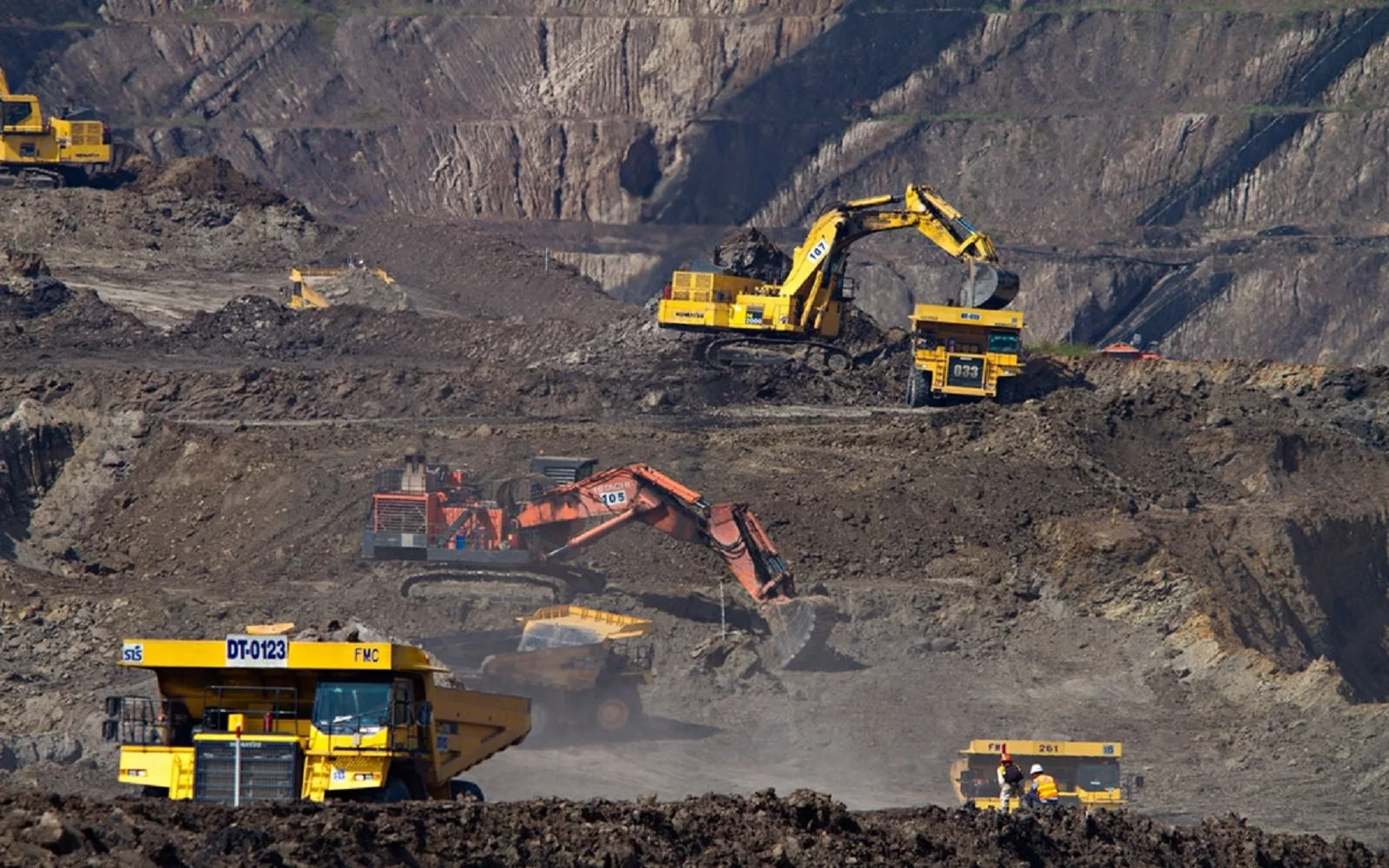
Prominent government officials, financiers, and other stakeholders in the mining industry have called for local funding solutions for mining operations in Nigeria and across Africa.
This was one of the outcomes of the inaugural Ore Reserve Development Forum (ORDF) Inception Workshop, convened in partnership with the Solid Minerals Development Fund (SMDF) under the theme
“Building a Sustainable Mining Finance Framework for Nigeria”, held in Abuja on Tuesday.
Delving into how Africa can unlock its mineral resources and create sustainable economic growth through credible, structured mining finance, the event examined the obstacles preventing Nigeria—and the wider African continent—from fully benefiting from their natural resource endowments.
The workshop noted that Africa holds some of the world’s richest mineral deposits, yet it continues to struggle with exploration financing, credible data, and investor confidence.
In her keynote address entitled “Why Mining Finance Matters for National Development”, SMDF Executive Secretary Ajiya Fatima Umaru Shinkafi said Nigeria is entering a transformative era similar to the mining booms that reshaped Botswana, Saudi Arabia and Australia.
“Mining finance is the mechanism that converts geological potential into economic performance—into jobs, revenue, industrial capacity and prosperity.”
Shinkafi, who was represented by Dr Martina Ananaba, head of minerals and project development at SMDF, stressed that Nigeria’s challenge goes deeper than funding:
“The real challenge is not simply funding—it is the lack of bankable projects. Without credible data, standardised reporting and technical capacity, investors cannot commit,” she said. Shinkafi highlighted the impact of ongoing reforms, noting that mining’s GDP contribution has risen from below 1% to 4.6%, adding that 867 mining licences were issued in Q1 2025 alone, generating about N7 billion in fees.
She affirmed that the SMDF is now building a more credible ecosystem by strengthening due diligence and collaborating with capital market institutions.
ORDF Chairman Uba S. Malami, who explained the motivation behind the group, said the Ore Reserve Development Forum was conceived at the Geological Society of Nigeria (GSN) Roundtable in 2024, where stakeholders agreed that Nigeria’s mining sector needed a body capable of developing standards, improving reporting quality and creating structured financing pathways.
“Unlocking Nigeria’s $700 billion mineral potential requires strategic collaboration. ORDF exists to help junior mining and exploration companies meet global standards,” he said.
Malami stated that many mining assets remain unbankable due to inadequate geological data and artisanal-level operations.
“It is not enough to have minerals; we must extract value from them. A mineral only becomes a reserve when there is credibility and accepted standards,” he said.
One of the participants, Jon Callagan of Montt Capital, an Australian mining expert, predicted that “within the next 25 years, mining will become bigger than oil and gas in Nigeria.”
Callagan underscored the importance of early exploration: “Without exploration, there can be no mining. And without risk capital, there can be no exploration,” he stated, insisting that Nigeria must invest more in mineral exploration to reap fully from its assets.
Delivering a technical presentation on the risks and opportunities in mineral exploration, he identified Nigeria’s most significant barrier as the lack of risk capital, worsened by limited geological assessments and minimal liquidity in the mining investment space.
Using the Sandfire discovery as a case study, he showed how exploration success can rapidly transform a mining company’s market valuation.
He urged Nigeria to: Create local junior exploration companies,
List them on the NGX, adopt internationally accepted reporting standards, and
Engage stockbrokers to create liquidity.
He added that Nigeria’s large economy and untapped mineral resources make the country one of the most promising exploration frontiers globally—if financing systems are fixed. For his part, SMDF Technical Adviser Abdulmajeed Oyeyemi Amussah reiterated the Fund’s mandate: “Our job is to de-risk mining assets and turn mineral potential into shared prosperity—prosperity that reaches the very last mile.”
He noted that while Nigeria’s shallow deposits make artisanal mining widespread, the real challenge is formalising the sector to make it investable.
The workshop also proposed strategies for unlocking capital, including partnerships with the Africa Finance Corporation (AFC), the African Development Bank (AfDB) and other local funding institutions.
A key message from the continental discussion was clear:
Africa must build its own upstream capacity before talking about downstream beneficiation.
This means prioritising exploration, reserve definition and early-stage investment—areas where Africa currently lags.
The forum concluded with a strong, pan-African message: Africans must take charge of their mineral resources, develop financing frameworks tailored to African realities, and avoid dependence on foreign capital to determine the value of African minerals.
We’ve got the edge. Get real-time reports, breaking scoops, and exclusive angles delivered straight to your phone. Don’t settle for stale news. Join LEADERSHIP NEWS on WhatsApp for 24/7 updates →
Join Our WhatsApp Channel