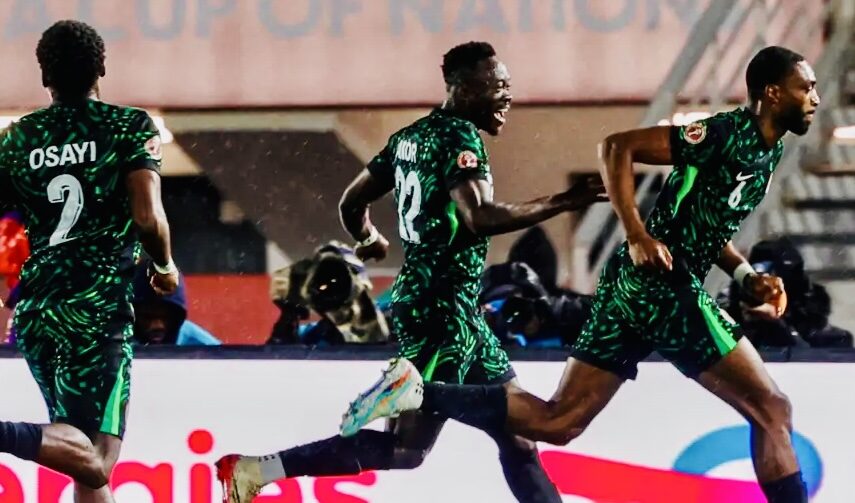
The Nigerian Super Eagles are set to rekindle a historic rivalry this Wednesday as they face the Moroccan Atlas Lions at the Prince Moulay Abdellah Stadium. For Nigerian football fans, and indeed for the team itself, this particular venue in the Moroccan capital carries a significant and rather fortunate resonance. It was Rabat, over four decades ago, that Nigeria carved out a crucial victory, a memory that could well serve as a potent psychological advantage for Wednesday’s semifinal clash.
The sole previous encounter between the senior national teams of Nigeria and Morocco in Rabat transpired on Saturday, 28th August 1983. This was no ordinary friendly; it was the decisive second leg of a qualification tie for the 14th Africa Cup of Nations finals, ultimately hosted by Côte d’Ivoire. Two weeks prior, the first leg in Benin City had concluded in a goalless stalemate, setting the stage for a high-stakes return fixture in North Africa.
Under the astute guidance of Coach Adegboye Onigbinde, the Super Eagles arrived in Rabat with a subtly altered line-up from the first leg. Onigbinde, known for his tactical prowess, made several key changes designed to counter the home advantage and the formidable Moroccan side. Most notably, the legendary Peter Rufai took his place between the posts, replacing Wilfred Agbonavbare. Further adjustments saw Kingsley Paul, Amos Edoseghe, Anthony Edward, Wole Odegbami, and Sunday Daniel introduced into the squad, replacing Charles Osuji, Henry Nwosu, Rafiu Yusuf, Dehinde Akinlotan, and Tarila Okorowanta respectively. These strategic shifts underscored Nigeria’s determination to secure passage to the continent’s most prestigious football tournament.
Across the pitch, the Atlas Lions, marshalled by their Brazilian tactician José ‘Mehdi’ Faria, maintained a consistent and strong core. Their formidable squad featured iconic figures such as the revered goalkeeper Badou Ezzaki, alongside Mustapha El Haddaoui, Abdelaziz Bouderbala, Mohamed Timoumi, Abdelmajid Lamriss, Mustapha El Biyaz, Noureddine Bouyahyaoui, and Khaled Labied. This was a Moroccan team brimming with talent and eager to qualify on home soil.
The match itself was a testament to the evenly matched quality of both sides. A closely fought battle ensued, characterised by robust defending and tactical discipline from both camps. Despite numerous forays and moments of tension, neither team could break the deadlock within regular time, resulting in a second successive goalless draw. The fate of qualification thus hinged on the dreaded penalty shootout.
In a nail-biting conclusion, Nigeria held their nerve, emerging victorious with a 4-3 win in the shootout. This dramatic triumph secured their spot in the AFCON finals in Côte d’Ivoire, where they subsequently impressed by reaching the final, ultimately finishing as deserving runners-up.
As the current crop of Super Eagles prepare to step onto the hallowed turf of the Prince Moulay Abdellah Stadium this Wednesday, the echoes of that 1983 encounter will undoubtedly resonate. The historical context provides a compelling narrative: Nigeria has never lost a match to the Atlas Lions in Rabat. This unbeaten record, while a statistic from a different era, offers a psychological boost and a reminder that this particular ground has, in the past, been a happy hunting ground for Nigerian football. Whether this historical precedent translates into a similar outcome for the AFCON 2025 qualifiers remains to be seen, but the stage is certainly set for another captivating chapter in this intriguing rivalry.
We’ve got the edge. Get real-time reports, breaking scoops, and exclusive angles delivered straight to your phone. Don’t settle for stale news. Join LEADERSHIP NEWS on WhatsApp for 24/7 updates →
Join Our WhatsApp Channel