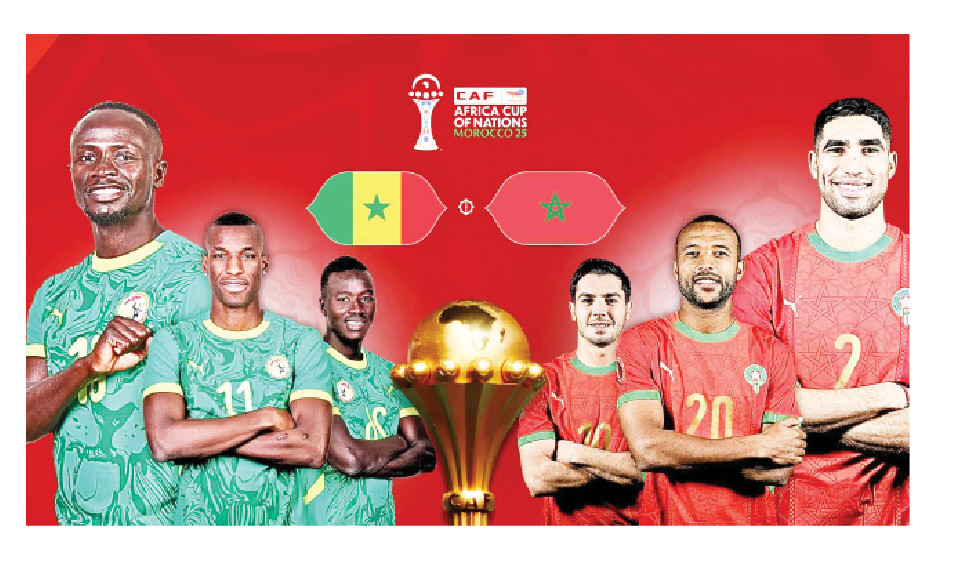
The decision by the Confederation of African Football (CAF) to strip Senegal of its 2025 Africa Cup of Nations (AFCON) trophy and hand it to Morocco is, to say the least, controversial.
The controversy emanated from the AFCON final match in Rabat, the Moroccan capital, where Senegal defeated Morocco 1–0 after extra time and was handed the trophy..
However, the match had witnessed a disruption late in regulation time – when referee Jean-Jacques Ndala disallowed a Senegalese goal and awarded Morocco a contentious penalty in the 98th minute.
In protest, Senegal’s players walked off the pitch for 17 minutes, after which they were persuaded to return and complete the game.
The match resumed. The penalty was missed by Brahim Díaz. And ultimately, Senegal’s Pape Gueye scored the decisive goal in extra time. The game was completed in full, and Senegal were crowned champions on the pitch.That should have been the end of the matter.
But not quite. CAF’s disciplinary mechanisms were expected to review the incident a day after the tournament,
The African football body issued heavy sanctions. It suspended Senegal coach Pape Thiaw for five matches and fined the Senegalese Federation $615,000 for fan misconduct, while Morocco was also fined $315,000 for improper conduct by staff and ball boys during the match.
However, the Morocco Football Federation filed an appeal, the verdict of which has caused consternation in international football
CAF’s Appeals Board, chaired by a Nigerian judge, Roli Daibo Harriman, ruled that Senegal’s temporary walkout constituted a forfeiture.It overturned the match result and awarded Morocco a 3–0 victory.
Under Articles 82 and 84 of AFCON regulations, any team that refuses to continue play or leaves the field without the referee’s consent risks forfeiting the match.
It is commonplace for teams to be awarded three-goal victories when their opponents fail to turn up or abandon the match. Usually, when a team fails to continue or abandons the match midway, the referee ends the contest and a three-goal victory is awarded to the law-abiding team. However, in the instant case, this was not so. The key issue is that the match was not abandoned. The referee allowed play to resume. Both teams completed the contest. The result was decided on the field of play. By allowing the game to continue into extra time, the ultimate official effectively validated its completion.
To retroactively declare forfeiture after a completed match is not just inconsistent, it is illogical. Rules are meant to protect the integrity of competition, not to distort it.
The backlash has been swift and justified. Prominent football figures across continents have condemned CAF’s ruling.
Former international stars such as Patrice Evra and Samir Nasri described the decision as a “disgrace” and a “scandal”.
Nigeria’s decorated forward Asisat Oshoala dismissed Morocco’s title as existing only “in CAF’s book”, while Mutiu Adepoju labelled it a “boardroom snatch”.
Veteran coach Claude Le Roy called the ruling “pitiful”, and even Africa and global icon George Weah warned that the ruling damages the reputation of the tournament. Others like former England defender Jamie Carragher, former French striker Thierry Henry and current Manchester City manager Pep Guardiola are among numerous voices that have questioned this decision.
As a newspaper, we do not condone the action of Senegal in walking off the pitch. It was unprofessional and unacceptable and could have stained a very well organised competition. It was reckless and a resort to self-help.
They must learn not to take the law into their hands, no matter how contentious officiating decisions may be. CAF has every right to sanction Senegal. But punishment must be proportionate—and, above all, rational.
It is a measure of the divisive nature of this decision that while football authorities in Morocco have welcomed the ruling, the reigning Africa’s best footballer and captain of Morocco, Achraf Hakimi, has rejected the CAF decision on behalf of his team-mates, saying Senegal are deserved champions and should keep the trophy.
Hakimi’s position tallies with the overwhelming majority who believe that titles are meant to be earned through performance, resilience, and sporting excellence—not administrative reinterpretation long after the final whistle.
We are equally concerned that CAF’s decision may have far-reaching consequences.Football thrives on credibility. Fans must believe that what they witness on the pitch is final. Sponsors and investors demand stability and transparency.
By overturning a completed result, CAF has introduced uncertainty into the very fabric of competition. If such precedents stand, what stops future matches from being decided long after the final whistle? If CAF’s credibility is in doubt, it may struggle to attract sponsors in future.
Senegal’s decision to approach the Court of Arbitration for Sport (CAS) is both justified and necessary.
This is no longer just about a trophy. It is about restoring principle. Matches should be decided on the pitch, not rewritten in committee rooms.
Anything less risks throwing African football into disrepute. African football deserves better than this.
CAF must reconsider the implications of its actions—not just for Senegal or Morocco, but for the credibility of the sport across the continent. It should redeem itself rather than wait for the verdict of the world body.
.
We’ve got the edge. Get real-time reports, breaking scoops, and exclusive angles delivered straight to your phone. Don’t settle for stale news. Join LEADERSHIP NEWS on WhatsApp for 24/7 updates →
Join Our WhatsApp Channel