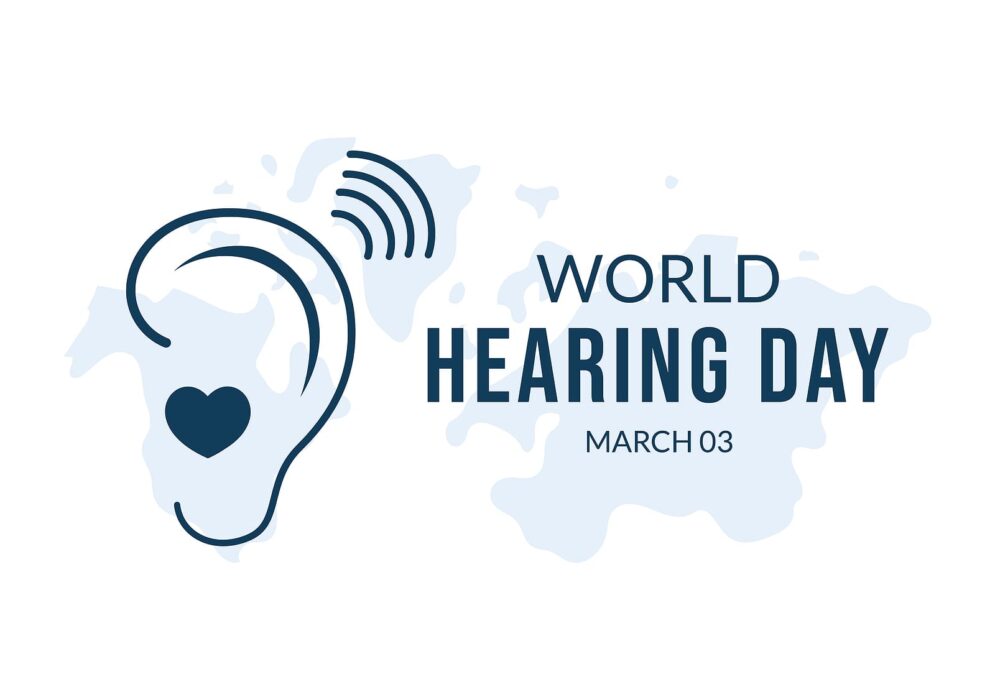
Today, Nigeria celebrates with the global community on World Hearing Day, with the theme, “From communities to classrooms: hearing care for all children.” The campaign focuses on integrating ear and hearing care into school and community programmes to ensure early identification and prevent avoidable hearing loss in children.
This newspaper recognises that hearing loss is a significant public health issue in Nigeria, affecting millions of people and having profound implications for individuals and the economy
Though nearly 2.5 billion people are projected to have hearing loss by 2050 with about 700 million of these people needing hearing devices like hearing aid, the WHO said hearing loss affects around 90 million children and adolescents aged 5-19 years, across the world.
The WHO defines hearing loss (hearing impairment) as a person who is not able to hear as well as someone with normal hearing – hearing thresholds of 20 decibels (dB) or better in both ears while disabling hearing loss refers to hearing loss greater than 35 dB in the better hearing ear.
The prevalence of hearing loss increases with age, among those older than 60 years, over 25 per cent are affected by disabling hearing loss.
Nearly 80 per cent of people with disabling hearing loss live in low- and middle-income countries.
Common, preventable and treatable causes of hearing loss—such as otitis media with effusion (OME), chronic suppurative otitis media (CSOM), and impacted ear wax—remain widely prevalent in children.
At times, hearing loss begins insidiously but progresses and worsens over time.
It is classified according to severity—mild, moderate, severe, or profound—and causes significant social, economic, and health impacts.
Hearing loss can lead to social isolation, depression, and difficulties in communication, impacting personal relationships and mental health.
Meanwhile, estimates from the Speech Pathologists and Audiologists Association in Nigeria (SPAAN) indicate that appproximately 8 to 8.5 million Nigerians are living with various forms of hearing impairments and challenges while six out of every 1,000 children born in Nigeria suffer from congenital hearing loss.
Experts warn that the number is rising, driven by factors like infections, genetic conditions, and untreated ear diseases.
However, it commonly remains undetected, especially in low-income settings like Nigeria.
WHO said this year’s focus is on school children because globally, school-age children with hearing loss often remain undiagnosed and without access to needed services .
According to the world health body, about 60 per cent of hearing loss in children can be prevented through public health measures.
This includes preventing infections like measles and meningitis, protecting mothers from infections such as rubella and Cytomegalovirus (CMV) a very common, lifelong herpes virus spread through body fluids (saliva, urine, blood) that usually causes no symptoms in healthy people. CMV can be detected during pregnancy and screening newborns. Providing early help when problems are found is essential.
Left unaddressed, this not only affects a child’s ability to hear but significantly impacts speech, language, cognitive and social development, commonly leading to poorer educational outcomes, reduced employment prospects and long-term economic disadvantages.
Sadly, like other Non communicable diseases( NCD), the high prevalence of hearing loss in the country is another sad commentary on the country’s health system.
WHO said integrating systematic screening and early intervention programmes into school health and child health plans can ensure improved outcomes for children living with ear or hearing problems.
Yet, Nigeria still lacks a mandatory newborn hearing screening policy which mandates hospitals in the country to automatically test babies for hearing loss shortly after birth, using simple and affordable methods such as the otoacoustic emission (OAE) test.
With between just N10,000 to N15,000, a newborn hearing test can be done the same day a baby is born.
Unfortunately, this test is not available in the nation’s public hospitals.
More often than not, many Nigerian parents often discover rather too late when intervention has already closed, their child’s hearing loss at four or five years old, when speech delays become obvious.
But experts say that with early detection and support, such as hearing aids, cochlear implants, or sign language, children can develop language, succeed in school, and reach their full potential.
Also, a clinical audiologist at BSA Hearing and Speech Centre, Dr. Simeon Afolabi, canvassed the creation of a National Hearing Loss Registry for a reliable data to make effective planning possible.
In our view, beyond screening, there’s need for the establishment of a National Cochlear Implant Programme, as the rising cost of treatment has placed lifesaving technology beyond the reach of most Nigerian families.
There is a high, unmet need for hearing aids and audiological services, often due to low awareness and high costs.
The situation has been described by experts as a growing public health emergency, with many cases resulting from preventable or treatable causes.
In our opinion, addressing hearing loss in Nigeria is critical for enhancing the quality of life for individuals affected and improving the overall economic health of the nation.
Investments in healthcare, education, and public awareness can mitigate its impact and promote inclusive growth.
World Hearing Day, held every year on March 3, is an annual global health effort to raise awareness about hearing health.
This observance provides an opportunity to educate the public on how to prevent hearing loss and promote ear and hearing care.
We’ve got the edge. Get real-time reports, breaking scoops, and exclusive angles delivered straight to your phone. Don’t settle for stale news. Join LEADERSHIP NEWS on WhatsApp for 24/7 updates →
Join Our WhatsApp Channel