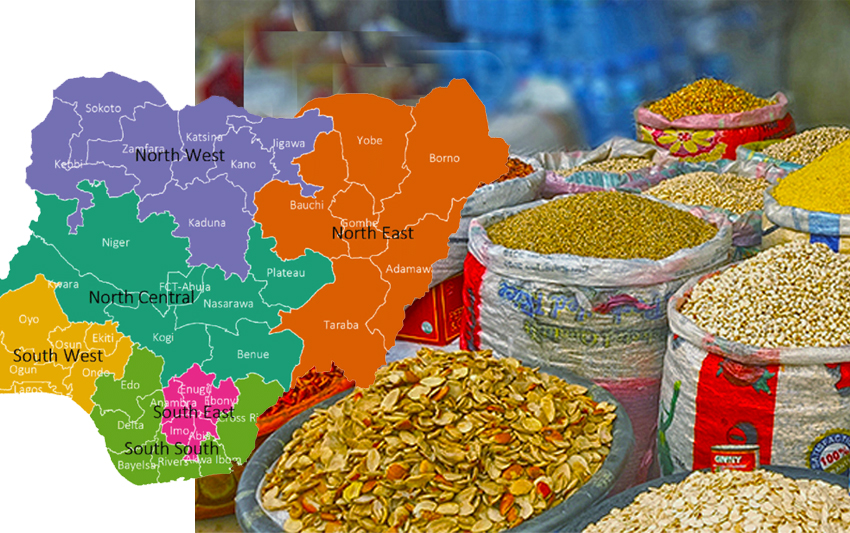
The food crisis in Nigeria is like a ticking time bomb that is threatening the survival of the nation itself. The high cost of food, which continues to skyrocket daily, has become a major concern for citizens nationwide. As it presently is, official statistic puts Nigeria’s food inflation at an alarming 26.98 per cent level.
For most families, putting food, of whatever quality, on the table has become a struggle as tough as life itself. It is no longer news that some have resorted to skipping meals in addition to reducing the quality and quantity so as to stretch what is available to its very limit. This is a challenge confronting the government and the people collectively and finding a lasting solution requires an acute thinking outside the box. The approach ought to follow a strategy that is not only effective and productive but also sustainable.
The government’s current approach to food security has been largely ineffective, wasteful and unhelpful. The over-reliance on imports, coupled with poor infrastructure, corruption, and insecurity, has led to a situation where food prices have become unaffordable for the average Nigerian. The lack of meaningful investment in the agricultural sector coupled with the neglect of rural areas have also contributed to the crisis that is posing a serious threat to national security as a whole.
The consequences attendant to food crisis anywhere in the world is always dire. They manifest in ways that can be catastrophic. Malnutrition rates are rising, and the health of millions of Nigerians is being compromised. The economic impact is also significant as the high cost of food is reducing disposable income and hindering economic growth. The social consequences are similarly severe, as hunger leads to unrest, crime, and other negative outcomes.
The federal government recently disclosed that it has set aside N200 billion to tackle food insecurity in the country. It explained that the amount would help bring down food prices and inflation. But the nagging question is, how does the nation intend to achieve that in a way and manner that will bring about a result that is impactful? Over the years, successive governments have continued to pump funds purposelessly into programmes, without well-thought-out plans of how such funds could be optimally utilised to achieve desired goals.
It is also important to note that many factors contribute to Nigeria’s continued rise in food prices. The government must make conscious efforts to address these challenges. For instance, efficient transportation system is required to move food items from the farm or industry to the market where the consumers can access them at prices that are affordable. Other sub-factors also contribute to the high cost of transportation.
It is trite to posit that vehicles don’t run on water; they require either petrol or diesel. It stands to reason that when this important factor is either costly, scarce or even unavailable, of course, it escalates food prices. The ongoing increase in fuel prices has substantially hiked the price of food items.
Added to this challenge is the state of the roads in the absence of reliable rail transportation. Most of the highways are in deplorable condition. In that case, the cost of vehicle repair and the time it takes to get the food to the market are factors that impact negatively on the unit cost of the produce.
In our opinion, it is important to tackle and solve the factors that cause high transportation rates as one of the ways of bringing down the cost of food items. Also, in our view, fuel prices should be stabilised at a rate deliberately designed to favour the masses.
The government must take urgent action to address this crisis. The first step is to invest in agriculture and rural development. This will create jobs, increase food production, and reduce the country’s import dependence. The government must also improve infrastructure, such as roads and storage facilities so as to enable farmers to get their produce to market in a timely manner and prevent waste.
Another crucial step is to tackle corruption and insecurity which have contributed to the high cost of food. The government must also prioritise nutrition programs to address the rising malnutrition rates. These programs should target vulnerable segments of the population such as children and pregnant women.
The food crisis in Nigeria is a complex problem that requires a multifaceted approach to finding a lasting solution. The government should provide subsidies for vital materials required for food items cultivation. These include pesticides, fertilisers, herbicides and other vital inputs. Failure to act urgently will lead to dire consequences for the country and its people. Time is, indeed, of the essence.
We’ve got the edge. Get real-time reports, breaking scoops, and exclusive angles delivered straight to your phone. Don’t settle for stale news. Join LEADERSHIP NEWS on WhatsApp for 24/7 updates →
Join Our WhatsApp Channel