Nigeria is entering a decisive new phase in its energy history. For more than three decades, the country survived on the unstable foundation of imported petroleum products, an arrangement that left the economy exposed to global price shocks, foreign exchange scarcity, and volatile geopolitical risks far beyond Nigeria’s control.
Today, that long-standing import regime is being fundamentally redefined by the emergence of the Dangote Petroleum Refinery, the world’s largest single-train refining facility.
The debate surrounding this transition has become increasingly loud, but the core facts remain straightforward: importation is inherently unstable, local refining is strategically superior, and Nigeria finally has the capacity to meet its own demand.
Importation: A system built on global uncertainty
One of the most persistent misconceptions is that importing fuel creates stability. It does not.
Imported petroleum is tied directly to the daily fluctuations of international crude prices, exchange rate movements, shipping costs, and global geopolitical tensions.
A single event, whether tension in the Middle East, sanctions on major producers, or disruptions in global shipping corridors, immediately impacts the landing cost of fuel in Nigeria.
This dependence is neither sustainable nor strategic for a major oil-producing nation.
It is simply a vulnerability disguised as a system.
Local refining and the single-train misconception
A recurring criticism is that the Dangote Refinery is a “single-train refinery” and therefore risky. That argument collapses under basic technical scrutiny.
A well-designed, fully integrated single-train refinery is not an operational hazard. Modern refineries are engineered so that supporting units, hydrogen plants, power systems, desulphurisation units, reformers, and product-treating facilities,can operate independently.
If the crude distillation unit encounters a technical issue, the ancillary units do not shut down.
Production of key products continues through imported intermediate feedstocks, which do not require the crude cracker to run.
This is precisely why Dangote has been able to maintain production levels, even while expanding its crude distillation capacity from 600,000 barrels per day to 700,000 barrels per day.
Within the next 24 to 30 months, this capacity is projected to double to 1.4 million barrels per day, positioning it among the largest refineries globally.
So, the question is simple:
If Nigeria’s four government-owned multi-train refineries have remained non-functional for over 15 years, why is a fully operational single-train refinery suddenly a problem?
Capacity, storage, and supply chain dominance
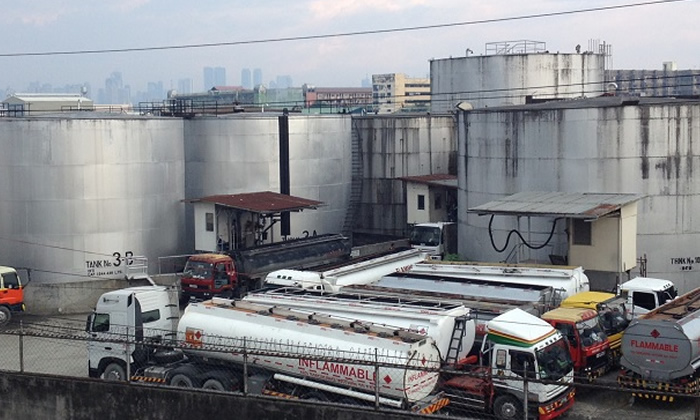
The Dangote Refinery was built not only for production, but for resilience. Its product storage capacity exceeds one billion litres, enough to serve Nigeria and significant portions of Sub-Saharan Africa.
Its standalone marine terminal is one of the largest of its kind, capable of receiving and offloading vessels of virtually any size.
This capacity eliminates the bottlenecks that long plagued Nigeria’s fuel supply chain: congested ports, insufficient storage, and dependence on third-party logistics.
With thousands of CNG-powered trucks and the largest loading infrastructure in the country, Dangote can deliver directly to petrol stations nationwide.
For the first time, Nigeria has a refinery with the scale, supply chain, and distribution capability to render fuel importation economically unnecessary.
The Protest
The current resistance from certain importers is not rooted in national interest, technical concern, or economic logic.
It is simply a reaction to the end of a profit model.
For years, importers purchased fuel abroad at any price the market dictated, and sold it locally with significant margins.
Local refining disrupts that model by reducing foreign dependency and introducing competition grounded in actual production, not arbitrage.
When Dangote adjusted PMS prices from N699 to N799 after the holiday promotional period, some importers claimed it created “market uncertainty.”
But the previous price was intentionally discounted for the festive season, even sold at a loss, which caused smuggling across West and Central Africa where the same fuel sold for N1,700 to N1,900 per litre. No refinery or marketer can sustainably maintain loss-level pricing.
Price adjustments in oil markets are normal. What matters is supply certainty, and domestic refining offers more stability than any import-based model.
A structural shift, not a temporary phase
Nigeria’s energy landscape is undergoing a necessary transition: from an import-dependent system to one anchored in domestic refining, integrated infrastructure, and market-reflective pricing.
This shift enhances energy security, conserves foreign exchange, supports industrialisation, and positions Nigeria as a regional supplier rather than a perpetual importer.
Those who built their businesses on importation may find this new reality uncomfortable.
But national progress cannot be held back by the resistance of a few. Importation is easy, so is importing poverty.
Refining, integrating, distributing, and sustaining national energy security requires scale, investment, and long-term vision.
The Dangote Refinery embodies that vision.
And its emergence marks the beginning of the end of Nigeria’s petroleum imports regime.
We’ve got the edge. Get real-time reports, breaking scoops, and exclusive angles delivered straight to your phone. Don’t settle for stale news. Join LEADERSHIP NEWS on WhatsApp for 24/7 updates →
Join Our WhatsApp Channel