In a country where public opinion is often shaped by viral headlines and paid narratives, entrepreneur and civic thinker Akor Philip Paul is charting a different course — one rooted in accountability, data, and critical reasoning.
Once at the center of intense media controversy surrounding Benignant Forte Nigeria Ltd, Paul has since emerged with a renewed focus on national consciousness through the Cachet Community, a fast-growing intellectual movement advocating evidence-based civic engagement.
In this exclusive interview, he reflects on the lessons from 2021, the birth of Cachet, and his vision for a more discerning Nigerian society.
Interviewer:
In 2021, you were at the center of a media storm regarding Benignant Forte Nigeria Ltd. Many labeled it a “failed investment.” Looking back, what is the side of the story the headlines missed?
Akor Philip Paul:
The headlines missed the nuance of a principled exit. Benignant Forte was the first Nigerian crowdfunding organization to enter voluntary liquidation. We weren’t forced out by a lack of funds; we were pushed by what I call regulatory bullying — high-handedness disguised as oversight.
When we announced that we were stopping public investments to clear our obligations at a time when we were liquid enough to meet over 50 percent of our liabilities the media chose sensationalism over investigation.
I was labeled a “scammer” simply because bad news sells faster than the truth of a founder trying to do right by his investors under immense regulatory pressure.
Interviewer:
That experience seems to have birthed the Cachet Community. Was this move born out of spite, or something deeper?
Akor Philip Paul:
It was born out of observation.
During that period, I noticed a dangerous trend: the average Nigerian had outsourced their thinking to paid bloggers and sensational headlines. People were reacting to narratives instead of data.
The Cachet Community was formed to champion epistemology — the study of how we know what we know. We want to equip Nigerians to analyze information critically rather than follow parochial sentiments.
Our aim is to create a solid opposition to any government — not through insults or emotions, but through the rigorous use of data and statistics.
Interviewer:
You recently hosted the maiden edition of The Conclave. How did it go, and what makes it different from typical political town halls?
Akor Philip Paul:
The Conclave serves as a physical contact point for these intellectual shifts.
Our first edition in September 2025 was mind-blowing because it deliberately moved away from Nigeria’s usual complaint culture. Instead of venting frustrations, we examined national issues using objective analysis.
What makes it different is simple: we are not there to support a person or political party. We are there to support the truth — as proven by evidence.
Interviewer:
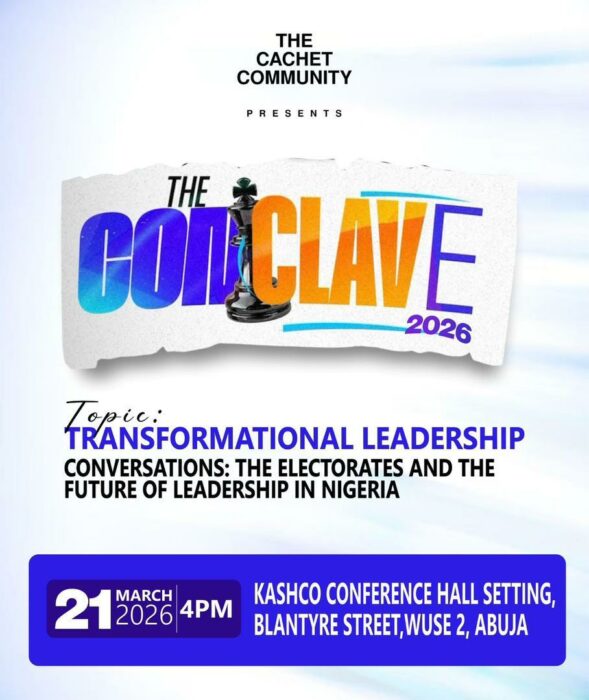
Your next Conclave is scheduled for March 21, 2026. What is the focus this time?
Akor Philip Paul:
The theme is “Transformational Leadership: The Role of the Electorate in the Future of Nigeria.”
We often blame leaders, but leaders are products of the ecosystem created by the electorate. This edition will focus on how Nigerian voters can transition from being passive consumers of political propaganda to data-driven stakeholders who demand specific, measurable outcomes from leadership.
Interviewer:
What ultimate legacy do you hope to leave through the Cachet Community?
Akor Philip Paul:
I want to see a Nigeria where a blogger cannot destroy a reputation with one unverified headline because the public is too informed to believe it without proof.
I want a Nigeria where our arguments with government are backed by statistics — making the voice of the opposition intelligent, credible, and impossible to ignore.
We’ve got the edge. Get real-time reports, breaking scoops, and exclusive angles delivered straight to your phone. Don’t settle for stale news. Join LEADERSHIP NEWS on WhatsApp for 24/7 updates →
Join Our WhatsApp Channel