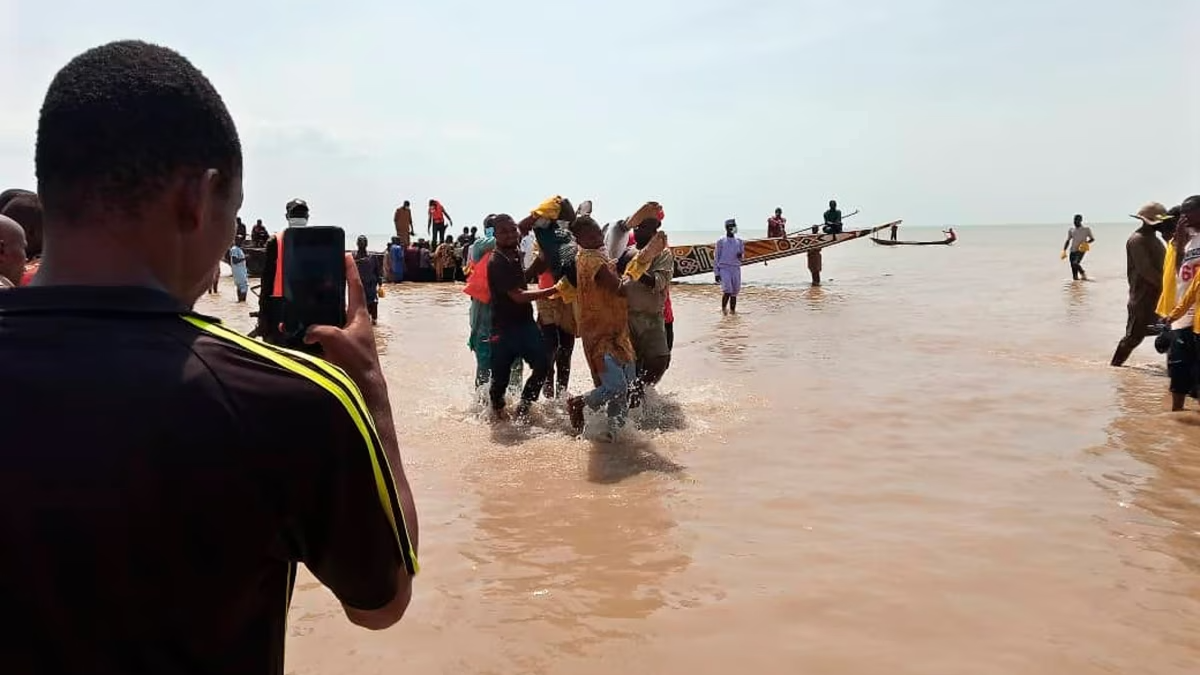
Another boat has capsized. Another hundred lives lost or forever changed. The National Inland Waterways Authority rolls out fresh directives, announces new measures, claims a 70 percent reduction in accidents.
But here’s what troubles us: the bodies keep floating to the surface.
In October 2024, over 200 passengers plunged into the waters at Gbajibo village in Niger State. Just months earlier, more than 40 people went missing in Sokoto when their boat capsized.
The list reads like a recurring nightmare: 60 dead in Niger State this month, over 70 in Warrah in 2021, more than 100 in Mokwa in 2022, 103 in Kwara in 2023. Each incident follows the same tragic pattern—overloaded boats, no life jackets, submerged obstacles, and families left counting the missing.
NIWA Managing Director Bola Oyebamiji paints a different picture. Since taking office in October 2023, he claims the Authority has transformed waterway safety through comprehensive reforms.
A Water Transportation Code has been gazetted. Water Marshals have increased from 80 to 350 personnel. New patrol boats, water ambulances, and passenger ferries have been deployed. Search and rescue response time has dropped to under 30 minutes. Safety campaigns have reached over 300 communities.
These initiatives sound impressive on paper. The question that haunts every riverine community is simple: if NIWA has achieved such remarkable progress, why do boats still sink with such devastating regularity?
The disconnect between NIWA’s claims and the harsh reality on Nigerian waterways exposes a fundamental problem with how we approach safety regulation in this country.
Agencies announce ambitious programs, deploy personnel, distribute equipment, then declare victory while the underlying problems persist. It’s bureaucratic theater masquerading as public policy.
Take the claim of 70 percent accident reduction. This figure demands scrutiny. What baseline is NIWA using? Which accidents are being counted? How do they explain the major incidents that have occurred since their supposed transformation began? When an agency makes such bold statistical claims while high-profile tragedies continue making headlines, citizens deserve detailed explanations, not vague assertions.
The enforcement challenge runs deeper than personnel numbers or equipment deployment. Nigeria’s waterways span thousands of kilometers across diverse terrains, from the Niger Delta’s maze of creeks to the broad rivers of the Middle Belt.
Many communities depend entirely on water transport, with no viable alternatives during rainy seasons when roads become impassable.
These realities create enormous pressure on boat operators to maximise passenger loads and minimise safety precautions.
NIWA’s “No Lifejacket, No Boarding” policy sounds admirable until you consider the economic dynamics at play.
Boat operators who refuse passengers without life jackets may lose business to competitors who are less scrupulous. In communities where the nearest alternative transport route adds days to a journey, passengers often pressure operators to bend safety rules.
Enforcement becomes nearly impossible without addressing these underlying pressures.
The Authority’s ban on night sailing between 6pm and 6am faces similar challenges. Many traders and travelers depend on overnight water transport to reach markets or return home.
In remote areas where NIWA’s presence is minimal, such bans are easily circumvented. Unless the agency can provide round-the-clock monitoring and viable alternatives, these restrictions remain aspirational rather than practical.
The agency’s call for Coastal Guards for Inland Waterways reveals another concerning reality: NIWA acknowledges it lacks adequate enforcement capacity. If the Authority needs additional security forces to implement basic safety regulations, what does that say about the effectiveness of their current 350 Water Marshals? How can they claim significant progress while simultaneously arguing for more enforcement tools?
Consider the practical challenges facing any serious enforcement effort. Nigeria’s waterways include countless unauthorised loading points in remote locations. Boat operators know their local waters better than any external regulator.
The agency’s emphasis on manifest systems at “recognised jetties” highlights another enforcement loophole. What percentage of water transport actually occurs at these official jetties? How many passengers board from informal launching points that remain outside NIWA’s monitoring system?
In communities where official jetties don’t exist or are inconveniently located, passengers will continue using traditional boarding points regardless of regulations.
What Nigeria needs is honest acknowledgment that waterway safety cannot be achieved through regulatory announcements and equipment distribution alone.
It requires sustained investment in alternative transportation infrastructure, economic support for communities that depend on water transport, and realistic enforcement strategies that account for local conditions.
The Authority’s recruitment of 800 additional Water Marshals may help, but only if these personnel receive adequate training, equipment, and support to operate effectively in challenging conditions. Deploying more officers without addressing systemic enforcement challenges risks creating another bureaucratic layer that looks impressive but delivers limited results.
Riverine communities deserve better than recycled promises and inflated statistics. They need reliable transport options that don’t require choosing between convenience and survival.
We’ve got the edge. Get real-time reports, breaking scoops, and exclusive angles delivered straight to your phone. Don’t settle for stale news. Join LEADERSHIP NEWS on WhatsApp for 24/7 updates →
Join Our WhatsApp Channel