There is something almost poetic about the fact that Nigeria’s power sector has spent the better part of a decade paralysed by debts it accumulated while failing to deliver electricity. The country paid through stalled industries, ruined compressors, dead refrigerators, and hospitals running generators around the clock and the sector still could not function.
Now, President Bola Tinubu has approved a N3.3 trillion settlement plan to clear legacy debts that built up between February 2015 and March 2025. Fifteen power plants have already signed settlement agreements worth N2.3 trillion. The Federal Government has raised N501 billion toward the obligation, disbursed N223 billion, and declared that Series II of the programme begins this quarter.
On its face, this is significant. The debts owed to generation companies and gas suppliers have long been the loudest excuse for why the lights stay off. Gas suppliers stopped pumping because they were not paid. Power plants throttled output because their invoices aged and died on the Nigerian Bulk Electricity Trading Company (NBET’s) desk. It validated N1.8 trillion of the N4 trillion claimed by 27 generation companies a figure that, by the Special Adviser on Energy’s, Olu Arowolo-Verheijen, own account, could still shift downward pending final settlement. That discipline in verification, rather than simply writing a blank cheque, is the right instinct.
But Nigerians have been here before, and they know how this particular road tends to end.
The announcement last October of a ₦4 trillion bond to clear GenCo and gas debts preceded this latest settlement figure. Before that, there were similar promises under different administrations’ restructuring plans, liquidity interventions, and emergency payments all announced with the same language about restoring confidence and stabilising the market.
The sector absorbed the money, the debts regenerated, and the darkness persisted. A power sector that has been the subject of more than N10 trillion in government interventions since privatisation in 2013 and still cannot sustain 5,000 megawatts consistently is not merely suffering from a debt problem. It is suffering from a structural one.
In our opinion, that distinction matters enormously, because debt settlement without structural reform is not a solution. It is a loan to a leaking bucket.
Consider the numbers the Minister of Power, Adebayo Adelabu, presented during the Expert Forum on Uninterrupted Power. Revenue grew by 70 per cent, from N1 trillion in 2023 to N1.7 trillion in 2024. Installed generation capacity edged up from 13,000 MW to 14,000 MW. An all-time peak of 5,801 MW was recorded on March 4 this year. There has been no national grid collapse in 2025. These are not trivial achievements, and credit should go where it is due.
The Electricity Act of 2023, the country’s first integrated national electricity policy in 24 years, and the metering drive funded through FAAC are all meaningful steps.
Yet the average Nigerian does not feel them. The gap between what the grid can theoretically generate and what actually reaches homes and businesses remains a chasm. Peak generation of 5,801 MW for a country of 220 million people a country the government itself describes as Africa’s largest economy is barely enough to power a mid-sized European city.
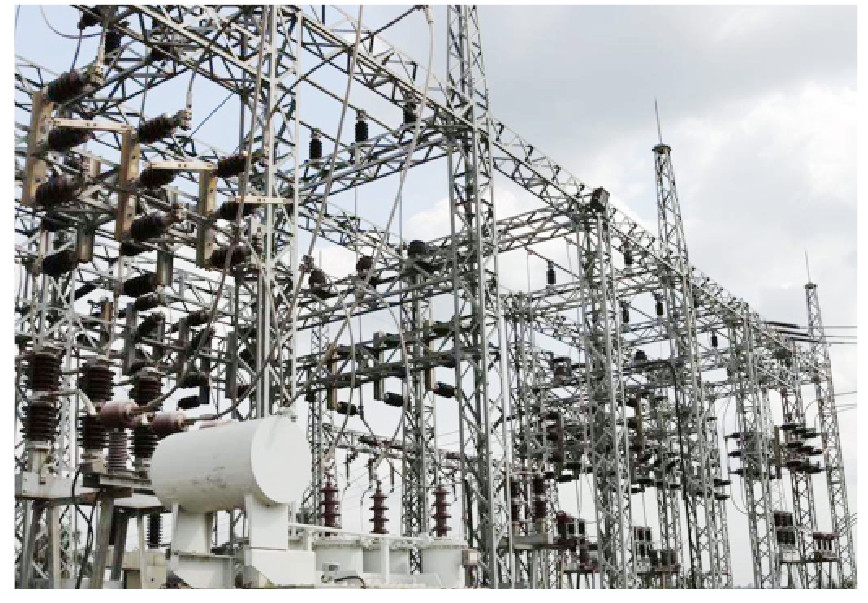
Distribution infrastructure is crumbling. The DisCos, which collect revenue and deliver power to end consumers, remain the weakest link in a chain that snaps predictably at that point.
That is where the government’s narrative begins to strain credibility. Settling debts upstream, paying gas suppliers and GenCos will increase generation. But a generation that cannot move efficiently through transmission corridors, and cannot reach consumers through functional distribution networks, will not translate into reliable electricity.
The enablement requires more than settling what is owed to the generators. It requires confronting the distribution sector’s governance failures, its chronic under-investment, and the perverse incentive structure that allows DisCos to collect tariff revenue without proportionate obligation to improve service.
The government’s answer to this, in part, is the service-based tariff — linking what consumers pay to the quality of electricity they receive. The principle is sound. The implementation has been patchy.
Millions of Nigerians have seen their electricity bills rise sharply over the past year without a commensurate improvement in supply hours. When tariff reform outpaces service delivery, it does not build confidence in the sector. It breeds resentment and reinforces the public’s long-held conviction that reform is a euphemism for paying more for the same dysfunction.
The Presidential Metering Initiative, targeting 3.45 million smart meters, is another piece of the puzzle. Metering gaps have historically been exploited by DisCos through estimated billing a practice that punishes consumers and distorts revenue data simultaneously. Deploying 300,000 smart meters so far against a gap estimated in the tens of millions is a start, but the pace must accelerate. Unmetered consumers are not just revenue leakages. They are citizens deprived of the basic right to know what they owe and why.
What Nigeria needs from this moment is not just a payment plan but a performance covenant. The ₦3.3 trillion settlement must come with enforceable conditions: generation targets that gas suppliers and power plants must meet once the debts are cleared, transmission upgrade timelines that are publicly tracked, and DisCo performance benchmarks tied to their operating licences. Settlement without accountability will simply restart the cycle that produced the debt in the first place.
The Tinubu administration has shown, with this initiative, that it understands the scale of the problem. That is different from solving it. Nigeria’s power crisis has defeated every administration since independence not because the solutions were unknown, but because the political will to enforce compliance, accept short-term pain, and hold sector actors accountable has always faltered when it mattered most.
Debt clearance is a necessary condition for fixing Nigeria’s power sector. It is not, by itself, a sufficient one. The government must now prove that this time unlike the dozens of interventions before it the money will be the beginning of a functional system, not the latest installment in a very expensive illusion.
We’ve got the edge. Get real-time reports, breaking scoops, and exclusive angles delivered straight to your phone. Don’t settle for stale news. Join LEADERSHIP NEWS on WhatsApp for 24/7 updates →
Join Our WhatsApp Channel