There are occasions in the public calendar that arrive not merely as holidays but as invitations. Eid Maulud, the commemoration of the birth of Prophet Muhammad, peace be upon him, is one of them. It asks something of those who observe it — not only gratitude and celebration, but honest reflection on how far the values the Prophet embodied are present in the lives we live and the society we have built.
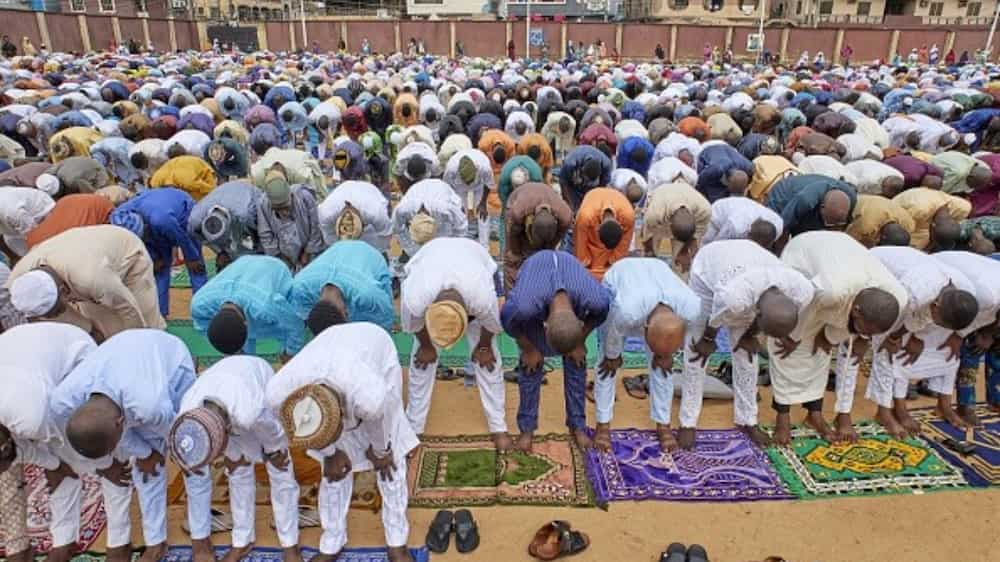
The Federal Government has declared today Tuesday August 25, 2026, a public holiday in honour of the occasion. Streets across the country will carry processions. Mosques will overflow with worshippers. Religious leaders will deliver sermons. Governors and ministers will issue messages of felicitation. All of this is appropriate. But Eid Maulud, at its core, is not a performance. It is a reckoning. The question it places before the honest observer is not what is being said in the Prophet’s honour today. It is whether what he lived for is visible in how we govern, how we serve, and how we treat one another when the ceremonies are over.
The Prophet Muhammad was born into a world that had organised itself around the supremacy of the powerful — tribe over tribe, the strong over the weak, privilege over justice. He did not merely preach against this order. He dismantled it, one value at a time, with a consistency between word and deed that earned him, before any revelation had come, the title his community bestowed: Al-Amin, the Trustworthy. In a public culture, in any era, that title is extraordinary. In Nigeria’s today, it would be revolutionary. For there is perhaps no single virtue whose scarcity is more felt in our national life than truthfulness — not of statement alone, but of conduct, the alignment between what a leader promises and what a citizen receives.
Truthfulness is the foundation on which every other social and political good rests. A government that manages public information as theatre rather than shared reality cannot earn the trust that legitimate governance requires. Trust, once systematically eroded, is not easily rebuilt. The distance between what Nigerian officials say and what citizens experience is one of the most quietly devastating features of our national life. On a day dedicated to the memory of a man who staked his entire moral authority on his truthfulness, that distance deserves to be named honestly rather than glossed with ceremony.
The Prophet’s mercy was equally concrete. The Qur’an describes him as rahmatun lil-ʻalamin — a mercy to all worlds — not as a decorative title, but as a description of how he moved through the world and who he saw when others looked away. He noticed the hungry. He stopped for the bereaved. He advocated for the enslaved. He remembered the absent. In Nigeria today, millions are carrying a weight that no official statement has adequately acknowledged: the compression of household budgets by inflation, the displacement of communities by sustained violence, the quiet despair of parents who cannot feed their children or keep them in school. The mercy the Prophet exemplified was not sentimental. It was practical, and costly to those who exercised it. Governance that genuinely reflects that value will be costly too — in political capital, in reordered priorities, in the discipline to serve those who cannot return the favour.
His justice was perhaps the most radical expression of his character. He said, plainly, that if his own daughter were to steal, he would apply the law to her as to any other person. That principle — the equal subjection of every person to a common standard — remains the most unfinished business of Nigerian public life. Justice here is too often a function of connection and proximity to power. The poor wait years for what the well-connected resolve in days. Accountability moves slowly for those who can afford to slow it. On this day, the Prophet’s standard is not a comfort to those who hold power. It is a challenge to every institution and every official in whom the capacity to deliver justice is vested.
His gift for community is perhaps the most urgent lesson for a Nigeria strained by the manipulation of difference. Arriving in Madinah among communities with deep mutual grievances, he built not a coalition of the powerful but a covenant of mutual obligation — a document, the Constitution of Madinah, that bound people of different faiths and lineages into a shared civic life. Nigeria’s diversity is not, in itself, a problem. It has been made into one, repeatedly, by those who find division more profitable than solidarity. Every invocation of religious or ethnic identity to inflame rather than unite, every act of communal violence dressed in the language of group grievance, betrays the community-building this day commemorates. Coexistence is not a soft aspiration. It is the most serious political project this country faces.
To our Muslim compatriots, we extend our warmest felicitations. May the day bring peace to every household and reflection to every heart. And to all Nigerians, we offer this thought: a nation truly honours the Prophet not by the scale of its celebrations but by the sincerity of its commitment to what he stood for — truthfulness without convenience, mercy without calculation, justice without exception, and community without exclusion.
We’ve got the edge. Get real-time reports, breaking scoops, and exclusive angles delivered straight to your phone. Don’t settle for stale news. Join LEADERSHIP NEWS on WhatsApp for 24/7 updates →
Join Our WhatsApp Channel