An earthquake measuring 8.8 on the Richter scale struck Russia’s far eastern Kamchatka Peninsula and triggered tsunami warnings for several countries. It also drew attention to the international dimension of disasters and why world leaders must approach the ticking time bomb euphemistically called climate change with greater seriousness and less politicking.
The scale measures the severity of earthquakes from 1 to 10 according to the amount of energy released, with a higher number indicating stronger tremors.
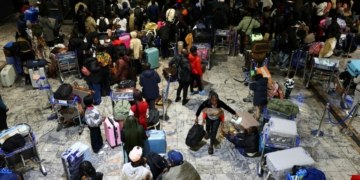
The earth tremor generated waves of up to 4m (13ft), damaging buildings and injuring several people. Though it took place in Russia, tsunami warnings were issued in far-flung countries like Japan and parts of the United States of America—Hawaii, California, Alaska, and the Philippines. So far, nearly two million people have been evacuated in some of the affected areas that took the first hit.
President Donald Trump thinks that Climate Change is a myth. He insists on expanded exploration and exploitation of hydrocarbons, which have been primarily blamed for the depletion of the Ozone layer through carbon emissions.
Recent hurricanes, tropical storms, and flash floods that have hit parts of the country have not had the kind of impact that could possibly initiate a policy shift. The earthquake in Russia reached the United States, including Hawaii, California, Oregon, Washington, and Alaska.
In response to the threat posed by phenomena like the one in Russia, the world community established a policy framework—the Paris Agreement. It is, on paper, a legally binding international treaty on climate change. It was adopted by 195 Parties at the United Nations Climate Change Conference (COP21) in Paris, France, on 12 December 2015. It entered into force on 4 November 2016. COP, “Conference of the Parties,” is an international climate meeting held annually by the United Nations. It serves as the supreme decision-making body of the UN Framework Convention on Climate Change (UNFCCC), where member states convene to assess progress in addressing climate change and to make plans for future climate action.
It is supposed to be a critical platform for countries to evaluate their collective efforts to curb climate change and accelerate actions towards achieving climate goals. Unfortunately, it has been mired in political and diplomatic brinkmanship.
The document’s provisions state that its goal is to hold “the increase in the global average temperature to well below 2°C above pre-industrial levels” and pursue efforts “to limit the temperature increase to 1.5°C above pre-industrial levels.” This was as of 2016.
However, in recent years, world leaders have stressed the need to limit global warming to 1.5°C by the end of this century due to frequent floods, storms and hurricanes.
This mood on the international scene is primarily influenced by the UN’s Intergovernmental Panel on Climate Change, which indicates that crossing the 1.5°C threshold risks unleashing far more severe climate change impacts, including more frequent and severe droughts, heat waves, and rainfall.
The UN insists that to limit global warming to 1.5°C, greenhouse gas emissions must peak before 2025 and decline by 43 per cent in 2030. Debates on combating climate change have been ongoing since the early 1990s. These negotiations have produced vital accords, including the Kyoto Japan Protocol, which the United States and some economically advanced countries flatly repudiated, and now the Paris Agreement.
It must be pointed out that the Paris Agreement represents a landmark in the multilateral climate change process because, for the first time, a binding agreement perceptibly brings all nations together to combat climate change and adapt to its effects.
Sadly, in our opinion, the devil is in implementing the Paris Agreement, which requires economic and social transformation, based on the best available science. It is expected to work on a five-year cycle of increasingly ambitious climate action- or, ratcheting up by countries.
Based on this understanding, since 2020, countries claim to have been submitting their national climate action plans, known as nationally determined contributions (NDCs). Each successive NDC reflects an increasingly higher degree of ambition than the previous version.
Curiously, the findings of the first global stocktake, discussed at the 2023 UN Climate Summit in Dubai, United Arab Emirates (UAE), concluded that governments must do more to prevent the global average temperature from rising by 1.5°C.
In principle, as this newspaper observes, governments generally agree on the science behind climate change but have diverged on who is most responsible, how to track emissions-reduction goals, and whether to compensate harder-hit countries, mainly in the world’s developing regions, like Africa.
Perhaps recognising the urgency of the situation and the need for accelerated action to limit global warming to 1.5°C, the COP27 decision requests Parties to revisit and strengthen the 2030 targets in their NDCs to align with the Paris Agreement temperature goal, considering different national circumstances.
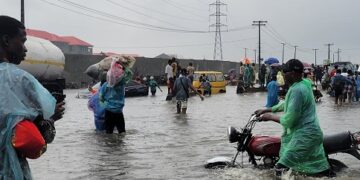
Nigeria is on record as one of the world’s most vulnerable countries. It faces increasing climate variability, which leads to more intense and untimely rainfall, land degradation, flash floods, landslides, and gully erosion. President Bola Tinubu has announced that Nigeria needs at least $17 billion annually to meet its nationally determined contributions (NDCs). The guilty, economically advanced nations, should bear more of this financial burden.
We’ve got the edge. Get real-time reports, breaking scoops, and exclusive angles delivered straight to your phone. Don’t settle for stale news. Join LEADERSHIP NEWS on WhatsApp for 24/7 updates →
Join Our WhatsApp Channel