
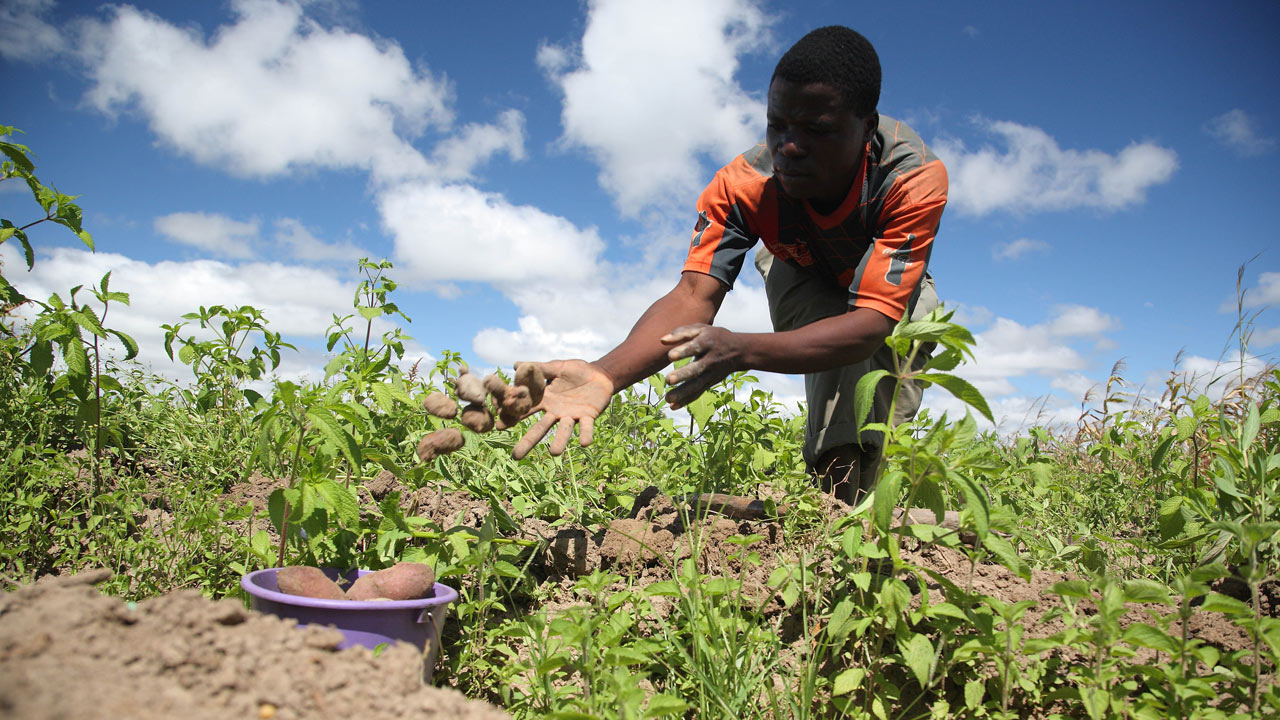
Once upon a time, Nigeria’s wealth rose directly from the soil. Before oil rigs and export terminals defined national revenue, the country was known for its groundnut pyramids, vast cocoa belts, palm produce, rubber plantations, and cotton fields.
Agriculture was not a fallback plan; it was the backbone of the economy. Across all geopolitical zones, the land produced something of value, and the nation exported food and cash crops with confidence.
Historical economic records from Nigeria’s pre-independence and early post-independence years, including data referenced by the World Bank and FAO, consistently show agriculture as the country’s dominant revenue and employment sector at the time.
In the North, groundnut pyramids stood like monuments of hard work, stacked high in Kano and other trading centres, symbolising abundance and enterprise. Commodity trade reports from the 1950s and 1960s identify groundnut as one of Nigeria’s leading exports, supplying both local processing mills and overseas markets. Cotton and hides also moved in large commercial volumes, supporting the textile and leather industries that once thrived in the region, according to historical records of the regional marketing board.
In the West, cocoa was king. From the old Western Region came the cocoa boom that funded infrastructure, education, and regional development. Archival economic data and regional government accounts from the First Republic period show that cocoa revenues supported landmark projects and public institutions.
Nigeria ranked among the world’s top cocoa producers during this era, with production concentrated across present-day Oyo, Ondo, Ogun, Osun, and Ekiti, forming a strong export corridor documented in FAO commodity statistics.
In the East, palm produce, palm oil and palm kernel drove commerce. Long before palm oil re-emerged as a strategic global commodity, Eastern Nigeria was a major supplier to international markets. Historical export records and produce board archives show coordinated grading and export systems, while rural households depended heavily on palm processing for income. Rubber plantations and cassava production also featured prominently in regional economies, strengthening both domestic food supply and trade flows.
The oil boom of the 1970s. Petroleum quickly replaced crops as the primary source of revenue. National accounts and OPEC-era revenue reports show a sharp rise in oil earnings and a corresponding decline in agricultural export share. Investment attention shifted, rural labour migrated to cities, and farm settlements thinned out. Remembering that agricultural era is remembering when every region had something to offer, when prosperity was harvested, and when national pride could be measured not only in barrels, but in bushels. It is the memory of a Nigeria that fed others, and fed itself.
We’ve got the edge. Get real-time reports, breaking scoops, and exclusive angles delivered straight to your phone. Don’t settle for stale news. Join LEADERSHIP NEWS on WhatsApp for 24/7 updates →
Join Our WhatsApp Channel