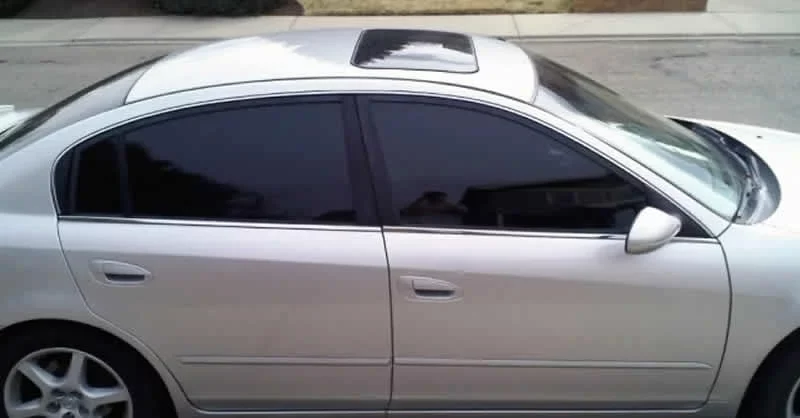
A legal practitioner, John Aikpokpo-Martins, has accused the Nigeria Police Force of attempting to transform itself into a revenue-generating agency under the guise of enforcing the tinted glass permit policy.
Aikpokpo-Martins described the planned enforcement as illegal, unreasonable, and financially motivated.
The lawyer made the remarks on Wednesday while speaking on Channels Television, where he criticised the police for insisting on enforcing the policy despite a subsisting court order restraining them from doing so.
“The police are trying to turn themselves into a revenue-generating agency. Revenue goes into the TSA account in this country, but the police have absolutely nothing to do with the TSA, and this money is not appropriated by the National Assembly,” he said.
According to Aikpokpo-Martins, police lack the legal authority to disregard or review a court order, insisting that only the courts have the power to alter their own decisions.
“The police lack the power to review a court order that has been noted. That excuse of trying to secure the country is not tangible at all, and it is childish,” he said.
Aikpokpo-Martins argued that if the police believe the court order stopping the enforcement of the tinted glass permit should be reconsidered, the appropriate step is to return to court rather than act unilaterally.
“If, for whatever reason, they believe that that order should be reviewed, they should go back to the court, bring applications, we argue it, and if the court deems it fit to review, they will review. They are not a court unto themselves,” he stated.
Questioning the security justification often advanced by the police, the lawyer challenged the authorities to provide evidence linking the use of tinted glass to rising crime levels across the country.
“What statistics state that the surge in crime across the country arises from the use of tinted glass?” he asked.
He added that law-abiding citizens already cooperate with police officers at checkpoints, noting that the police have sufficient powers to stop and search vehicles where there is reasonable suspicion.
“For reasonable Nigerians like myself, before I get to a police checkpoint, I wind down. And if anybody refuses to wind down, the police have the right to tell the person to step down and then check if the person is carrying illegal materials,” he said.
Aikpokpo-Martins also faulted comments by the Inspector-General of Police on licensing and renewal of tinted glass permits, describing the annual renewal requirement as unnecessary and unrelated to effective policing.
“Now the IGP came and started talking about licensing for tinted glass. Even if you do tinted glass, do you have to renew it every year? What has that got to do with policing?” he queried.
He alleged that the policy is primarily about revenue generation, claiming that the figures involved could run into billions of naira annually.
“It’s just about the millions. I have sat down to do the calculations. If every car renews their licence every year at ₦15,000 for roughly 50,000 cars in Nigeria, calculate the billions and tell me who will control the billions,” he said.
The lawyer further raised concerns about transparency and accountability in the handling of such funds, pointing out that revenue in Nigeria is meant to be paid into the Treasury Single Account (TSA), from which the police do not directly draw funds.
He questioned what ultimately happens to funds generated from tinted glass permits, warning that enforcing the policy without proper legal backing and financial oversight undermines the rule of law.
Meanwhile, the Police have denied the existence of a subsisting court order barring the Force from enforcing the tinted glass permit.
Force Public Relations Officer, ACP Benjamin Hundeyin, stated this while speaking with journalists in Abuja on Tuesday.
“At no point did any court restrain the Nigerian Police Force from enforcing the tinted gas permit policy.
“That injunction talked about maintaining the status quo, and I don’t want to go into the technicalities, but it talked about maintaining the status quo.
“At the time that order was given, the status quo was enforcement, not pre-enforcement,” he said.
We’ve got the edge. Get real-time reports, breaking scoops, and exclusive angles delivered straight to your phone. Don’t settle for stale news. Join LEADERSHIP NEWS on WhatsApp for 24/7 updates →
Join Our WhatsApp Channel