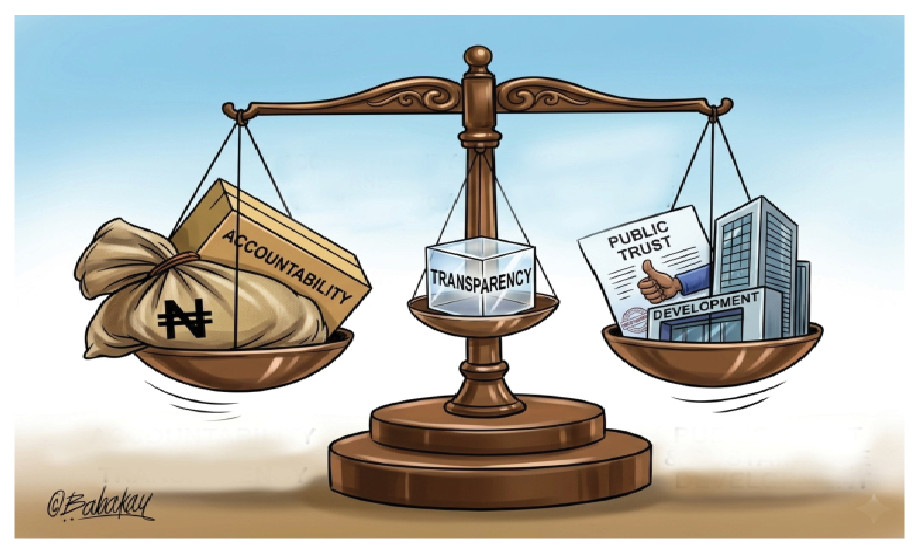
A nation’s tax system is like a long suspension bridge stretching across a turbulent river. The steel cables represent legislation, digital infrastructure, enforcement machinery and administrative reform. The roadbed represents taxpayers moving economic life forward. But what holds everything together, what prevents collapse under weight, is not steel alone. It is trust, the invisible tension created by a shared belief that the structure is fair, stable and collectively maintained.
Nigeria’s 2025 fiscal policy and tax reforms, operational from 2026, are a major attempt to reinforce this bridge. The reforms introduce digital tax administration, harmonised revenue frameworks, expanded taxpayer identification systems and improved integration of the informal sector into the formal tax net. On paper, these are commendable strides toward efficiency. They reflect global best practice and align with contemporary public finance principles.
Yet, the deeper question is not whether the bridge has been reinforced, but whether citizens believe it will hold their weight and whether they believe others are also contributing to its maintenance.
This is where fiscal systems rise or fall, not in statute books or digital platforms, but in social psychology.
Efficiency Has Limits Without Trust
Modern tax reform often begins with efficiency. Reduce leakage. Expand the tax base. Digitise collections. Improve compliance monitoring. Nigeria’s reforms reflect all of these imperatives. But efficiency, while necessary, is not sufficient.
The classical economic model of taxation, often associated with Gary Becker’s framework of rational deterrence, assumes that individuals comply because they fear punishment. Yet decades of empirical work have complicated this assumption.
James Alm, a leading authority in tax compliance research, has consistently shown that enforcement explains only a fraction of taxpayer behaviour. In his work on tax morale, he demonstrates that perceptions of fairness, trust in government and social norms are often stronger predictors of compliance than audit probability.
Similarly, Richard Thaler and Cass Sunstein in “Nudge” illustrate how behavioural design shapes economic choices in ways that traditional models overlook. Tax compliance, in their view, is not merely a calculation but a behavioural outcome shaped by framing, trust and institutional cues.
Efficiency reduces friction. Trust determines participation.
Without trust, even the most sophisticated fiscal machinery becomes a system of reluctant compliance rather than voluntary contribution.
The Nordic Lesson in Fiscal Psychology
To understand the power of trust in taxation, one must examine the Nordic countries. Sweden, Denmark, Norway and Finland consistently rank among the highest in tax compliance globally, despite relatively high tax burdens.
Bo Rothstein, in his influential book “Social Traps and the Problem of Trust” (Cambridge University Press, 2005), argues that institutional impartiality is the foundation of societal trust. Citizens comply with taxation not because they enjoy paying taxes, but because they believe institutions are fair, predictable and non-corrupt.
In “The Quality of Government” (with Jan Teorell), Rothstein further demonstrates that when public institutions are perceived as impartial, citizens are more willing to contribute to collective goods, including taxation.
This is reinforced by empirical studies in public finance by scholars such as Vito Tanzi and Ludger Schuknecht, who show that fiscal transparency and visible public service delivery significantly enhance compliance behaviour.
The Nordic model works not because of coercion, but because of what can be called fiscal reciprocity. Citizens see taxes transformed into education, healthcare and infrastructure with minimal leakage. The tax system becomes a visible exchange rather than an abstract obligation.
Trust, in this sense, is not cultural luck. It is institutional engineering sustained over decades.
Nigeria’s Reform Paradox
Nigeria’s 2025 fiscal policy and tax reforms are ambitious in scope and technically sound in design. They aim to widen the tax net, unify fragmented revenue systems and leverage digital tools to improve compliance and accountability. These reforms are aligned with global fiscal governance standards promoted by institutions such as the International Monetary Fund and the World Bank.
However, there is a structural paradox.
While administrative efficiency is improving, public trust in fiscal reciprocity remains uneven. In behavioural terms, this creates a compliance gap. Citizens respond not only to enforcement systems but to their perception of whether the state is a fair partner in the fiscal contract.
Research by Benno Torgler and Friedrich Schneider on tax morale across developing economies consistently shows that trust in government and perceptions of corruption are stronger determinants of compliance than enforcement intensity. Where citizens perceive inefficiency or misallocation of public funds, compliance weakens even when systems are technologically advanced.
Nigeria risks what scholars might describe as a high efficiency but low trust equilibrium. In such a system, enforcement becomes increasingly expensive while voluntary compliance remains stagnant.
How Behaviour Actually Drives Compliance
Behavioural economics provides a clearer explanation of this tension.
First is reciprocity. Individuals are more willing to pay taxes when they believe others are also contributing and when public goods are visibly delivered. Fehr and Gächter’s research on conditional cooperation shows that people are strongly motivated by fairness in group contributions.
Second is procedural justice. Tom Tyler’s work in “Why People Obey the Law” demonstrates that people comply with rules when they perceive the process as fair, not just the outcome. If tax administration is seen as arbitrary or opaque, compliance declines regardless of penalties.
Third is social norms. People often follow what they believe others are doing. If tax compliance is seen as widespread and socially expected, voluntary compliance increases significantly.
Nigeria’s reforms have begun addressing efficiency and transparency, but the deeper challenge is norm formation. Tax compliance is still widely perceived as obligation rather than identity.
Trust as Infrastructure, Not Decoration
The central policy lesson is that trust is not an outcome of efficiency. It is infrastructure that enables efficiency to function.
First, transparency must become radical, not symbolic. Citizens should be able to trace tax revenues to specific public goods at both federal and local levels. This creates what behavioural economists describe as feedback loops of legitimacy.
Second, the state must visibly close the fiscal loop. When taxpayers see direct connections between taxes paid and services delivered, compliance becomes self-reinforcing. This aligns with fiscal exchange theory in public economics.
Third, tax systems must actively shape social norms. Public communication should frame taxation not as burden but as collective investment in national outcomes.
Fourth, institutional impartiality must be strengthened. Rothstein’s research makes clear that trust collapses when institutions are perceived as biased or corrupt. Independent oversight bodies with real enforcement authority are essential.
Finally, digital systems must not only improve efficiency but also enhance visibility. Technology without transparency risks becoming a tool of extraction rather than trust-building.
The Invisible Weight of the Bridge
Returning to the opening analogy, a suspension bridge does not stand because its steel cables are visible or its design is modern. It stands because millions of users believe it will hold.
Nigeria’s fiscal reforms have strengthened the cables. They have improved design and reinforced structure. But the bridge will only truly carry national ambition if citizens believe, consistently and collectively, that their contribution is matched by fairness in return.
Without that belief, even the most advanced fiscal architecture becomes fragile under pressure.
And so the final image is this: a bridge does not fail when its steel breaks. It fails when people stop trusting it enough to cross.
We’ve got the edge. Get real-time reports, breaking scoops, and exclusive angles delivered straight to your phone. Don’t settle for stale news. Join LEADERSHIP NEWS on WhatsApp for 24/7 updates →
Join Our WhatsApp Channel