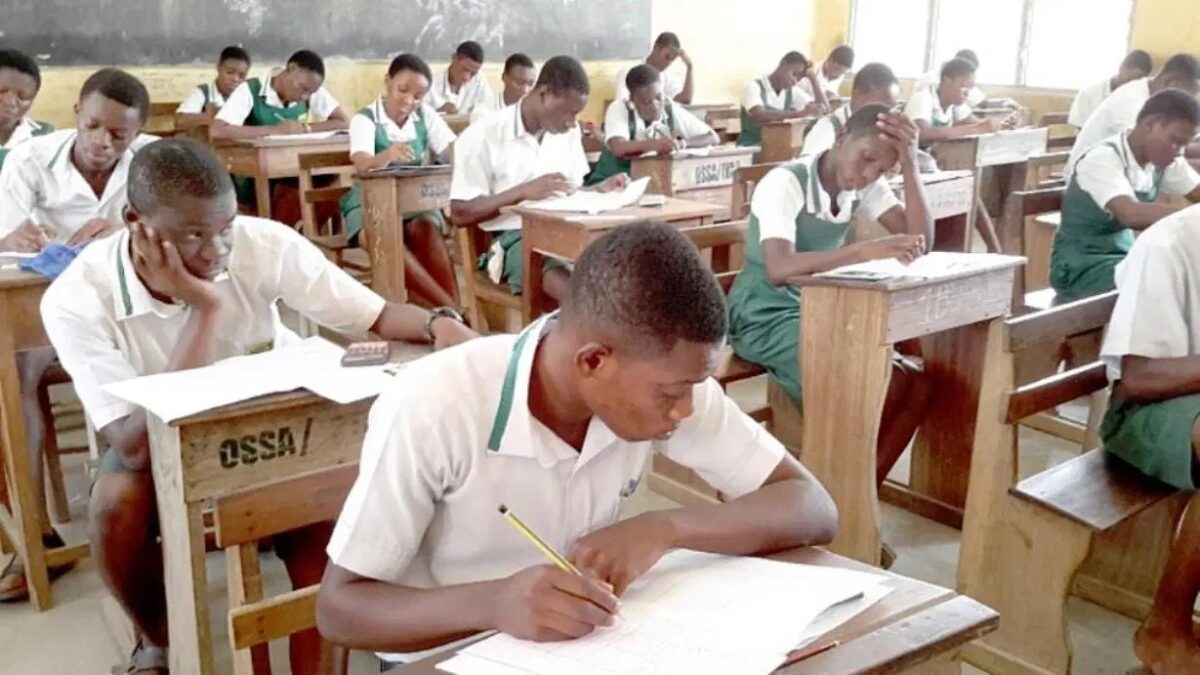
The Universal Basic Education Commission (UBEC) has warned state governments to make adequate budgetary provisions for the implementation of a $552.18 million World Bank-supported education programme targeting 29 million Nigerian children and 500,000 teachers.
The programme, known as the Human Capital Opportunities for Prosperity and Equity in Education (HOPE-EDU), also targets 65,000 public schools, 10,000 non-formal learning centres and the construction of 13,000 new classrooms nationwide.
However, UBEC has cautioned that states that fail to meet the programme’s funding requirements risk losing access to corresponding disbursements.
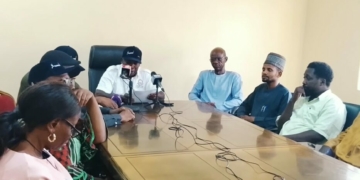
The Executive Secretary of UBEC, Dr Aisha Garba, gave the warning on Tuesday in Abuja during a two-day meeting with chairmen of State Universal Basic Education Boards (SUBEBs) on implementation readiness.
Garba disclosed that the programme became effective on February 27, 2026, and had entered its implementation phase, urging state governments to incorporate relevant activities and funding provisions into their 2027 budgets.
She explained that several disbursement-linked indicators under the programme depend on adequate budgetary allocations by participating states.
“A lot of the deliverables for Year 1 will require provisions in the states’ 2027 budget,” she said.
The UBEC boss directed SUBEB chairmen to present the programme’s implementation report to their respective state executives, secure their commitment and ensure that the necessary financial provisions were made on time.
She stressed that the success of the initiative would depend largely on the willingness of state governments to translate policy commitments into concrete action.
HOPE-EDU is designed to improve learning outcomes, expand access to basic education, reduce inequalities and strengthen accountability in the delivery of education across Nigeria.
Under its results-based financing model, funds are disbursed based on the achievement of agreed targets and performance indicators.
The programme has earmarked $262.239 million for improving the quality of basic education, $123.9 million for expanding access and $133.611 million for strengthening key systems.
The three components are intended to address persistent challenges in the sector, including poor learning outcomes, limited access to education and weaknesses in institutional capacity and accountability.
Garba said the quality improvement component would focus on raising teaching standards, providing essential learning resources and improving pupils’ academic performance.
A major intervention under the component is the Structured Pedagogy Programme (SPP), which seeks to strengthen the teaching of literacy and numeracy in primary schools.
She added that HOPE-EDU would build on existing Universal Basic Education interventions while complementing other government initiatives in governance and primary healthcare.
The UBEC executive secretary explained that the programme’s three result areas have different eligibility requirements for states.
According to her, the first result area, which focuses on improving the quality of basic education, is open to 33 states, with participation potentially extending to all 36 states and the Federal Capital Territory, subject to involvement in the HOPE-GOV operations.
The second result area, which targets increased access to education, is designed for 15 states with the highest populations of out-of-school children that also meet other eligibility requirements.
The third component, which focuses on strengthening key systems, is open to all 36 states and the FCT.
Garba said states must understand the requirements attached to each component and meet the relevant benchmarks to benefit from the programme.
She also called for stronger coordination among state ministries of education, SUBEBs, Local Education Authorities, schools and School-Based Management Committees to ensure effective implementation.
Describing SUBEB chairmen as key drivers of basic education delivery at the state level, she urged them to take ownership of the initiative and ensure that their states met the agreed targets and verification requirements.
Garba said the programme, introduced under President Bola Tinubu’s administration, was designed to ensure that every Nigerian child, particularly those in rural communities, marginalised populations and out-of-school groups, had equitable access to quality education.
She, however, maintained that achieving the objective would require adequate funding, political commitment and effective coordination between federal and state authorities.
“The success of HOPE-EDU rests on your shoulders. Let us work together to ensure that no state is left behind,” she told the SUBEB chairmen.
She urged participants to engage actively during the meeting, seek clarification on implementation requirements and return to their respective states as advocates for the programme.
The UBEC executive secretary also commended the National Programme Coordinator, the Programme Manager and the HOPE-EDU team for organising the meeting, while acknowledging the support of the Federal Ministry of Education, the World Bank and other technical partners.
Earlier, the Programme Manager of HOPE-EDU, Mr Olumayowa Aleshin, presented an overview of the initiative, outlining its funding arrangements, implementation targets and key milestones.
The programme requires participating states to meet specified performance targets and verification requirements before qualifying for the corresponding disbursements.
With its targets covering 29 million children, 500,000 teachers, 65,000 public schools and 10,000 non-formal learning centres, HOPE-EDU represents a major intervention aimed at addressing Nigeria’s basic education challenges.
Its impact will ultimately depend on the ability of federal and state authorities to translate the funding commitments into improved infrastructure, better teaching standards, stronger learning outcomes and wider access to education for millions of Nigerian children.
We’ve got the edge. Get real-time reports, breaking scoops, and exclusive angles delivered straight to your phone. Don’t settle for stale news. Join LEADERSHIP NEWS on WhatsApp for 24/7 updates →
Join Our WhatsApp Channel