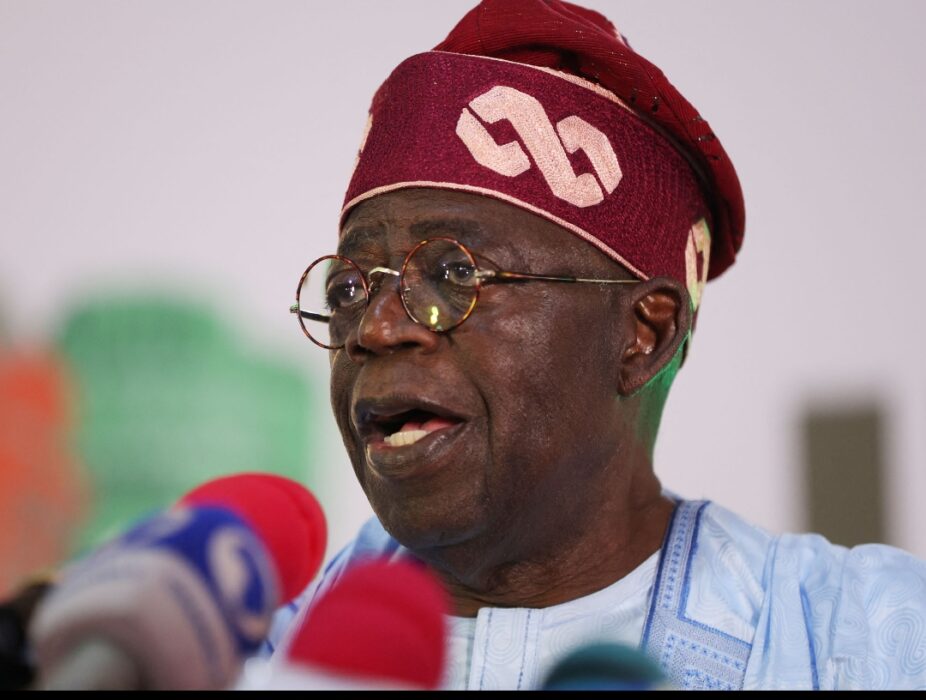
President Bola Ahmed Tinubu has warned that the expansion of Nigeria’s compressed natural gas (CNG) market must not end up benefiting only importers and foreign suppliers.
The President who sounded the warning at the National CNG Summit held on Tuesday, in Abuja, said local manufacturers and workers must share in the gains of the expanding CNG adoption in the country.
Represented by the Minister of State for Petroleum Resources (Gas), Rt Hon. Ekperikpe Ekpo, the president said, “We must not allow the expansion of the CNG market to become an opportunity that benefits only equipment importers and foreign suppliers.
Tinubu called for local assembly and manufacturing of conversion kits, storage systems and other components.
He also urged technology transfer partnerships among Nigerian firms, foreign providers, technical institutions, and research bodies, as well as skills training for engineers, technicians, welders, fabricators, inspectors, and mechanics.
This is as the Presidential Initiative on Compressed Natural Gas and Electric Vehicles (PiCNG & EV) said that Nigeria now has more than 143,000 vehicles running on CNG, even as the sector has attracted up to $2.6 billion in private-sector infrastructure investments.
President Tinubu described CNG as “not merely an energy sector intervention” but an economic development strategy. He said it would diversify fuel options, reduce exposure to imported fuel price shocks and lower transport costs.
Infrastructure, safety and finance
The President called for more mother-and-daughter stations, integrated refuelling facilities, and mobile refuelling units along major transport corridors and around industrial clusters. He said gas available at the production point must reach filling stations reliably.
He said the government would set policy and regulate, but the private sector must lead investment. He urged banks, development finance institutions and leasing companies to design financing products for vehicle owners, transport operators and small businesses.
Other participants at the event said financing remained one of the biggest hurdles. They urged commercial banks to offer cheaper loans for conversions and infrastructure, and retailers asked for incentives to help more stations install CNG facilities.
On safety, Tinubu said: “Safety must never be sacrificed in the pursuit of rapid expansion.” He asked regulators to step up inspection and enforcement and to ensure conversion centres are accredited.
Results, not meetings
The President said that summit outcomes must be translated into measurable actions with clear timelines and accountability. Progress, he said, should be judged “not only by the number of meetings held or policies announced, but by the infrastructure delivered, investment mobilised, vehicles converted, jobs created and economic benefits realised.”
The executive chairman of PiCNG & EV, Barr. Ismael Ahmed said many Nigerians who had converted their vehicles were now seeking fuel supplies.
He said the initiative had created a market that did not exist three years ago, though it was not yet where it should be. “Is it where we want it to be? No. But are we where we were? Absolutely not,” he said.
Ahmed said government had to invest first because investors go where profit is assured. The initiative bought buses, converted existing vehicles and acquired modular refuelling units (MRUs) to stimulate demand. “The private sector will only go where the market is,” he said.
He said the initiative also had to calm public fears about the safety of cylinders and conversions. At some point, he said, cynicism had set in.
According to him, the initiative has so far catalysed $2.6 billion in private sector investment.
Ahmed explained that gas supply is harder to organise than petrol. Petrol can be moved over long distances and stored for months, but “gas is more like air,” he said. Each station needs a source of gas, a compression point, tube skids, transport by truck as a virtual pipeline or through a physical pipeline in the South, and a dispensing point. “These things are not cheap,” he said.
He said government would carry most of the heavy lifting on supply infrastructure, while private investors had to be convinced that the market was stable.
Ahmed said Nigeria has 12.6 million vehicles, 57 per cent of them commercial. Transport takes 15 to 22 per cent of household income, he said, and moving vehicles to gas and electric power would cut that burden.
He put Nigeria’s proven gas reserves at 215 trillion cubic feet. “We are not an oil-rich country with gas,” he said. “We are a gas-rich country with some oil.”
In a panel session, the chief operating officer, PICNG & EV, Tosin Coker, said the figure was recorded at the end of the third quarter.
“We recorded over 143,000 vehicles operating on CNG at the end of last quarter,” Coker said. “We have increased our station count to 205, with many more at various stages of completion or licensing.”
He said the country also has 430 conversion centres. “It is a good leap, and it shows that CNG is becoming widely acceptable,” he added.
Local production
Coker backed the President’s call for local production. He said Nigeria cannot depend on imports as the programme grows.
“We cannot do one million conversions and import every component,” he said. “We have to assemble conversion kits, cylinders and vehicles in Nigeria.”
He said local production would create jobs, build technical skills and reduce the cost of the programme.
Cost of conversion
Coker said the cost of conversion depends on the type of vehicle and the cylinder installed. A tricycle can cost between N300,000 and N350,000, while a regular four-cylinder saloon car costs about N450,000 to N500,000 under the government-certified programme.
“People want bigger cylinders or fibre cylinders, which are lighter,” he said. “All these can increase the cost.”
He said the initiative was working with banks and conversion partners on instalment payment options. “We understand that not everybody has ₦500,000 or ₦700,000 to pay at once,” he said. “We are working with financial operators to make conversion affordable through spread payments.”
Coker said the numbers would keep rising as more partners joined. “We are a long way from where we were when these targets were set,” he said. “By the end of this year and into next year, the numbers will be very impressive.”
We’ve got the edge. Get real-time reports, breaking scoops, and exclusive angles delivered straight to your phone. Don’t settle for stale news. Join LEADERSHIP NEWS on WhatsApp for 24/7 updates →
Join Our WhatsApp Channel