Uber’s decision to wind down its Nigerian operations has laid bare a deep disconnect between ride-hailing fares and the real cost of running vehicles in the country, according to a senior official of the Amalgamated Union of App-Based Transporters of Nigeria (AUATON), Comrade Jolaiya Seun Moses, has noted.
Moses, AUATON’s business partnerships and proposals manager, argued that years of aggressive price competition among platforms have created a “race to the bottom” that leaves drivers and vehicle investors unable to recover their capital or fund major repairs.
“The problem is in the hands of Uber itself and all the app companies. They have been running this industry on a race to the bottom. You cannot be running a business and selling below your cost price and expect that business to continue to boom. It cannot work,” he said.
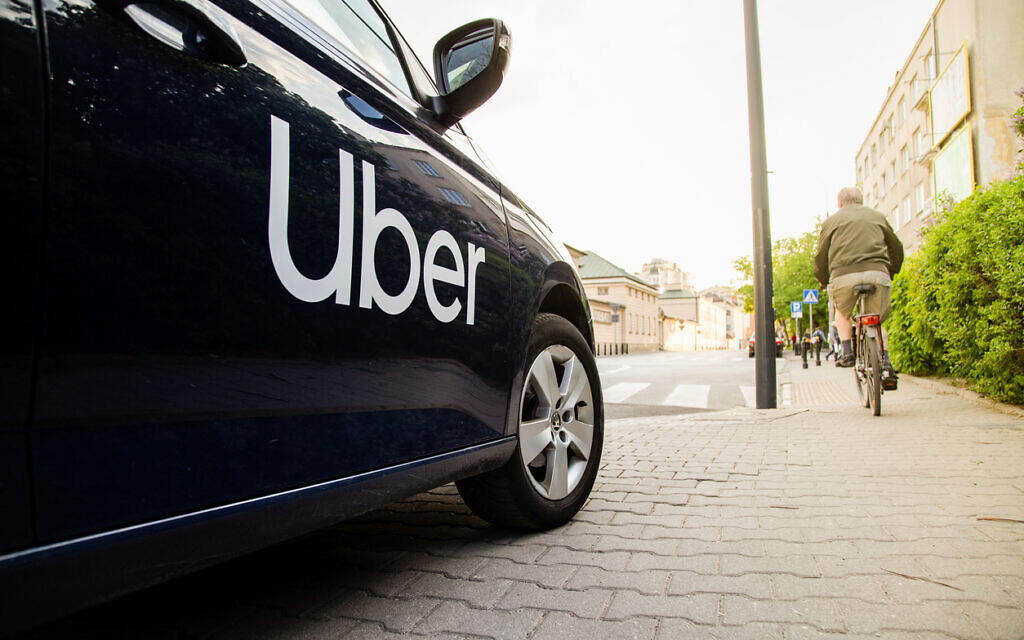
Uber, which launched in Lagos in 2014, confirmed on Wednesday, September 2, 2026, that it would cease ride-hailing operations in Nigeria and Uganda after a “thorough review” of its business, stressing that the move was limited to the two markets and not tied to recent regulatory directives at airports.
But Moses said the company’s exit should be read as a warning to other operators that the current pricing model is unsustainable in Nigeria’s high-cost operating environment.
He described a cycle in which investors who entered the market years ago are now exiting as maintenance bills, fuel costs and other expenses erode their earnings, while new entrants replace them only to face the same pressures.
“When you come in with a car of N5 million, and regularly you are making N50,000 or N100,000, you think you are making money. But by the time that car develops an engine fault of maybe N1.2 million, that is when you realise that you don’t have savings,” he said.
According to him, this dynamic has turned the sector into a revolving door: “Those who invested three years ago cannot invest again today. Those who invested 10 years ago cannot invest again. The old ones are going, the new ones are coming, and the cycle continues.”
Moses warned that the pricing disconnect does not affect Uber alone and could soon hit Bolt, inDrive and other platforms if nothing changes.
“This is not only going to affect Uber. It is going to affect Bolt, inDrive and every other app if the situation is not corrected. Uber leaving is a very bad signal for the other platforms. They need to wake up and correct the mistakes,” he said.
He also raised concerns about vehicle-financing schemes that have been used to expand fleet sizes, saying some drivers and investors in such arrangements have struggled to recoup their investments amid high commissions and operating costs.
“Today, we don’t have investors putting money into this industry. They are withdrawing their assets. Everybody is bailing out. If we don’t find a solution and nobody comes to invest, then what happens?” he asked.
The AUATON official urged ride-hailing companies, drivers’ associations and regulators to work together on a sustainable framework that aligns fares with the true cost of vehicle acquisition, maintenance and operations.
“The message to them is, let us secure this industry before everybody loses out of the industry. Now it is Uber that has lost out, but I can tell you that a lot of drivers have already lost out of the industry and have moved away,” he said.
He stressed that government cannot ignore the livelihood implications of a shrinking ride-hailing sector, given the number of Nigerians whose incomes depend directly or indirectly on app-based transportation.
“Government cannot afford to allow this to happen. Imagine the number of people driving on these platforms. If all of us go back to unemployment, what do you think will happen? These drivers support many families,” he said.
Drivers on the ground echoed concerns about uncertainty. Ejiro Mark, a ride-hailing driver, said Uber’s departure would reduce options for both drivers and passengers, but could also force surviving platforms to rethink their business models and improve driver welfare.
“What drivers want is stability. We need platforms that understand the cost of fuel, vehicle maintenance, commissions and the general cost of living. If one major player leaves, the others should see it as a reason to provide better conditions, not just increase their market share,” he added.
Uber’s exit comes amid heightened regulatory attention, including efforts by the Federal Airports Authority of Nigeria (FAAN) to establish a new framework for e-hailing operators at airports, although the company explicitly denied any link between its withdrawal and the FAAN directive.
For policymakers, the episode underscores the challenge of maintaining competition and affordable mobility without pricing drivers, vehicle owners and investors out of the market.
“If the companies, government and citizens, who are the drivers, do not speak the same language to secure the industry, everybody will suffer from the same problem,” Moses summed.
We’ve got the edge. Get real-time reports, breaking scoops, and exclusive angles delivered straight to your phone. Don’t settle for stale news. Join LEADERSHIP NEWS on WhatsApp for 24/7 updates →
Join Our WhatsApp Channel