Once again, Nigerians are grappling with a severe fuel scarcity crisis that has paralyzed transportation, hiked costs for businesses and citizens, and dashed hopes that the removal of the fuel subsidy would finally solve the nation’s perennial fuel supply challenges.
When President Bola Tinubu announced on May 29, 2023 that fuel subsidy is gone and the price of fuel quadrupled, most Nigerians thought that was the end of excruciating fuel queues .
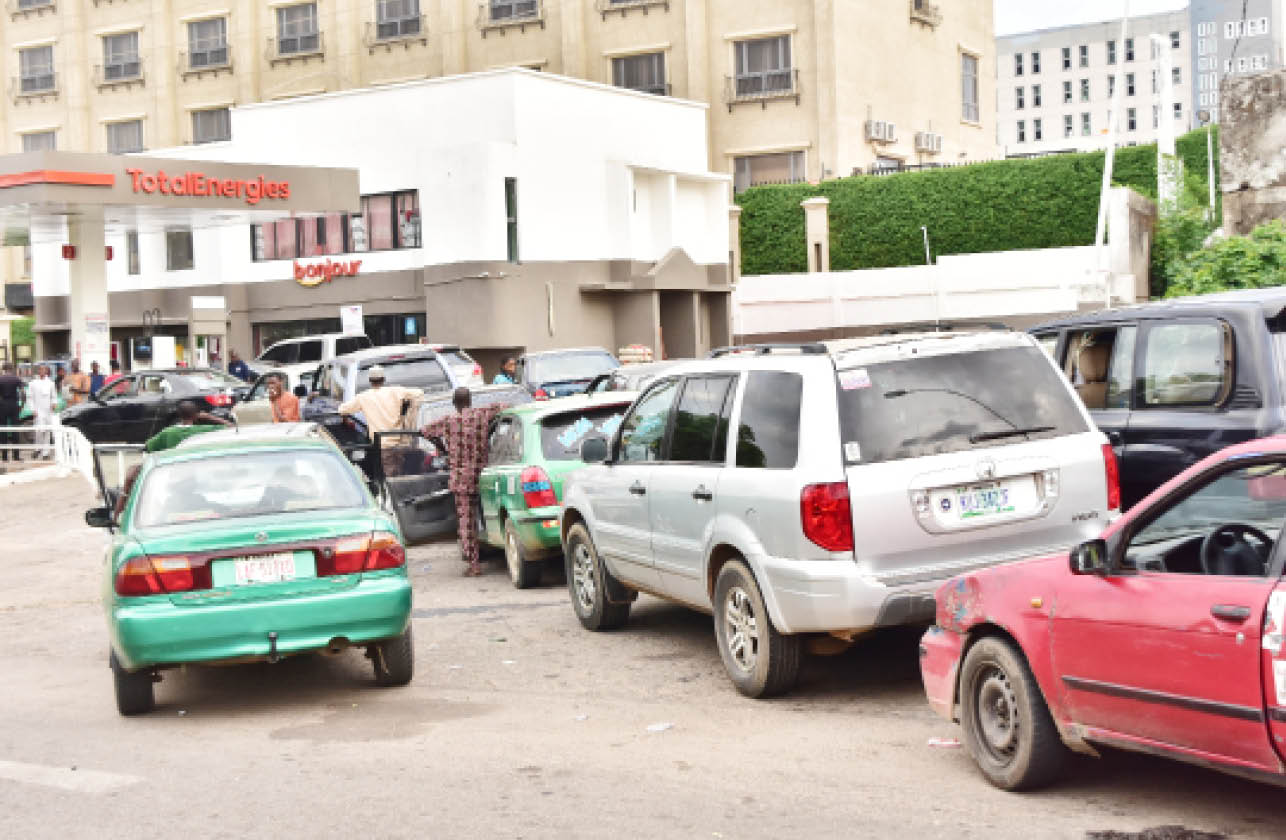
But we were wrong .Last week long queues resurfaced at the few functioning filling stations in Abuja and other states, reminiscent of the dark days when fuel scarcity was the norm rather than the exception.
The Nigerian National Petroleum Company Limited (NNPC) has attributed the current shortage to logistical issues impacting product distribution.
While they claim these problems have been resolved, the reality on ground tells a different story.
Fuel stations remain dry, transportation costs have spiked, and the masses are bearing the brunt of this inexcusable crisis.
The government’s explanations for the scarcity ring hollow, as they always do. We’ve heard it all before – logistics problems, pipeline vandalism, crude oil theft, and the familiar refrain of import challenges due to foreign exchange scarcity.
These are not new issues, yet successive administrations have failed to implement lasting solutions, instead the offer temporary Band-Aids that inevitably unravel.
In our view, it is a national embarrassment that Nigeria, Africa’s largest oil producer and a major global crude supplier, cannot reliably provide fuel for its citizens and industries. The country’s four refineries have been in a state of disrepair for decades, operating at a fraction of their installed capacity or lying completely moribund.
Promises to revamp these critical assets have been made and broken countless times.
While the Dangote Refinery offers a glimmer of hope, it is a private endeavor that should not absolve the government of its responsibility to restore Nigeria’s public refineries to full working condition.
The projections for the Kaduna refinery to resume operations by late 2024 and the Port Harcourt refinery’s supposed restart in April 2024 (which has not materialized) are mere words until actualized.
The logistical challenges cited by NNPC are symptoms of a deeper malady – the nation’s overreliance on a single fuel depot and loading point in Lagos.
This centralization of operations is unsustainable and a recipe for disaster. Nigeria must revive its network of 21 dysfunctional depots and repair the vandalized or obsolete pipelines that once served as product distribution arteries.
Sadly, the fuel scarcity crisis may worsen if independent petroleum marketers follow through on their threat to halt supply over unpaid bridging claims totaling N200 billion owed by the government.
This is a crisis compounded by policy inconsistencies, delayed payments, and the broader challenges of operating in an economy plagued by foreign exchange volatility.
While the NNPC claims to have over 1.5 billion liters of products to last 30 days, this temporary reprieve does not address the structural deficiencies that have made fuel scarcity a recurring nightmare.
Nigeria loses trillions of naira annually to crude oil theft and pipeline vandalism, a hemorrhage that must be stanched through robust security measures and decisive prosecution of perpetrators.
The adoption of alternative crude evacuation systems involving barges and trucks is a pragmatic stopgap, but it should not divert attention from the pressing need to secure and rehabilitate the nation’s critical pipeline infrastructure.
The military’s Operation Delta Safe has recovered over four million liters of crude in six months, but this is a drop in the ocean compared to the scale of losses.
As Nigerians endure yet another bout of fuel scarcity-induced hardship, one cannot help but wonder when the nation will finally break this vicious cycle.
Successive governments have paid lip service to solving the crisis, only for their words to evaporate into empty promises. The Tinubu administration inherits this challenge and must approach it with unwavering commitment, innovative solutions, and the political will to implement comprehensive reforms.
The fuel crisis is not just an economic issue but a national security imperative. A nation that cannot fuel its industries, transportation sector, and households is a nation held hostage by its own resources. Nigeria’s vast oil wealth should be a blessing, not a curse that condemns its citizens to perpetual hardship and underdevelopment.
The time for excuses and temporary fixes has passed. Nigerians demand decisive action, transparency, and accountability from their leaders.
They deserve a future where fuel scarcity is relegated to the dustbin of history, where the nation’s refineries operate at full capacity, and where the black gold that flows beneath their soil fuels progress, prosperity, and sustainable development.
The fuel crisis is a test of leadership, one that has humbled successive administrations. President Tinubu must rise to the challenge, marshaling all resources and stakeholders towards a comprehensive, multi-pronged strategy that addresses the root causes of this recurring nightmare.
Failure is not an option, for the hopes and aspirations of over 200 million Nigerians hang in the balance.
We’ve got the edge. Get real-time reports, breaking scoops, and exclusive angles delivered straight to your phone. Don’t settle for stale news. Join LEADERSHIP NEWS on WhatsApp for 24/7 updates →
Join Our WhatsApp Channel