
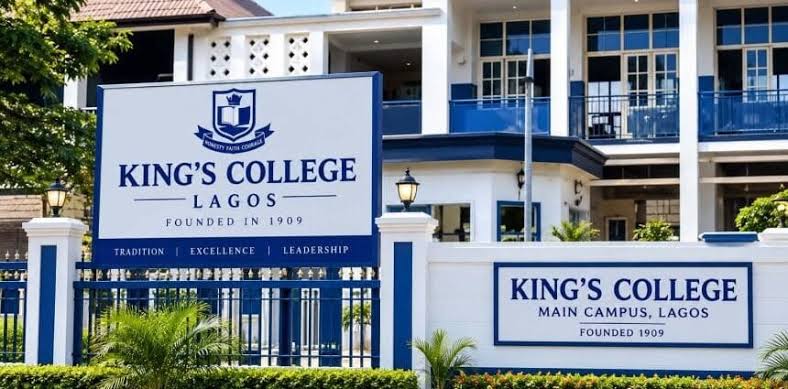
After weeks of uncertainty over the reopening of Nigeria’s Federal Unity Colleges, hope has returned to thousands of students and their parents following the suspension of the industrial action by workers protesting the proposed concession of King’s College, Lagos.
The decision by the Association of Senior Civil Servants of Nigeria to suspend the strike has opened the way for the resumption of academic activities in the 115 Federal Unity Colleges across the country, bringing relief to families who had been left uncertain about when their children would return to school for the 2026/2027 academic session.
The suspension, however, does not mean the dispute surrounding the future of King’s College has been resolved.
Rather, it has created an opportunity for dialogue, with a seven-member committee expected to review the concession document and address concerns raised by labour and other stakeholders.
For students, however, the immediate concern is getting back to their classrooms.
The proposed 35-year concession of King’s College, one of Nigeria’s oldest secondary schools, had gradually developed into a wider dispute over the management, funding and future direction of the Federal Unity College system.
What began as opposition to the proposed arrangement eventually disrupted the reopening of schools nationwide, leaving students, teachers and parents caught in an increasingly uncertain academic calendar.
Now, with labour suspending the strike, attention is shifting towards reopening the schools and restoring normal academic activities.
At the heart of the dispute is King’s College, Lagos, a 117-year-old institution with a long and distinguished history in Nigeria’s education system.
Its reputation, alumni network and record of producing prominent Nigerians have made proposals concerning its management particularly sensitive.
The Federal Government and the King’s College Old Boys’ Association have argued that the proposed concession is designed to address the deterioration of infrastructure and modernise the institution.
The old boys’ association, under the arrangement would mobilise resources for the rehabilitation, operation and maintenance of the school through a concession framework.
Although government officials have maintained that the arrangement does not amount to a sale or transfer of ownership of King’s College.
The Minister of Education, Dr Tunji Alausa, had stated that the Federal Government would retain legal ownership of the institution, while the King’s College Old Boys’ Association would be responsible for financing, rehabilitating, modernising, operating and maintaining the school.
However, organised labour raised concerns about the implications of the arrangement for workers, public education and the future management of Federal Unity Colleges.
For the unions, the issue was not simply about whether King’s College required improved infrastructure. They also wanted clarity on the implications of the concession for staff welfare, job security and the character of federal public schools.
Those concerns eventually spread beyond King’s College. The disagreement over King’s College became a national education issue when labour extended its industrial action to the Federal Unity Colleges.
The colleges, which were scheduled to resume for the new academic session in September, could not fully reopen as planned.
The situation created uncertainty for thousands of students, particularly those travelling from different parts of the country to boarding schools.
Parents were also placed in a difficult position, having to make arrangements for transportation, accommodation and other school-related expenses without certainty over whether academic activities would commence.
The uncertainty was further complicated by conflicting positions within the labour movement over whether the industrial action had been suspended.
While the Federal Government directed students and teachers to return, some workers and union factions remained opposed to reopening until their concerns over the King’s College concession were addressed.
Following discussions between the leadership of the Trade Union Congress, ASCSN and zonal coordinators of the Unity Schools, labour agreed to suspend the strike.
The decision was linked to the agreement that a seven-member committee would review the King’s College concession document.
The suspension also followed the Federal Government’s decision to put the implementation of the concession on hold pending the committee’s report.
For the unions, the review provides an avenue to examine the agreement and address the concerns that triggered the industrial action.
The suspension has been welcomed by the Parent-Teacher Association of the Federal Unity Colleges, which described the development as an opportunity for dialogue and the restoration of academic activities.
The parents have proposed Sunday, September 27, 2026, as a possible date for students to return to their schools, although they said the date remains subject to confirmation by the Federal Ministry of Education.
The PTA has urged the ministry to communicate its position quickly so that parents can make the necessary arrangements for the return of their children.
With the strike suspended, attention is now turning to the practical task of reopening the colleges and ensuring that teaching and learning resume without further disruption.
Although the suspension has eased the immediate crisis, the underlying disagreement has not disappeared.
The seven-member committee still has to review the concession document, while the Federal Government, labour, school authorities and other stakeholders will have to continue discussions over the issues raised by the unions.
The government will also have to rebuild confidence among workers and parents while ensuring that the review process is conducted without further disruption to the academic calendar.
We’ve got the edge. Get real-time reports, breaking scoops, and exclusive angles delivered straight to your phone. Don’t settle for stale news. Join LEADERSHIP NEWS on WhatsApp for 24/7 updates →
Join Our WhatsApp Channel