The recent air strikes reportedly carried out by the United States of America in Nigeria have sparked intense debate across the country. It will be recalled that US President Donald Trump had earlier warned of a possible military action against terror groups allegedly committing acts of genocide against Christians.
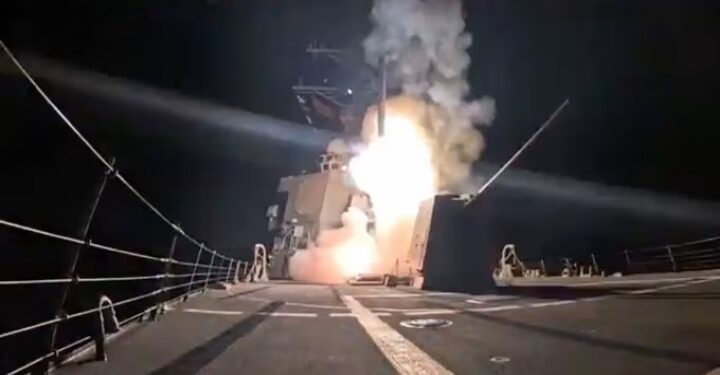
It was, therefore, not entirely surprising when the United States followed through on its threat by launching Tomahawk missiles—each carrying 1,000-pound warheads—into Sokoto State. In the aftermath of the strikes, government officials stated that the operation was conducted at the request of the Nigerian government and described it as successful.
However, this position has attracted mixed reactions. Many have questioned why Nigerian authorities would request an air strike in Sokoto State, a location that has not, in recent times, been associated with significant terrorist activity. Critics argue that, at the very least, such strikes should have been directed at Boko Haram or ISWAP strongholds in the North-East, or at bandits’ hideouts in Zamfara and other parts of the North-West.
It is also on record that the United States has declared the strikes a success, yet without providing corresponding evidence to substantiate the claim.
As a newspaper, we maintain that there should be no cloak of secrecy surrounding the success or otherwise of such an operation. If the strikes indeed neutralised their intended targets, releasing verifiable documentary evidence should not be an insurmountable task. The absence of such evidence has inevitably fuelled speculation about the timing, intent, and appropriateness of the operation.
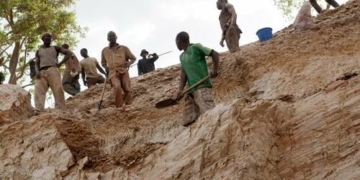
In some quarters, it has even been alleged that the air strikes missed their targets entirely and instead hit an onion farm. While this claim remains unverified, it will persist until credible and substantial evidence is presented to prove otherwise.
In the present circumstances, it is safe to say that there is more to this operation than meets the eye. Particularly curious is the fact that the footage released by the United States shows only the launch of the missiles, not their impact at the target location. This omission raises further questions. One of the key issues raised by stakeholders is whether the Nigerian Air Force, if provided with credible intelligence on the presence of terrorists in the area, lacked the capacity to carry out such an operation independently.
It is the position of this newspaper that the strikes were neither extraordinary nor beyond the operational capacity of the Nigerian Air Force. This was not a scenario involving uranium enrichment or other strategic threats that would justify the deployment of Tomahawk missiles. Some analysts have therefore suggested that the strikes may have served as testing exercises by the Americans for broader strategic purposes.
While this view remains speculative, the secrecy surrounding the outcome of the strikes lends it some credence.
This newspaper further notes that this appears to be the first instance in Nigeria’s history in which a foreign country has carried out an air strike on Nigerian soil. It presents a troubling image and leaves much open to interpretation. The United States must avoid appearing overbearing in its efforts to assist Nigeria in tackling its security challenges. This is not a case of inaction on the part of the Nigerian military. While the armed forces face operational constraints in certain theatres, this does not amount to institutional incapacitation.
Our view is that the Nigerian military is primarily challenged by technological limitations in its ability to prosecute asymmetric warfare. Compounding this difficulty is Nigeria’s continued reliance on foreign countries for critical military hardware.
As a newspaper, we strongly advocate intelligence sharing and technical support from the United States to the Nigerian military. One practical avenue for such cooperation would be the provision of advanced ISR (Intelligence, Surveillance, and Reconnaissance) platforms to enhance access to wide-area, real-time intelligence.
In our view, this approach is far preferable to unilateral air strikes. The opportunities for meaningful synergy between both nations are vast and have been canvassed repeatedly over the years.
We believe that unilateral strikes of this nature risk further complicating an already fragile situation by giving the conflict a religious coloration and inflaming tensions within the polity. This episode should also serve as a wake-up call to relevant authorities to accelerate efforts at developing indigenous defence capabilities and strengthening national self-reliance.
We strongly suggest that the deliberations at the recently concluded African Defence Chiefs Summit in Abuja be critically examined and translated into concrete actions aimed at strengthening defence capabilities and addressing the myriad security challenges confronting the African continent.
We’ve got the edge. Get real-time reports, breaking scoops, and exclusive angles delivered straight to your phone. Don’t settle for stale news. Join LEADERSHIP NEWS on WhatsApp for 24/7 updates →
Join Our WhatsApp Channel