
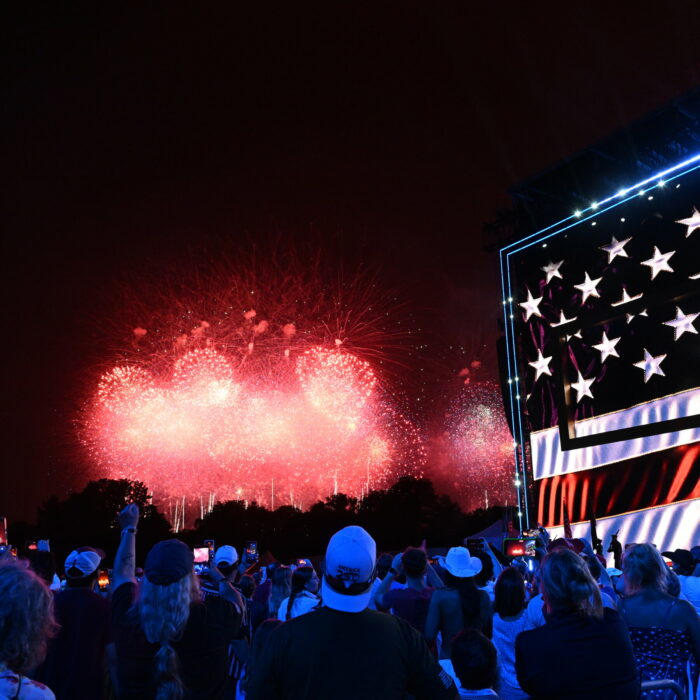
As the United States marked its 250th Independence Anniversary on July 4, stakeholders in Nigeria’s business, diplomatic, and policy circles have highlighted the deepening economic ties between the two nations, stressing that stronger institutions, policy consistency, and trust remain critical to unlocking more bilateral trade and investments.
The anniversary, which commemorates America’s founding in 1776, comes at a time when economic relations between the two countries are increasingly shifting from aid-driven engagements to trade, innovation, and private-sector partnerships.
Experts said this transition is already visible in sectors such as technology, healthcare, finance, energy, agriculture and digital infrastructure, where American firms continue to play a major role in Nigeria’s economy.
Speaking on the US Independence anniversary and its relation with Nigeria, Board member of the American Business Council (ABC) Nigeria, Adeoti Adebisi, said American companies remain among Nigeria’s oldest and most significant foreign investors, adding that their impact extends far beyond capital injection.
According to him, “American companies are among the largest and longest-standing investors in Nigeria. Their contribution goes far beyond capital.”
He noted that U.S. firms operate across technology, energy, healthcare, manufacturing, financial services, logistics, agriculture, consumer goods and entertainment, creating thousands of direct and indirect jobs.
Adebisi added, “Bottom line: American companies are helping Nigeria create jobs, build skills, strengthen institutions, improve productivity, and integrate more deeply into the global economy.”
He disclosed that U.S. foreign direct investment (FDI) in Nigeria stood at about $6.5 billion in 2024, with some estimates putting the figure closer to $7.9 billion following recent inflows.
He further stated that bilateral trade between both countries reached approximately $13 billion in 2024, making Nigeria America’s second-largest trading partner in Africa.
While noting that China dominates Nigeria’s infrastructure financing, Adebisi said American investments are largely private-sector-driven and focused on technology, healthcare, manufacturing and financial innovation.
However, he identified foreign exchange volatility, regulatory uncertainty, multiple taxation, poor infrastructure, insecurity and slow judicial processes as major concerns for U.S. investors.
“Investors do not necessarily demand perfection; they demand predictability,” Adebisi said.
He urged Nigeria to sustain exchange rate reforms, simplify tax administration, modernise ports, improve security and accelerate digital governance.
Also speaking, managing director/chief executive officer of Citibank Nigeria and president of the American Business Council, Nneka Enwereji, said American companies have been instrumental in building industries in Nigeria, not merely participating in them.
“American companies have been long-standing partners in Nigeria’s economic development, and their contribution goes far beyond capital. They are investing across critical sectors — from finance, energy and manufacturing to technology and consumer goods — and in doing so, they are helping to build industries, not just participate in them,” she said.
Enwereji estimated historical U.S. investments in Nigeria at over $8 billion, noting that what distinguishes American capital is its long-term nature and adherence to governance and compliance standards.
“But beyond the absolute numbers, what matters is the quality and longevity of that investment. American capital tends to be long-term, stable, and standards-driven, which is critical for sustainable growth,” she stated.
She also highlighted the role of American firms in deploying advanced technologies, including artificial intelligence and digital asset capabilities, to modernise business operations in Nigeria.
Enwereji, however, pointed to challenges such as infrastructure deficits, high operating costs, regulatory inconsistencies and port inefficiencies as major barriers to scaling U.S. investments.
“What needs to happen is straightforward: streamline regulatory processes, invest in infrastructure, particularly power and ports, and strengthen the rule of law and contract enforcement,” she said.
She maintained that America’s 250-year history offers lessons for Nigeria, especially in institution-building, policy consistency, and innovation ecosystems.
“The biggest lesson is that strong economies are built on strong institutions and consistency over time,” Enwereji added.
Commenting, former senior commercial specialist at the U.S. Embassy in Lagos, Anayo Agu, described trade as one of America’s most enduring diplomatic tools, saying the U.S. Commercial Service has played a vital role in strengthening trust and commercial confidence in Nigeria over the decades.
While quoting former U.S. Secretary of State Cordell Hull, Agu said, “Trade has probably done more than any other single influence to promote civilisation throughout the world.”
He, however, reflected on his 22 years of service in Lagos, stating, “Economic diplomacy succeeds whenever it succeeds in building trust and fostering mutually beneficial relationships.”
Agu revealed that one of the biggest tests of U.S.-Nigeria trade relations came in the 1990s during the rise of advance-fee fraud, otherwise known as 419, which eroded confidence in Nigerian businesses.
According to him, the Networking with USA (NUSA) programme was introduced to restore credibility by institutionalising due diligence and business verification.
“Identity was no longer assumed. Trust was verified,” Agu said.
He noted that the U.S. Commercial Service contributed significantly to Nigeria’s technology ecosystem through initiatives such as the Computer, Telecommunications and Office Equipment (CTO) exhibitions, trade missions and franchising programmes.
On his part, director-general of the Nigerian Institute of International Affairs, Prof. Eghosa Osaghae, said America’s 250-year journey offers important lessons for Nigeria and the wider world.
“America was one of the first experiments of the federal formula. It became what Americans call the first new nation, showing how diversity can be moulded into one national identity,” Osaghae said.
He argued that the U.S. remains a global model of entrepreneurship, capitalism and institutional resilience.
While speaking on the recent strains in U.S.-Nigeria relations, including stricter visa enforcement and migration concerns, Osaghae dismissed suggestions that Nigeria’s global relevance has diminished.
“Nigeria has not become an ant, and Nigeria will never become an ant. Nigeria is a giant in Africa, and that has not diminished,” he said.
Additionally, he explained that America’s immigration policies are rooted in long-standing legal traditions and national security concerns rather than targeted hostility.
“Every country has its own regime of laws, rules and regulations. The American situation is not different at all,” Osaghae said.
Similarly, he added that despite migration restrictions, Nigerians continue to make significant contributions in the United States across medicine, technology, academia, aerospace, and sports.
Consequently, the stakeholders agreed that the future of U.S.-Nigeria relations lies in deeper collaboration across digital technology, agriculture, infrastructure, healthcare, clean energy and critical minerals. Even as Nigeria builds the kind of stable, transparent and predictable environment that can convert those opportunities into jobs, growth and shared prosperity.
We’ve got the edge. Get real-time reports, breaking scoops, and exclusive angles delivered straight to your phone. Don’t settle for stale news. Join LEADERSHIP NEWS on WhatsApp for 24/7 updates →
Join Our WhatsApp Channel