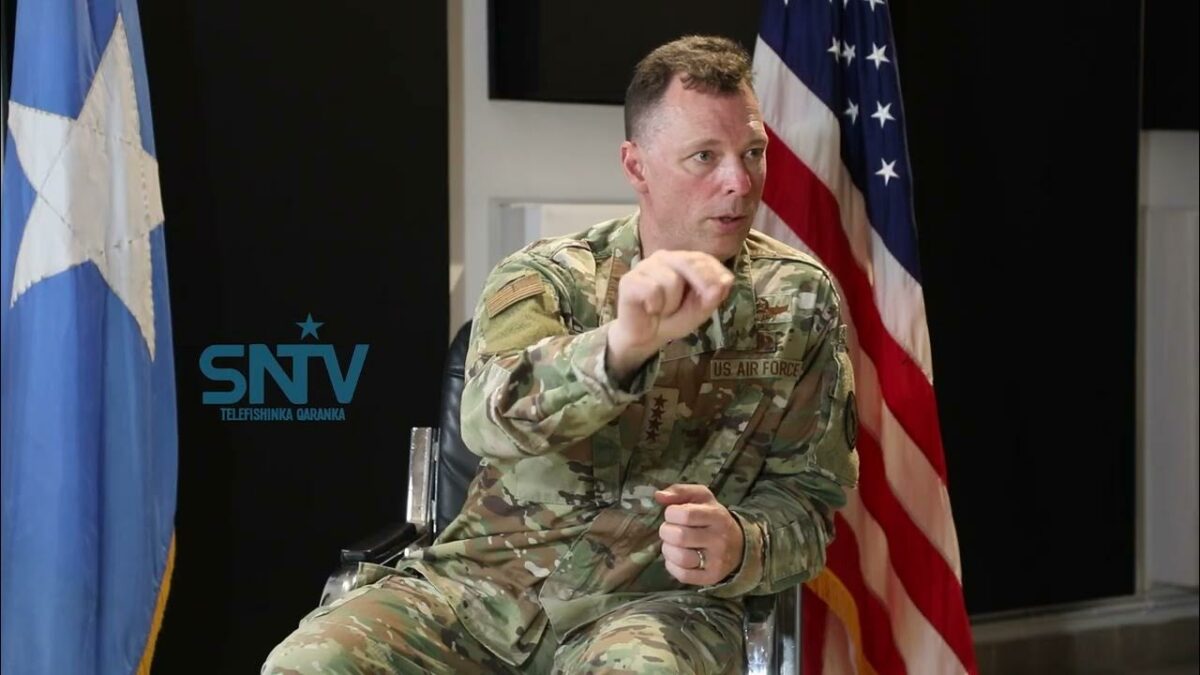
The press statement by the Commander of the United States of America (USA) military’s Africa Command (AFRICOM), General Dagvin Anderson, announcing that a “small number of ground troops” from that country’s military had been dispatched to Nigeria to assist the country as part of efforts to combat terrorist threats in the West African sub-region, appeared to have hit the wrong chord from all indications.
Instead of informing, it misinformed the general public. This was a sequel to the apprehension following the December 2025 airstrike in parts of Sokoto state, which, in any case, was timeously carried out to deliver the appropriate message.
The earlier threat by President Donald Trump to deploy military action in Nigeria following allegations of Christian genocide in parts of the country didn’t do justice to the psyche of Nigerians, and the air strike and the presence of some US soldiers in Nigeria further heightened the situation. According to this newspaper’s findings, the presence of a “small number of ground troops” in Nigeria is not a new development. It does not translate to “boots on the ground”, as speculated. It has been an ongoing exercise among friendly and allied nations. This was corroborated by top military sources, who described it as normal, given the long-standing military relationship between Nigeria and the United States and other countries.
As a newspaper, we have consistently advocated effective management of sensitive information, especially when it is prone to misinterpretation by various parties. It is our opinion that an effective information management system, as in this case, is as crucial as the intended military assistance by the United States.
The response by the Nigerian authorities also left room for doubt about the intent and purpose of the US soldiers. It suffices to state that the bilateral agreement signed by both countries is geared towards “a non-binding cooperation framework and Joint Working Group to coordinate actions in priority areas such as enhanced intelligence sharing and the provision of military equipment to bolster ongoing counter-terrorism and counter-extremism efforts across the country”. This is remarkable.
According to official military sources, the US-Nigeria military pact includes technological assistance in capacity building, intelligence gathering, surveillance, and reconnaissance, while the tactical coordination remains within the confines of the Nigerian security forces.
As a newspaper, we recognise that military cooperation among countries is common and is identified as a positive step towards addressing the threats posed by terrorist networks across the globe.
It is our view that such cooperation does not in any way undermine the military sovereignty of the recipient country. It adds to enhance military capabilities in identified areas of lack.
Military cooperation among countries is usually for strategic purposes, as reflected in recent events. There is no gainsaying that the US is more technologically advanced than Nigeria, and it would be counter-productive, in the reckoning of this newspaper, for Nigeria to reject any means and methods that would assist in addressing the various security challenges in the country, especially the threats posed by the Boko Haram/ISWAP terrorists in the North-east and North-west.
We are persuaded to point out that, if the above-stated forms the nucleus of the military pact, its media framing in recent times has not been top-notch. Media framing of such a sensitive issue should not be left to ambiguity. The phrase “a small troop of soldiers” is easily conceptualised as a combat team, whereas in reality it is an advisory team.
The press statement by AFRICOM was vague and responsible for the public reaction it generated. Our position is that this might amount to an oversight; however, it should be urgently addressed by the Ministry of Defence and the various service branches of the Armed Forces.
The Nigerian military must lead the pack and disseminate information to the populace in a concise manner that eliminates any form of doubt or ambiguitys in the minds of the people. This, in our view, is crucial to avoid any misperception of what is otherwise a critical addition to measures to enhance national security.
The media space is dynamic with the potential to influence public opinion on government policies and actions. A simple mistake can make a brilliant idea sound awry. Thus, we believe that emphasis should also be placed on implementing other strategic measures to keep the public adequately informed about the military pact and the potential benefits for Nigeria.
This newspaper charges the relevant authorities with strategic media management of the US-Nigeria Military Pact to ensure the right message is delivered effectively to attain the desired impact. The public misconceptions generated so far are understandable, and it is hoped that lessons have been learnt.
We’ve got the edge. Get real-time reports, breaking scoops, and exclusive angles delivered straight to your phone. Don’t settle for stale news. Join LEADERSHIP NEWS on WhatsApp for 24/7 updates →
Join Our WhatsApp Channel