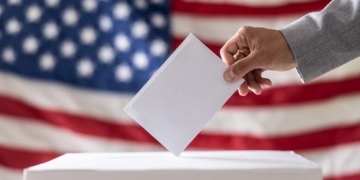
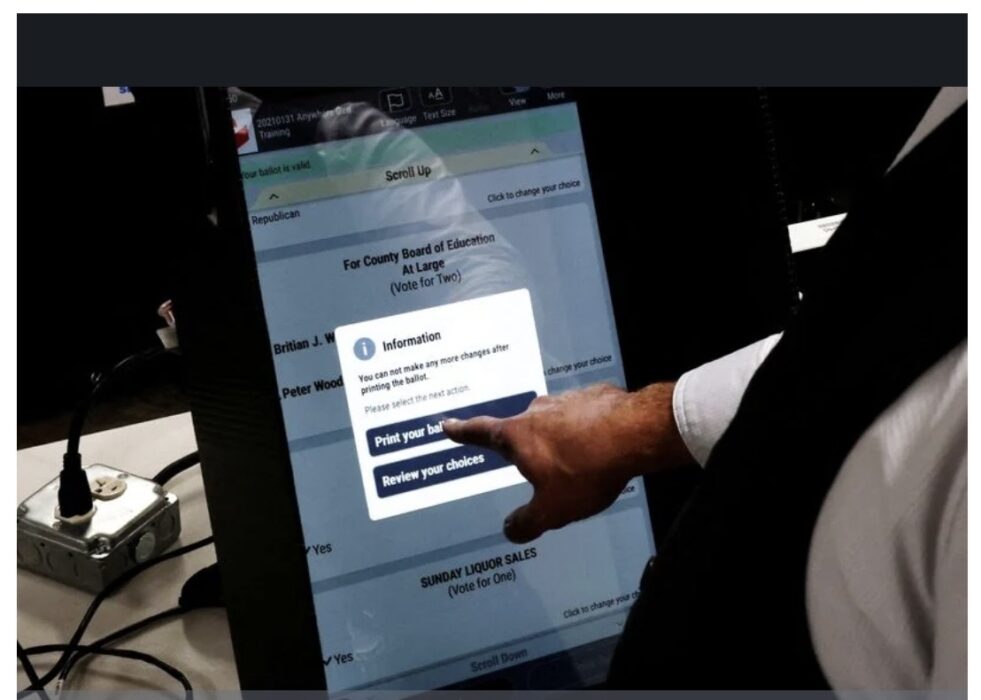
Americans have begun casting their ballots in the November 3, 2026, US midterm elections, with control of Congress, governorships and state legislatures at stake.
The elections, held halfway through a four-year presidential term, will determine the composition of the US House of Representatives and Senate, as well as the governors of 36 states.
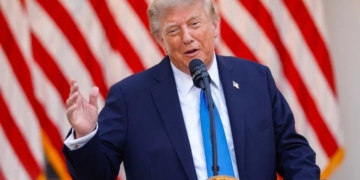
Although President Donald Trump is not on the ballot, the elections are expected to serve as a major test of his administration’s performance and the Republican Party’s grip on power, with Republicans currently controlling both chambers of Congress.
More than 57 million Americans had already cast their ballots as of Monday, according to the University of Florida Election Lab, exceeding the 46 million votes recorded during early voting in the 2022 midterm elections.
The 2026 elections are also projected to be the most expensive in American history, with the nonpartisan campaign finance watchdog OpenSecrets estimating that candidates and outside political groups will spend about $11.9 billion.
Billionaire businessman Elon Musk alone had reportedly spent approximately $366 million supporting Republican candidates as of three weeks ago, according to campaign finance records.
Here are seven key things to know as Americans vote in the 2026 midterm elections.
1. Control Of Congress At Stake
One of the major issues in the 2026 US midterm elections is whether Democrats can secure majority control of Congress from Republicans.
Republicans currently hold a 218-214 majority in the House of Representatives, with two vacant seats and an independent member who caucuses with the Republicans.
To take control of the House, Democrats must secure a net gain of four seats.
The battle is also intense in the Senate, where Republicans hold a 53-47 majority. Democrats need a net gain of four seats to take control of the upper chamber.
About 12 Senate races, including contests in traditionally conservative states such as Kansas and Texas, could determine which party controls the chamber.
A change in congressional leadership could significantly affect Trump’s legislative agenda and the direction of US domestic policy.
2. How The Midterms Could Affect Trump’s Presidency
Although Trump is not contesting any position in the midterm elections, the outcome could have significant consequences for his administration.
Historically, midterm elections have often proved challenging for the political party occupying the White House, with voters using the polls to assess the president’s performance and express dissatisfaction with government policies.
The outcome could force Trump to reconsider aspects of his administration’s policies, particularly if Republicans lose seats in Congress.
A Democratic victory could also make it more difficult for the president to push through his legislative priorities, as opposition lawmakers would have greater influence over congressional proceedings.
The results could also provide early indications of voter sentiment ahead of the 2028 presidential election, with potential presidential aspirants expected to study the outcome for insights into campaign strategies and voter preferences.
3. What Opinion Polls Are Showing
Opinion polls suggest that Trump and the Republican Party are facing challenges ahead of the elections.
A Reuters/Ipsos poll puts Trump’s approval rating at 32 per cent, close to a record low.
Economic concerns, particularly rising consumer prices and the cost of living, are expected to influence voters’ decisions in several competitive races.
Democrats also appear to have an enthusiasm advantage, with more supporters reportedly expressing interest in voting and a higher number of their voters already participating in early voting, according to the University of Florida Election Lab.
Meanwhile, there are indications that some Latino voters who supported Trump in the 2024 presidential election may be reconsidering their political allegiance.
Frustration over economic conditions and aspects of the administration’s immigration enforcement policies could push some of these voters back towards the Democratic Party.
However, a major Democratic victory is not guaranteed. Republicans could benefit from their campaign spending advantage, continued scepticism among some voters towards the Democratic Party and concerns among moderate voters over the victories of left-wing candidates in Democratic primaries.
4. What Recent Midterm Elections Reveal
Previous US midterm elections offer an indication of how dramatically the political balance of power can change halfway through a presidential administration.
In the 2010 midterm elections, Republicans recorded significant victories during the presidency of Democrat Barack Obama.
The party gained 63 seats in the House of Representatives, ending the Democrats’ majority, amid economic difficulties and opposition to Obama’s healthcare reform legislation.
Democrats, however, retained control of the Senate despite losing six seats.
Reacting to the Republican victories, Obama described the outcome as a “shellacking.”
In 2018, Democrats returned the favour during Trump’s first presidency, gaining a net 40 seats in the House of Representatives and taking control of the chamber.
Republicans, however, maintained their Senate majority after Democrats lost a net two seats.
Beyond Congress, the 2026 elections will also determine governorships in 36 states and involve contests for seats in state legislative chambers across almost the entire country.
According to Ballotpedia, Republicans currently control approximately 55 per cent of state legislative seats nationwide, while Democrats hold 43.8 per cent.
5. Who Could Become The Next House Speaker?
The outcome of the House elections will determine which party controls the powerful office of Speaker of the House.
If Democrats win control of the chamber, Democratic Representative Hakeem Jeffries of New York is widely expected to emerge as a leading contender for the position.
Jeffries, who currently serves as House Democratic leader, would become the first Black American to occupy the powerful office if elected Speaker.
The position would give him considerable influence over legislative proceedings, congressional committees and investigations into the activities of the Trump administration.
Jeffries has repeatedly accused the administration of wrongdoing and promised investigations into what he described as “unprecedented levels of corruption.”
He has also outlined the party’s legislative priorities, including efforts to make healthcare, groceries, housing, energy and other essential expenses more affordable.
A Republican victory would keep the speakership within the party, potentially retaining current Speaker Mike Johnson or producing another Republican candidate if he faces a challenge.
Republican legislative priorities are expected to include additional tax cuts, increased defence spending and reductions to social safety net programmes, building on Trump’s 2025 “One Big Beautiful Bill.”
6. Key Races To Watch
Several closely contested congressional races are attracting national attention as both parties fight for control of Congress.
Among the notable House contests is Republican Representative Mike Lawler’s re-election bid in a New York district won by Democratic presidential candidate Kamala Harris during the 2024 election.
Another closely watched contest is an open House seat in a competitive Nebraska district, where concerns over rising fuel prices are expected to feature prominently in the campaign.
The economic pressure on farmers and truckers, particularly following the impact of the US war against Iran on fuel costs, could influence voters in the district.
Democrats are also targeting two Republican-held House seats in Pennsylvania and another in New Jersey as part of their efforts to secure a congressional majority.
The outcomes of these contests could prove decisive in determining the balance of power in the House of Representatives.
7. Concerns Over Trump’s Possible Election Interference
Questions surrounding the integrity of the US electoral process are also emerging as a major issue during the midterm elections.
Trump has repeatedly claimed, without evidence, that widespread cheating occurred during previous US elections, particularly the 2020 presidential election, which he lost to Joe Biden.
His repeated allegations have raised concerns about the possibility of attempts by his administration to interfere with the electoral process.
US elections are primarily administered by individual states, with election officials responsible for organising and overseeing voting.
State election authorities and Democratic lawmakers have reportedly been preparing for possible legal challenges should the Trump administration attempt to intervene in the conduct of the elections.
The issue is expected to remain a major point of political contention as Americans cast their ballots.
We’ve got the edge. Get real-time reports, breaking scoops, and exclusive angles delivered straight to your phone. Don’t settle for stale news. Join LEADERSHIP NEWS on WhatsApp for 24/7 updates →
Join Our WhatsApp Channel