
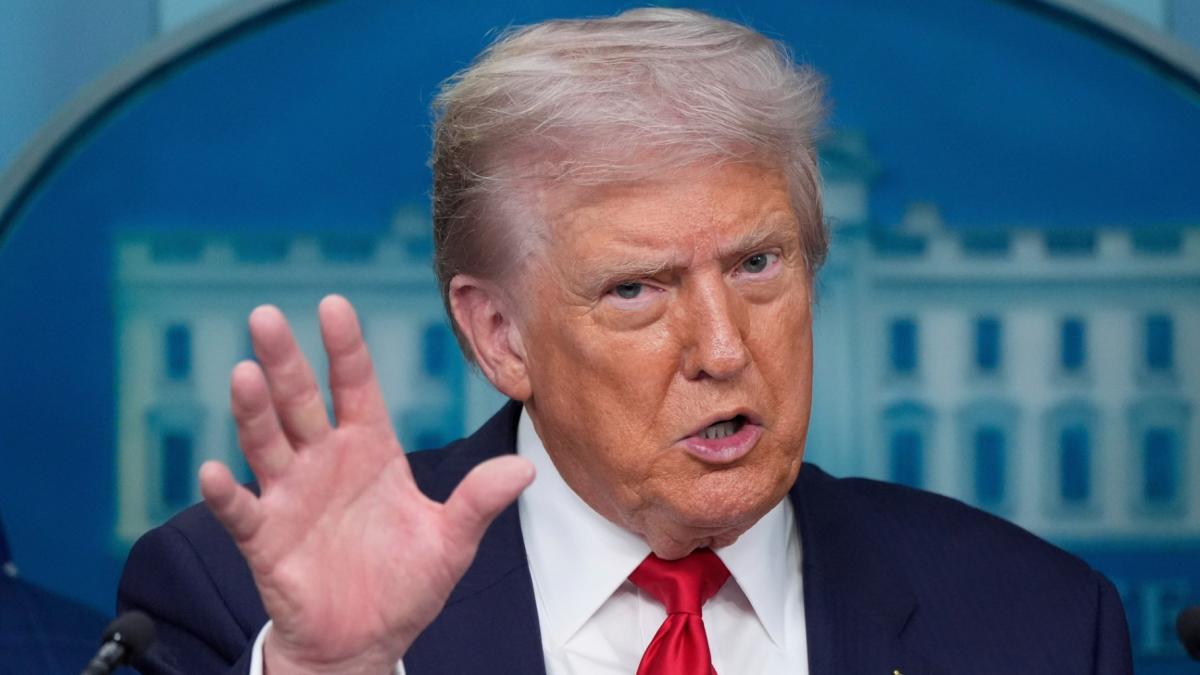
United States President Donald Trump is heading into what could be a turbulent final two years in office following the Democratic Party’s victory in both chambers of Congress during the November 3 midterm elections.
The results represent a major setback for Trump and the Republican Party, with Democrats flipping at least seven Senate seats, including in Kansas, Iowa, Texas, Ohio, Maine, North Carolina and South Carolina. The opposition party also made significant gains in the House of Representatives, winning Republican-held districts that had backed Trump in the 2024 presidential election.
Current projections put Democrats at approximately 54 Senate seats and 231 seats in the House, compared with 139 for Republicans, according to CNN.
The victories mark a significant shift in the balance of power in Washington, giving Democrats greater influence over the legislative agenda and the authority to subject Trump’s administration to sustained congressional scrutiny.
The outcome also returns Democrats to full control of Congress for the first time since 2023, setting the stage for heightened political confrontation, investigations into the administration and renewed debates over the president’s policies.
With Republicans losing control of congressional committees and key leadership positions, Trump could face mounting resistance to his agenda as Democrats prepare to exercise their oversight powers.
Here are some of the major ways the Democratic takeover could complicate Trump’s final two years in office.
1. Congressional Investigations Into Trump’s Finances And Administration
One of the immediate consequences of the Democratic victory is the opposition party’s ability to launch investigations into Trump’s personal finances, business interests and the activities of his administration.
With control of House committees, Democrats will have the authority to hold hearings, issue subpoenas, demand government documents and summon administration officials to testify.
Before the elections, Democratic lawmakers and committee staff had reportedly been preparing an extensive oversight agenda targeting Trump’s financial interests, his administration’s restructuring of the federal government and decisions involving his political allies.
According to reports by The Washington Post and CNN, several areas are expected to attract particular attention.
Trump’s family finances and cryptocurrency interests
A major focus could be whether Trump, members of his family or close political allies have benefited financially from his presidency.
Democrats are expected to examine the growth of Trump’s wealth since the 2024 presidential campaign, family business dealings, government contracts and cryptocurrency investments linked to the Trump family.
They could also investigate whether these financial interests created potential channels for foreign influence or conflicts of interest.
Another issue likely to attract scrutiny is Trump’s pardon of Binance founder Changpeng Zhao, who previously pleaded guilty to money-laundering-related violations.
Democrats could seek to establish whether financial or political connections influenced the decision and whether the pardon raises broader questions about the administration’s approach to presidential clemency.
White House projects and government contracts
Trump’s construction and renovation projects, including plans for a White House ballroom, could also come under congressional scrutiny.
Democratic lawmakers may investigate the sources of funding for the projects, the role of private donors and contractors, and whether individuals or companies received preferential access or government benefits in return for their contributions.
The Donald J. Trump Presidential Library Foundation could also attract attention, particularly over its funding arrangements and potential connections to government contracting decisions.
The broader investigation could extend to whether federal contracts or other government decisions have favoured companies associated with the president, his family or political allies.
Immigration and Homeland Security
Trump’s mass-deportation programme and the enforcement activities of Immigration and Customs Enforcement (ICE) are also likely to become major subjects of congressional investigations.
Democrats have repeatedly criticised the administration’s immigration crackdown, particularly allegations of aggressive enforcement, questionable detention practices and violations of due-process rights.
With control of relevant congressional committees, lawmakers could investigate detention conditions, deportation procedures, the treatment of migrants and cooperation between the Department of Homeland Security and other federal agencies.
The Senate Homeland Security and Governmental Affairs Committee could also examine how the administration is implementing its deportation programme and whether its operations comply with existing laws.
Justice Department and FBI
Another potential battleground is the administration’s relationship with the Department of Justice (DOJ) and the Federal Bureau of Investigation (FBI).
Democrats have raised concerns about the alleged politicisation of federal law enforcement, including the dismissal or sidelining of career prosecutors, investigations involving Trump’s political opponents and claims that officials have disregarded court orders.
The opposition party could use its investigative powers to examine whether the president has improperly influenced law enforcement decisions or used federal institutions to advance political interests.
Lawmakers may also scrutinise reported IRS arrangements involving Trump’s tax audits and the agency’s cooperation with Homeland Security on immigration enforcement.
Epstein files and presidential pardons
The handling of documents relating to convicted sex offender Jeffrey Epstein is another issue likely to feature prominently in congressional oversight.
Some Democratic lawmakers want to establish whether the Justice Department has fully complied with the Epstein Files Transparency Act or improperly withheld, redacted or delayed the release of relevant documents.
Trump’s use of presidential pardons could also attract scrutiny, particularly decisions perceived as benefiting political allies, donors or individuals with financial connections to his administration.
Democrats could investigate whether the pardon process has been used consistently and whether any decisions were influenced by personal or political relationships.
Iran war and national security
The administration’s handling of the war in Iran could also become a major source of confrontation between the White House and Congress.
Democrats may seek answers about the legal justification for military action, its financial cost, civilian casualties, the president’s authority to conduct military operations and the wider implications for American national security.
The conflict’s impact on global energy markets and domestic fuel prices could also feature in congressional hearings, particularly as Americans continue to grapple with the cost of living.
Lawmakers may further examine the administration’s decisions on energy and environmental policy, including the cancellation or suspension of renewable-energy projects and their implications for energy security.
Elon Musk, DOGE and federal agencies
The role of billionaire Elon Musk in the Department of Government Efficiency (DOGE) and his relationship with the Trump administration could also attract renewed attention.
Democrats are expected to examine the agency cuts, federal workforce reductions and the handling of public funds under the government’s cost-cutting programme.
The investigations could extend to government contracts involving companies connected to Musk, potential conflicts of interest and the extent of his influence over federal agencies.
Other possible areas of scrutiny include deregulation, corporate mergers, artificial intelligence-driven surveillance pricing and whether federal agencies are adequately protecting consumers and competition.
2. Trump’s Policies Could Face Legislative Resistance
Beyond investigations, Democratic control of Congress could significantly complicate Trump’s domestic and foreign policy agenda.
During the first two years of his second presidency, Trump benefited from Republican control of both chambers, making it easier for his administration to advance legislative priorities.
That political advantage is now set to disappear.
With Democrats controlling the House and Senate, the president could struggle to secure congressional approval for major proposals, particularly those requiring cooperation between both chambers.
Healthcare, the cost of living and Trump’s tariff policies are expected to feature prominently in the Democratic legislative agenda.
Among the issues Democrats could pursue are restoring Affordable Care Act health insurance subsidies, reversing Medicaid cuts contained in Trump’s signature domestic policy legislation and challenging some of his trade policies.
However, controlling Congress does not automatically mean Democrats can implement their preferred policies.
Trump retains the constitutional power to veto legislation passed by Congress. Overriding a presidential veto requires a two-thirds majority in both chambers, a threshold Democrats are unlikely to meet.
The Senate’s legislative rules present another obstacle. Most major legislation requires 60 votes to overcome a filibuster, meaning Democrats may still need support from Republican senators to advance significant bills.
Consequently, the new Congress could spend much of its time negotiating, blocking proposals and engaging in political battles rather than delivering sweeping legislative changes.
3. Senate Control Gives Democrats Power Over Trump’s Appointments
The Democratic takeover of the Senate is particularly significant because the chamber has constitutional authority over presidential appointments.
Under the US Constitution, the Senate confirms cabinet secretaries, ambassadors, federal judges and other senior government officials nominated by the president.
With Democrats controlling the chamber, Trump’s ability to secure confirmation of his preferred nominees could face considerable resistance.
The new majority could delay controversial appointments, demand additional scrutiny of nominees or reject candidates it considers unsuitable.
The Senate’s influence over judicial appointments could also have long-term consequences, particularly if vacancies arise in federal courts or the Supreme Court during Trump’s remaining time in office.
This gives Democrats another important institutional check on the president, beyond their ability to block legislation and investigate his administration.
4. Will Democrats Impeach Trump For A Third Time?
Perhaps the most politically explosive possibility following the elections is a renewed impeachment effort against Trump.
Democrats have previously impeached the president twice during his first term, in 2019 and 2021, although the Senate acquitted him on both occasions.
With control of the House restored, Democratic lawmakers could revive discussions about a third impeachment, particularly if investigations uncover evidence of alleged misconduct or abuse of presidential power.
However, impeachment is not automatic, and some Democratic leaders may prefer to prioritise investigations before considering such a move.
The opposition party’s immediate strategy could therefore focus on gathering evidence, holding public hearings and establishing whether the administration has violated the law or abused its authority.
A third impeachment would nevertheless be a significant political possibility if congressional investigations produce findings that Democratic leaders consider serious enough to warrant formal action.
Under the US Constitution, the House has the authority to impeach a president through a simple majority vote. However, conviction and removal require a two-thirds majority in the Senate.
Even with control of the upper chamber, Democrats would need substantial Republican support to remove Trump from office.
This means impeachment could become a major political issue during the final two years of his presidency, but removing him from office would remain a much more difficult prospect.
5. What Does This Mean For Trump’s Final Two Years?
The Democratic victory signals the beginning of a new political reality in Washington, where Trump will have to contend with an opposition-controlled Congress rather than a legislature largely aligned with his administration.
Although the president retains executive authority, his ability to push through major legislative proposals will be significantly constrained.
The president has indicated that he is prepared to work with Democrats after their victory, but cooperation could prove difficult given the deep political divisions between both parties and the likelihood of investigations into his administration.
For Democrats, the challenge will be balancing their responsibility to scrutinise the president with the expectations of voters who backed them to provide an alternative to Trump’s leadership.
The party will also face pressure to demonstrate that its electoral victory can translate into tangible improvements in healthcare, household finances and other issues that influenced voters.
Beyond domestic politics, the midterm outcome could also affect Trump’s influence over the Republican Party and the political direction of the 2028 presidential election.
Republicans will have to contend with questions about the party’s electoral strategy, its relationship with Trump and the prospects of maintaining political influence after his presidency.
For Trump, the defeat is a warning about the challenges ahead as he approaches the final stretch of his presidency and seeks to preserve his political legacy.
Ultimately, the Democratic takeover does not strip Trump of his presidential powers, but it significantly changes the political environment in which he must exercise them.
With control of both chambers, Democrats now have the numbers to obstruct key aspects of his agenda, investigate his administration, challenge his appointments and potentially reopen the debate over impeachment.
His final two years could therefore be dominated by congressional investigations, legislative deadlock and an increasingly intense struggle over the direction of American politics.
We’ve got the edge. Get real-time reports, breaking scoops, and exclusive angles delivered straight to your phone. Don’t settle for stale news. Join LEADERSHIP NEWS on WhatsApp for 24/7 updates →
Join Our WhatsApp Channel