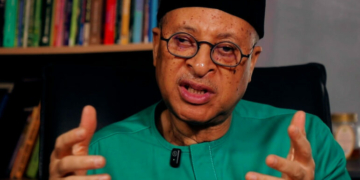
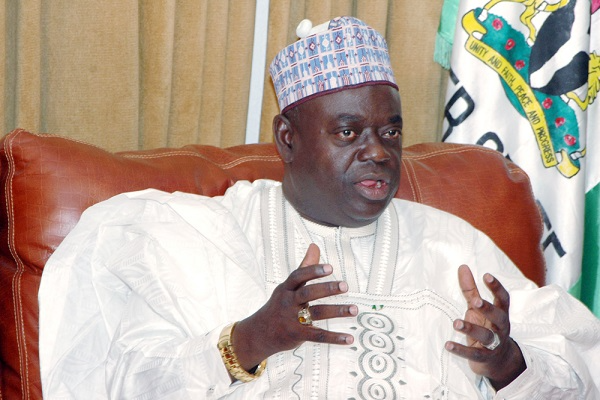
Dr. Mu’azu Babangida Aliyu (Talban Minna) is a retired senior civil servant who became the governor of Niger State in 2007 and was re-elected in 2011. He was also a member of the House of Representatives for Chanchaga Federal Constituency in Niger State during the Second Republic. Dr Aliyu, who also holds the title of Sodangin Nupe, in this interview speaks to CHRISTIANA NWAOGU, AUSTINE ODO & ABU MMODU on current national issues. Excerpts:
You were one of the most active governors in your time. What have you been doing politically since you left office?
No, as far as I’m concerned, I’ve been a member of my party. I’ve never changed since I joined the PDP. I’ve not changed a party up to today. I got involved, you know, as a governor. I served as chairman of the Northern States Governors Forum for 8 years. At least, when the campaign comes, we normally join the system. So one has been active still, but not the noisy type, because it’s not about just looking for attention. It is about relevance and timing, and also understanding whether the situation was right for certain things.
Unfortunately, many people now say that our turn may have gone away under the country’s governance. On our side, many things seem to have happened, and today people are not too confident about the governors, the politics, and other things they are lamenting and probably also regretting how things have come to where they are at the moment.
As you observed, people are not very confident about governors. How do you react to this?
Because people’s expectations have not been met, they expect progress as we go along. People expect development as we go along, particularly with the promise of democracy. So people are really disappointed, and with what is happening now, the insecurity, the roads that are not good, or the infrastructure generally that has seemed to have decayed. From here (Abuja) to Minna, my hometown, it used to take about 1.5 hours. But now it takes you about three, three and a half hours to get there, because of the nature of the road. Ditto Abuja to Kaduna. And any place you pick, you will discover that you have that problem.
And that also eats into people’s economic activities. Because it means that if I have to go to Minna by road, maybe the fuel that ordinarily would have taken one and a half hours would now take three hours, at a slower speed, which again tends to take more if you use the fuel analogy. So, many people find it difficult now to really get by; that’s the main issue. The insecurity itself, the people’s economic situation, and the deteriorating infrastructure.
How did you become the governor of your state?
The way I became governor was slightly different from how those who shout they want to be governor do. I was already a permanent secretary here in Abuja, and if I can tell you, I was sleeping when I was woken up to be told that I had an option of being governor of Niger State and I knew if I said no, I didn’t want to be, I would have probably been dismissed from my job because they would have asked or questioned what I was getting in Abuja that I didn’t want to go and help my people. And I knew that I was prepared, not only intellectually, but also administratively. And I’m happy that today, when you ask people from my state, they will always tell you that maybe they haven’t gotten a governor or they have not had a governor, sorry to use the word, like me.
So I’m happy I went, but as I said, I didn’t go through all the rigmarole of primaries, having to bribe certain people or pay certain things. So I didn’t go to the governorship thinking that I needed to retrieve what I had lost in the campaign or whatever. And I didn’t make too many enemies in the process, even though I had my own share of people who felt offended that they were in the party, and somebody coming from somewhere to pick up the ticket.
You appear to be the last PDP governor of Niger State, for now. Does it disturb you?
At the moment, with the way things are happening, I think it disturbs me to the extent that for democracy to thrive, it must have an opposition, a very viral opposition that will be able to question the processes, the nature of the discussion and the conclusions and the actions that will come. Otherwise, when you have a one-party state, then you have a problem. At the end of it all, you may call it democracy, but it is not, by my definition.
We understand you are favourably disposed to the performance of the present governor of Niger State. In other words, you like him, you praise him, is this personal or political?
Praise him in comparison, in comparison to whom? To my successor, because there was a lot of hope that was raised. You know, when people are complaining, they don’t remember or understand what they are going to meet on the ground. And when they come, everyone wants to tarnish their predecessor’s image. And I’m happy this young man did not do that. At least he did not tarnish his predecessor’s image. But in the case of my successor, that’s what he tried to do, and the fear was that I was too popular and would not allow them to administer the state the way they wanted. I’m happy that now people can compare the eight years of each of us.
But the present governor is a member of the APC. And with your disposition towards him and his performance so far, I mean, gives somebody room to suspect that you are trying to align with the APC. Are you thinking of that?
I have not thought of that. If I wanted to join the APC, I would have joined it in 2014 or 2015. When you remember, many key actors in the nPDP joined the APC, as they called it. You remember? So I didn’t, even then. And at the moment, the only way… You don’t have to join a party to work for the people or the government. In other words, if you are asked to do something for the government and you feel you can, please go ahead and do it. Partisanship should give way to nationalism, to making sure you work for the people. And wherever you are, if people ask you to come and work for Nigeria, oh, good, please accept.
But other than that, partisanship should not be the major issue in administration. So, for me, the expectation is that this young man will do more. The expectation is that he will do his best to do better than we did.
But looking back at the nPDP, you were one of the founding fathers. I thought we were protesting something specific. You remember you walked out of a convention.
I thought that was enough for us to negotiate back and be part of the PDP. The idea was not to break away. But the ambition of other people, I think, overtook them, and they decided to really go for another party.
But many of them, again, came back to the PDP, if you remember. Since the idea of the nPDP didn’t move forward, do you have any regrets about it? They alleged that you were involved in anti-party activities
No, that’s a local thing. When we started all these issues with the Nyesom Wike people, the insurrection, and the way he was paying many executive members of our party in different states, because it became an intense competition as to who really… and it’s still on now, and unfortunately, it’s still on. But no regrets. You see, when you are involved with human beings, I wouldn’t say expect the worst, but make sure that you are flexible enough to appreciate, because some people react from their own position, not necessarily from your own perspective. So if you take it too personally, then it becomes an issue. And that is why we have a problem, too. Like any other, politics should also be a profession. And we know a profession has rules and regulations of what to do and what not to do. But in Nigeria, politics, in fact, is becoming more apparent by the day. You need to be a rich person, no matter how you raise the funds, or you need to be a crook, or you need to be something else to be able to win elections because of the cost that it’s coming up with. For some of us, we can never regret the actions that have happened so far.
Okay, a few months ago, you were reported to have warned Nigerians that the APC was pushing Nigeria toward a one-party state, given the defections from opposition parties, and it’s getting worse…
(Cuts in) I saw how some governors were brought into the federal government, particularly opposition members, and I knew that would not bode well for the country as a whole or its development. Well, my confidence in the system is that, no matter what happens, God’s will shall prevail in the end. Many people might think they have the majority, but again, by my own calculation, it is what God has already destined to happen. And we must go back to that adage, an adage or a dictum or whatever, that says people get the kind of government they desire, meaning (and we have it also in Islam), that says God says He cannot change your situation unless you change yourself. So we are in a situation now where we feel very bad about what’s happening, or we feel threatened or whatever, unless we look back and change our perception. If you look at Nigeria, it’s like virtually, if you use the term, virtually everybody is corrupt.
So you cannot have corrupt people and honest leaders at the same time. It’s not possible, because the leaders are coming from the same society, you know. So, one-party state, multi-party state, I think, depends on how the people feel about it.
And my understanding is that you cannot, no matter how many governors you have, guarantee that you will win an election.
Let us take you on this security. We know that one time you were quoted to have said that you chased some leaders of Boko Haram from your state. If you look at what is happening in the North Central now, would you say the current government and leadership in the state are not strategising on what could have gone wrong? Could it be strategy, or leadership in a political way?
Let me put it this way. When I was a governor, I was proactive. I wouldn’t wait. Any time I heard, and I was reading all my security reports every day, and anything that I saw and I noticed was going to cause a problem, I would act. And I made sure I owned all the security agencies.
By ‘owning here,’ I mean anybody who was posted to my state, whether from Akwa Ibom, Borno, or wherever, to me, they have become citizens of Niger state. Because to own him and make him feel that, yeah, you are home and you must do this, rather than making him feel that he was non-indigenous. When I went, there was a school fees differential between indigenes and non-indigenes, and certain things I couldn’t stomach because I felt that if a Nigerian finds himself in Niger State, he didn’t say, ‘post me to Niger State.’
He was posted there because there must be somebody there, either the NYSC, the security agencies or the federal government. There are civil servants posted, and federal government civil servants posted to the state. So I made sure I owned, and by owning, I don’t mean making them feel at home.
Whatever they needed to do their work, that was my major concern, and you can always ask anyone of them who worked at that time, either a police commissioner or a military officer or whoever, that you want to find out how it happened, that’s why I was able to do it.
Not only in the Mokwa one, and in the Mashegu, and in Lapai, but with all these people who were congregating to do certain things, I normally got the intelligence beat and reacted. In fact, I remember that we have local governments that border Kaduna and Zamfara. I made sure I hired helicopters to fly around, and I gave them instructions: anywhere you see more than 10 people, whether on a farm or elsewhere, please go down and ask them what they are doing.
In other words, the life and property of the people are the most fundamental principles in our constitution, which save the lives and property of the people. But unfortunately, the insecurity has made it now that we have accepted death as a normal thing. We hear 100 people killed, 200 people killed, people just shrug because they are not concerned, they are not touched.
And I am still surprised. Is it the people or the government? Many people have said and have confessed that a particular government brought these bandits. And up to today, nothing has been done in that direction. Why is it difficult to declare total war on the bandits? Why do we need outside help to do that? Is it because we are questioning the role of our military? Will you read somewhere, I don’t know if you read the book by Hillary Clinton, where she confessed or she said that America had been the one putting up all these groups from Salafiyat and co. to use them for their foreign policy issues. So, I cannot understand how many years it has taken us now.
At least Boko Haram from 2009, now the banditry from 2015. Somebody told me they brought them, thinking President Goodluck Jonathan would not concede even if they had won. And Jonathan gave them before the election result was even declared. I mean, before finishing the counting.
And I thought, now that they have nothing to do, pay them their way back to where they came from. But unfortunately, now they have touched down in Nigeria, and the easiest way to make money has been found.
Unfortunately, now, even if you pay the ransom, they end up killing you. So, it’s so unfortunate, and I believe if we had maintained our security apparatus, not only the institutionalised one like the DSS and co. Every city, particularly everywhere now, has traditional institutions. For example, in an emirate, the layer is such that even a village of two, three houses, there is a representative of the emir there. So, they knew everything that was happening. When we were younger, anybody arriving a particular time, there were people who interviewed, who found out who he was.
At least in my hometown, in Minna, I was aware that people who came to Minna would be interviewed. Sometimes they would even send you to the right area of the town because of the nature of the job you had done. But all the things have been condemned.
Even the emirs have now been almost rendered almost useless as they used to be. In other words, traditional institutions, religious leaders are all sources of intelligence and mobilisation. But I think modern politicians think they should not be used only; they can be used for political and election purposes.
Do you therefore have any view on state police?
Yes. At first, when I was chairman, the issue came up, and there was the initial fear that, given the way some governors were behaving, they could use it for their own internal purposes, since whoever is the head of the police will have to report to them directly. He will be paying the salaries of the state police. But then, gradually, I have noticed that Nigerians generally accept that position.
But again, if the leader has no commitment to the role, it will just be another waste of resources. Because the same group, you need to not only fund them and pay their salaries, but also provide the equipment they need to work and the support they need to go and do what they are supposed to do. And we need to institutionalise all these things. If you will, look at the situation we are in now. Every institution has been questioned as to its proper role, particularly in our constitution. Why? Because again, we go back to the issue that Nigerians now believe. Look, sometimes when you meet people, you smile, but they may ask you to pay them for smiling at them, unfortunately.
Given everything you have lamented, the state of state security, the economy and so on, what is the one hard decision you think President Tinubu has not yet taken that would change the situation?
Convincing Nigerians that the government is for the people. He needs to come out, let the people feel him, let the people understand him, let the people really know that he is for them. All this noise about somebody having done that, somebody having taken that, would have vanished by now if that decision had been taken.
What is the situation in the Sir Ahmadu Bello Foundation now?
So far so good. The whole purpose is to give people what you could call a role model, to understand that there was a leader once, so we can understand the value. I don’t know anybody who, I don’t know which governor now will tell you he has only one house, he has only, in fact, to say that his account is in the red.
Now, the situation might have changed, but that was the situation of Sir Ahmadu Bello at the time of his death. They discovered that the only house he had was the traditional house in Sokoto. So we feel that Nigerians, or rather northerners in particular, needed to know that there was a kind of leader, that the value system is still there, and that these are the value systems of honesty, fear of God, and fairness to the people.
Going back to the PDP, some people felt that the idea of the PDP allowing Atiku Abubakar to come vying for the presidency, even after a fellow northern, Muhammadu Buhari, had spent eight years in power, was a bit unfair
I don’t think it’s the PDP you should blame for that, because, in the politics of it, fairness means that, yes, we agreed to rotate, but it’s not in the constitution of Nigeria. This is more of a convenient way of saying, take care of everybody; nobody should be left alone.
Now, the northern leader who came, did he perform to satisfaction, or is it simply a question of just changing positions? This man, who came, probably laid the foundation of all the issues that we are facing today. So if a northerner says, “Well, I’m not aware of the rotation,” and Nigerians elect the person, that’s all. But in the issue of fairness, yes, since we have agreed that there must be rotation, until maybe when Nigerians have reached a stage where you can elect anybody from anywhere, where you can even have, for example, a northern presidential candidate and probably a northern vice presidential candidate, but we haven’t reached there, so we need to be careful.
So you don’t go just because other people say, I know this is our time, we must do it this way, but again, the parties want to win elections, if Nigerians have developed enough to say I don’t care where you come from, you’re a Nigerian, so be it. So, allowing Atiku, we went for primaries, no matter how he emerged, he emerged with other aspirants. If you remember, in 2019, there were over 12 aspirants in Port Harcourt; in 2023, there were over 5 or 6 participants who contested against him, so maybe people felt he was better at that time.
In the political equation in the North, the people of North Central feel politically marginalised. Do you agree with that?
I’m one of those who have been bringing attention to other Northerners that we need to integrate ourselves properly; issues of religion, tribe, or area should not come in. People must not feel they are being dominated, because the problem with politics is perception. Once people perceive even if they are having the best, once they perceive they are being cheated then it becomes a problem and really at one time or the other, the people of North Central I talk only about North Central and not Middle Belt I’m not participating in that, the people of North Central because of the combination, because of the nature particularly because it’s only in this part that we have a balance of religion, a balance of so many tribes that are on ground and who right from historical reasons feel really deprived of many things including recognition then, yes, people can feel that way. I recall a time when someone from Kogi was appointed either a Naval chief or something like that, and some people protested because of the name. They did not realise that he was somebody from a northern state, and they were protesting. People felt that we are not northerners too? Things like that we need to be careful how we handle it, if you go on platforms and read what people write, you will feel that tomorrow Nigeria would break into different countries. I hold the position that if we allow the situation to deteriorate to the point of disintegration the North will not go as one. We need to be very careful and we need to get the right people to understand that Nigeria as we are today is better for all of us because if you say you’re going to have a northern country, a West country but at the end of it all we are still together. Ghana is two or three countries from us but you can see the relationship between Ghana and Nigerians that are in that country. So it means that you will have hostile neighbours.
The North is believed to be very underdeveloped. What do you think should be the practical way of addressing this?
One, take a local government. I did an experiment, and it worked very well. I did what we call a ward development project. We have 270 wards in Niger State. During campaigns, I went to places where they told me they had no one in government; they had never been visited by any official. I knew that we had problems because if you’re in a particular ward, a ward could have many villages or towns, and if nobody has visited you, you have nobody in government. Nobody is to remember, and maybe talent is right there, if you have the right exposure, so for me, rather than top down, let’s start from the bottom up. Development must come from that local area, and that local area must be strengthened. I think the financial autonomy that was supposed to be given to local governments should be pursued properly. You cannot say a local government is autonomous of the state but you can have certain aspects or performance like basic education, if you go to local government maybe you attended native authority or some community secondary school that were built by a local government. If we start that way, then the best could emerge from there. Look, no state can be purely independent of the federal system. The states are what we can call the main grouping of the federal government without the states there will be no federal government, therefore, it cannot be purely independent. There must be a way. I saw the federal government donating every now and then because of one disaster or another. Is somebody following up to make sure that the money given has been used for that purpose?
As we prepare for 2027, how do you describe the ADC’s approach compared to PDP’s in its attempt to wrest power from the APC?
I like the word ‘attempt’ because of what has happened in the PDP, and you saw that it’s happening to almost all the opposition parties. I said something in Kaduna, and people were not comfortable with me coming out openly, and I referred to what was on the ground. If this man (President Bola Tinubu) could come when he had nobody including the president of the country did not want him to emerge but he emerged as a candidate, he emerged as a president and now he controls virtually everything, unless God wants to test him, you can’t beat him but you know sometimes God has a way of giving you time and everything to see how far you can go.
Your message to Nigerians
One, you cannot accuse somebody of corruption when you are ready to collect too. Two, we emphasised this fragment, the government we produce is coming from us, the campaign is so corrupt that people are looking for money for you to be a councilor, you need not less than one million naira, for you to be a member now you need five to 10 million naira and officially to contest for president, but you know it’s going to be more than that and nobody cares. Where I’m most concerned is that when I was drafted to run for the House of Representatives in 1983, I remember two members are now representing the constituency that I represented that time, there was virtually no campaign because everywhere I went because of my name people remembered my grandfather did that, my father did that, so it was easy for people to relate, but now the values are no more. Whatever riff-raff that comes with money is welcomed, and if we continue that way, then it’s unfortunate. We need to bring those values back, let us look for integrity, let us look for honesty, let us look for people who can do the job.
We’ve got the edge. Get real-time reports, breaking scoops, and exclusive angles delivered straight to your phone. Don’t settle for stale news. Join LEADERSHIP NEWS on WhatsApp for 24/7 updates →
Join Our WhatsApp Channel